


If you’re desperately searching how to help baby through 4 month sleep regression at 3 a.m., know that you are in very good company. This short but intense phase often feels like a sudden and frustrating setback, especially if you were just beginning to enjoy longer stretches of sleep. However, what feels like a regression is actually a major progression in your baby's development. Their brain is undergoing a remarkable upgrade, permanently shifting from the simple two-stage newborn sleep pattern to a more complex, adult-like four-stage cycle. This new sleep architecture means they experience more light sleep phases and brief, natural awakenings between cycles. As a result, they wake more frequently while their brain “checks” the environment for safety and comfort.
Quick Solutions for 4-Month Sleep Regression:
While it feels endless in the moment, most families see significant improvement within 2–6 weeks. With the right strategies—and a little help from Sleepy Baby’s hands-free, rhythmic patting sleep aids—you can gently guide your baby through this transition and reclaim precious rest for the whole family.
One day you have a predictable sleeper, and the next, they're waking every hour, fighting bedtime with surprising stamina, and taking naps that are frustratingly short. Welcome to the 4-month sleep regression. While it's named for the 4-month mark, this major developmental shift can happen anytime between 12 and 20 weeks of age.
So, what’s happening biologically? Your baby is graduating from two simple sleep stages (active/light and quiet/deep) to four distinct, adult-like stages (REM sleep plus three stages of non-REM sleep). This permanent change in their sleep architecture means they now cycle through light and deep sleep, with a brief, vulnerable waking at the end of each 60–120-minute cycle. If they don't yet know how to fall asleep on their own, they will cry out for the same help they got at bedtime (e.g., rocking, feeding, holding).
Common signs include:
Remember: this is a sign of healthy cognitive and neurological progress. Your baby’s circadian rhythm and melatonin production are maturing, laying the essential groundwork for longer, deeper sleep in the months to come. For added background, see Getting Your Baby to Sleep.
Navigating this phase successfully doesn't require complex or harsh methods. Instead, it's about creating a supportive and consistent framework that helps your baby adapt to their new sleep patterns. The seven practical tips below form a holistic approach to improving sleep for the long term. We'll explore how to establish a predictable bedtime routine to signal sleep, optimize their environment for minimal disruptions, and gently encourage the crucial skill of independent sleep. We'll also cover the importance of daytime nutrition, strategic responses to night wakings, the wise use of gentle sleep aids, and—critically—how to protect your own well-being through it all. By applying these tactics consistently for 2–3 weeks, you can build a strong foundation for healthier sleep for the whole family and will likely see solid gains.
For a deeper dive, explore The ultimate guide to baby sleep solutions: No more fights.
A simple, predictable 20-30-minute wind-down routine is a powerful tool. It acts as a clear signal to your baby's brain and body that sleep is approaching, helping them transition from active awake time to a calm state ready for rest.
An effective routine might look like this:
Consistency is the most important element. Research shows that regular bedtime routines are linked to fewer night wakings, a reduction in the time it takes to fall asleep (sleep onset), and longer overall sleep duration. See the study here: Bedtime Routines for Young Children: A Dose-Dependent Association with Sleep Outcomes.
Creating a sleep-conducive environment is like setting the stage for a great performance. For a baby navigating new sleep cycles, minimizing disruptions is critical. Your goal is to make their sleep space a calm, boring, and consistent sanctuary.
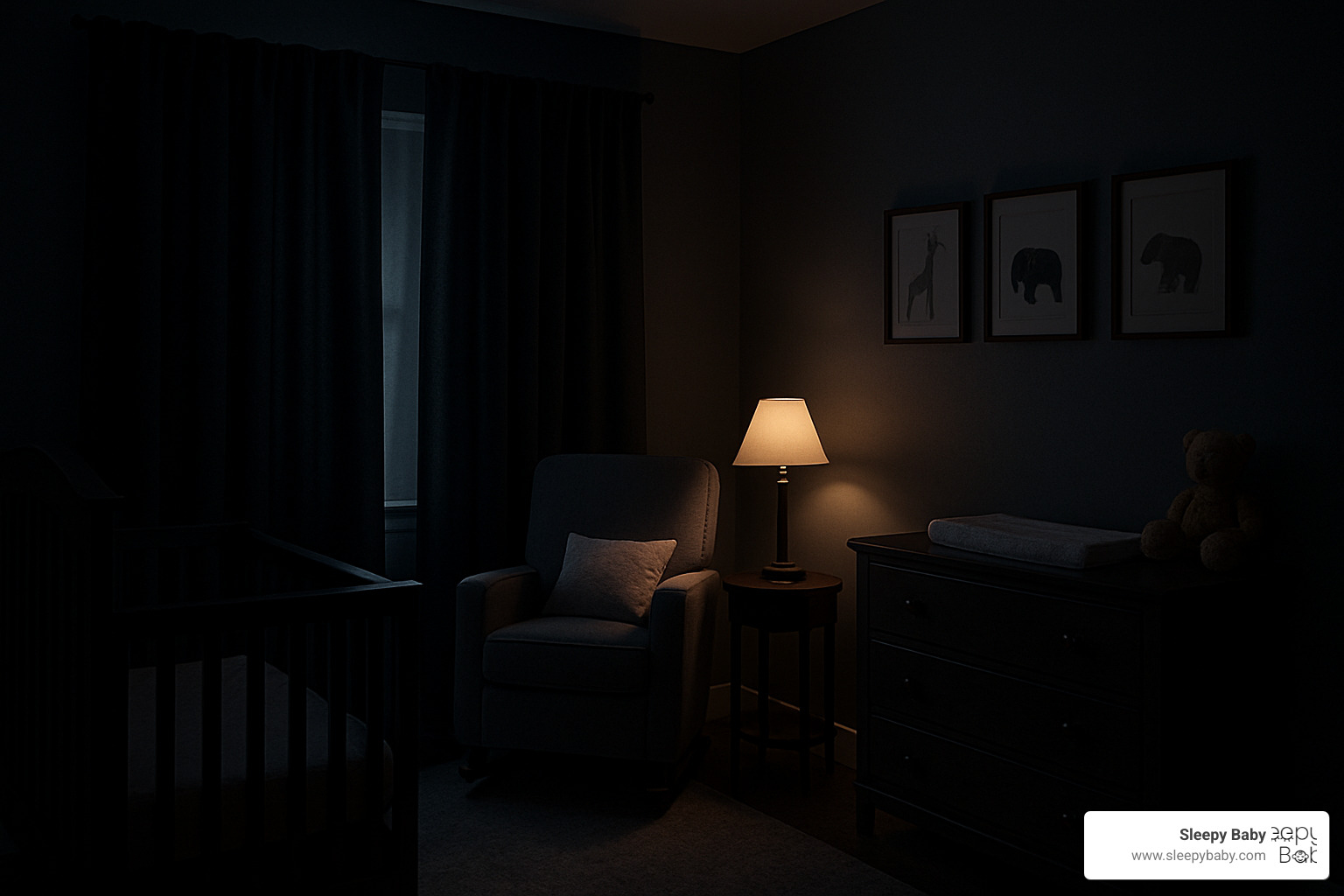
Key settings for the perfect sleep cave:
Creating this perfect bubble of tranquility can be challenging, especially when you're away from home. Sleepy Baby’s portable white-noise & rhythmic-patting devices are designed to solve this. This unique combination not only blocks external sounds but also actively soothes your baby by recreating the comforting sensations of being held, making any space feel like a secure sleep haven. Learn more: Baby sleep noise machines that'll have your little one snoozing like a champ.
This is perhaps the most impactful skill you can teach your baby during this period. The goal is to gently break the association between external help (like being fed or rocked) and the act of falling asleep. When a baby is always put down fully asleep, they don't know how to get back to sleep on their own when they naturally wake between sleep cycles. This is where the term "drowsy but awake" comes in.
Placing your baby in the crib when they are calm and drowsy, but still aware of their surroundings, gives them the opportunity to practice the skill of self-settling. This doesn't mean leaving them to cry. It means gradually reducing your intervention. If you typically rock for 10 minutes, try 8 minutes one night, then 5 the next. If you feed to sleep, try to gently unlatch just before they are completely unconscious. The aim is for them to do the last little bit of falling asleep on their own in their crib.
When they stir at night, resist the urge to rush in immediately. Pause for 5-10 minutes (as long as they are not hysterical). Often, a bit of fussing, grunting, or even a short cry is just the sound of them trying to get comfortable and connect to their next sleep cycle. Giving them this space is giving them a chance to learn. More tips: The calming chronicles: Helping your infant self-soothe.
A baby's sleep is a 24-hour cycle, and what happens during the day directly impacts the night. Two key areas to focus on are daytime nutrition and appropriate awake time.
At the 4-month mark, babies become incredibly aware of the world. This newfound curiosity can make them "snack and scan" during feeds, getting easily distracted by a sibling, a pet, or even a colorful picture on the wall. This often leads to them not getting full feeds during the day and trying to make up for those missed calories at night (a pattern known as reverse cycling). To combat this, try offering feeds in a quiet, boring room with minimal distractions to encourage them to finish a full meal.
Simultaneously, pay close attention to wake windows—the period a baby can comfortably stay awake between naps. An overtired baby has a harder time settling and staying asleep due to a surge of cortisol, a stress hormone. For a 4-month-old, a typical wake window is 90 minutes for the first stretch of the day, gradually increasing to about 100–110 minutes midday, and up to 2 hours before bedtime. Watch for early sleepy cues like yawning, eye-rubbing, a 'zoned-out' stare, or becoming fussy, and get them down for a nap or bed before they become frantic. A well-rested baby who has had enough calories during the day is set up for nighttime success. Aim for 3–4 naps, totaling 3–4 hours of daytime sleep. Full schedule help: 4 month old sleep schedule: Tips for restful nights.
Your middle-of-the-night response can either reinforce frequent waking or gently encourage a return to sleep. The key is to be strategic, consistent, and boring. When you hear your baby stir, implement "The Pause." Wait a few minutes before responding (unless you feel they are in distress). Babies are noisy sleepers and often fuss, grunt, and even cry out briefly while transitioning between sleep cycles. Rushing in too soon can fully wake them when they might have resettled on their own.
If the crying persists and escalates, go to them, but keep the intervention minimal and the environment dark and unstimulating. Your goal is to be a comfort, not an entertainer. Try a gentle pat on the chest or a quiet, repetitive "shhh." Avoid turning on bright lights, making eye contact, or engaging in conversation. Only offer a feed if it has been at least 3-4 hours since the last one, or if you are certain they are hungry rather than just looking for comfort to fall back asleep. Change the diaper only if it's clearly soiled or leaking. The message you want to consistently send is: "Nighttime is for sleeping, and I'm here to help you, but it's not time to play or party." More night-time troubleshooting: Nighttime woes: Why your baby struggles to sleep.
The right tools can be a game-changer during this transition, but they should be used to support independent sleep, not become another unsustainable sleep crutch. As your baby learns to roll (a common skill around this age), it's crucial for safety to transition from a swaddle to a wearable blanket or sleep sack. A sleep sack provides a sense of security and warmth without restricting their arms, allowing them to reposition themselves safely.
A continuous white noise machine is a non-negotiable tool for many families to buffer disruptive sounds that can jolt a baby awake. This is where the Sleepy Baby device truly shines. It not only provides that consistent, womb-like sound but also adds a unique layer of soothing with its gentle, rhythmic patting. This motion mimics the calming touch of a caregiver's hand on a baby's back, a sensation that is deeply reassuring to their developing nervous system. It's a hands-free way to provide comfort, helping your baby settle in their crib and connect sleep cycles without you needing to stand over them for hours. While pacifiers can be helpful for satisfying the sucking reflex during settling, be mindful if you become the "human pacifier replacer" all night. If possible, encourage your baby to find and re-insert it themselves by placing a few in the corner of the crib. See Dreamland awaits: Your guide to infant sleep aids.
You cannot pour from an empty cup. This regression is as taxing on parents as it is on babies, and sleep deprivation is a serious physical and mental health challenge. It's essential to make your own well-being a non-negotiable priority. If you have a partner, sit down and create a concrete plan to share night duties. Maybe one person takes the 10 p.m. to 2 a.m. shift, and the other takes 2 a.m. to 6 a.m., allowing for a solid block of uninterrupted sleep for each of you. During the day, truly "sleep when the baby sleeps," even if it's just a 20-minute power nap. Let the laundry pile up and accept any and all offers of help with meals, groceries, or chores from friends and family.
Make a point to step outside for fresh air and sunlight every day; it can do wonders for your mood and help regulate your own circadian rhythm. Stay hydrated and keep snacks handy for night feeds. Most importantly, if the exhaustion, anxiety, or low mood feels persistent and overwhelming, please reach out to your doctor, a therapist, or a postpartum support organization. Taking care of yourself is not selfish; it's a critical part of taking care of your baby. A quick overview of regression basics from a medical source can be found here: Infant Sleep Regression: What Parents Need to Know.
How long does the 4-month sleep regression last? For most families, this intense period lasts between 2 and 6 weeks. The duration often depends on how quickly a baby can master the skill of self-soothing. Being consistent with routines and strategies can help you land on the shorter end of that timeframe.
Do all babies go through it? Every baby’s sleep pattern matures around this age, so the biological change is universal. However, the outward signs can vary dramatically. Some babies show only mild changes, like slightly shorter naps for a week, especially if they already have some independent sleep skills. Others, particularly those who rely heavily on being rocked or fed to sleep, will experience a more dramatic disruption.
Should I try 'crying it out'? Formal sleep training methods, especially those involving extensive crying, are generally not recommended for babies this young. At four months, they are going through a significant developmental change and still need a high degree of comfort and reassurance. The strategies in this guide focus on gentle, supportive adjustments to help your baby learn, rather than 'training' them. You can always explore more structured methods when your baby is a bit older (typically 6+ months) if sleep issues persist.
When should I speak with a doctor? Trust your parental instincts. Contact your paediatrician if sleep problems last beyond 6-8 weeks without any improvement, or if the sleep issues are accompanied by other concerns like fever, poor weight gain, changes in feeding habits, or breathing issues. You should also reach out for support if you, the parent, are struggling to cope with the exhaustion and stress.
The 4-month sleep regression can feel like a marathon of sleepless nights, but it's truly a short-term challenge with a long-term payoff. By embracing this period as a developmental progression, not a behavioral problem, you can approach it with confidence and patience. The skills your baby is working on—linking sleep cycles and learning to self-soothe—are the very foundations of healthy, independent sleep for the years to come.
Consistently apply the seven strategies we've outlined: build a predictable routine, optimize the sleep space, encourage independent settling, focus on daytime needs, respond strategically at night, use aids wisely, and protect your own rest. Lean on supportive tools like Sleepy Baby’s intelligent sleep aids for that extra hands-free soothing when you need it most. Remember to be patient with your baby and, just as importantly, with yourself. Consistent, loving routines today will pave the way for sweeter, more restful dreams for the entire family tomorrow.
For continued guidance, visit The ultimate guide to baby sleep solutions: No more fights.


