


Does children's tylenol make babies sleepy is a common concern for new parents reaching for fever or pain relief in the middle of the night. Here's what you need to know:
Quick Answer:
When your baby has a fever or teething pain at 2 a.m., you might wonder if Children's Tylenol will help them sleep. While your baby might sleep after taking it, it's typically because they're feeling better, not because the medication is a sedative.
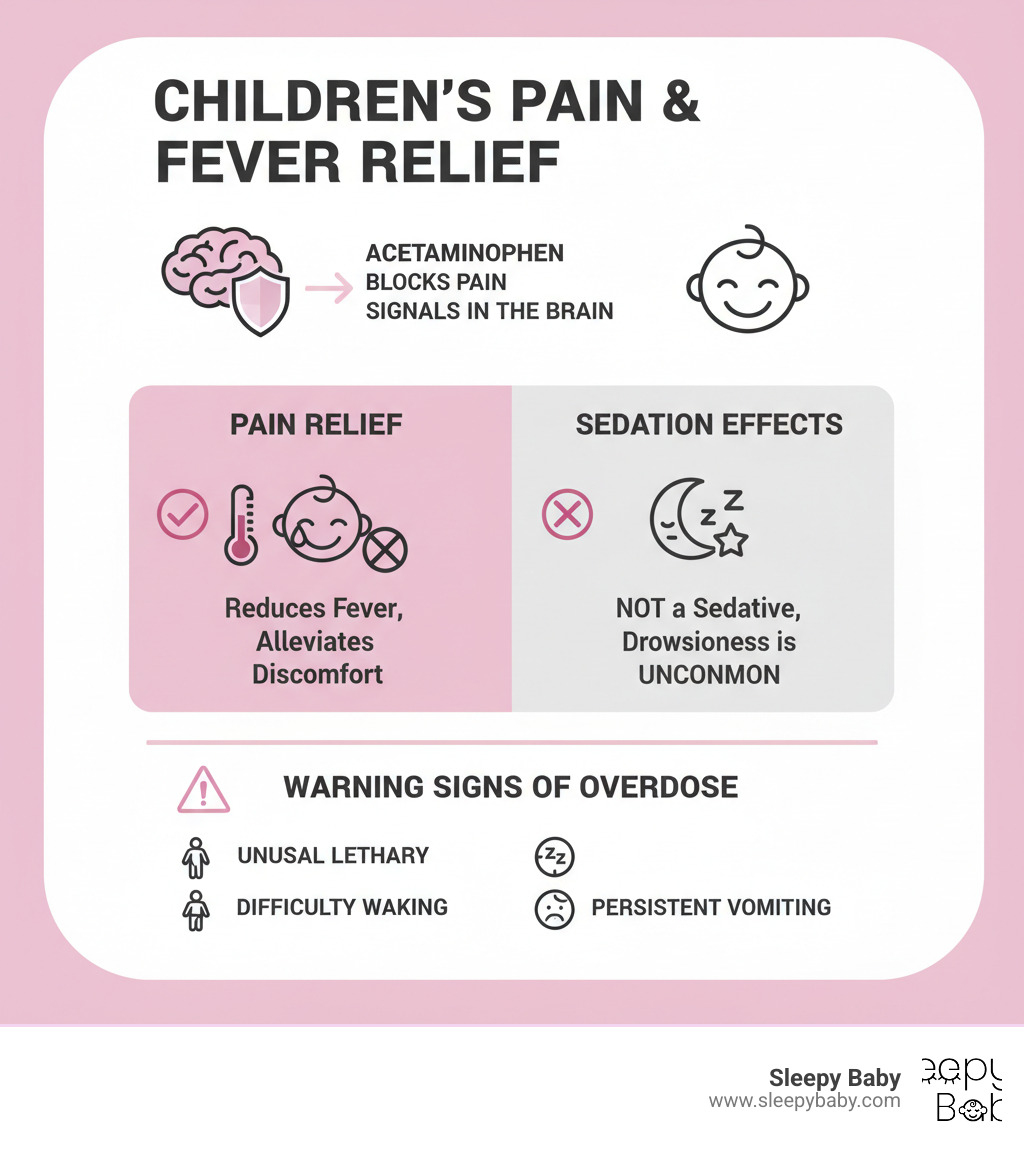
Many parents confuse pain relief with sedation. Children's Tylenol blocks pain signals and reduces fever; it has no ingredients to make babies drowsy. Illness causes fatigue, and when discomfort is relieved, babies rest better.
As the founder of Sleepy Baby and a father who's been there, I know understanding does children's tylenol make babies sleepy is crucial for safe use and realistic expectations. My experience taught me to distinguish between true sleep solutions and symptom relief.
Find more about does children's tylenol make babies sleepy:
To answer does children's tylenol make babies sleepy, it helps to understand how it works. Children's Tylenol is a pain reliever and fever reducer for little ones. It's not an anti-inflammatory like ibuprofen—it works differently to ease discomfort.
Acetaminophen is believed to block the production of prostaglandins in the brain—chemicals that send pain signals and cause fever. By interrupting these signals, Tylenol helps your baby feel more comfortable and reduces their temperature. You can learn more about how Tylenol works from medical research.
This mechanism is key to understanding why babies might seem sleepier after a dose. The medication isn't making them drowsy—it's simply allowing them to rest because they're no longer in pain or burning up with fever.
The star of the show in Children's Tylenol is acetaminophen (you might also hear it called paracetamol in other countries). This is the ingredient doing all the heavy lifting when it comes to pain and fever relief. The standard children's formulation contains 160 mg of acetaminophen per 5 mL.
Beyond the active ingredient, you'll find several inactive ingredients that don't provide therapeutic benefits but serve other purposes. These include flavors like grape or cherry, dyes that give the liquid its color, and other compounds that help with consistency and shelf stability. While these don't help with pain or fever, they make the medicine easier to give to your little one.
If you want to see the complete list of what's in the specific product you're using, check out Children's Tylenol ingredients on the official Tylenol website.
A common point of confusion is the difference between Infant's and Children's Tylenol. Years ago, they had different concentrations, which led to dangerous dosing mistakes. Infant drops were more concentrated, so small errors could lead to an overdose.
Thankfully, this changed after 2011. Now, both Infant's and Children's Tylenol use the same standard concentration of 160 mg per 5 mL. This was a huge win for medication safety, and it means you don't have to worry about accidentally giving your baby too much because you grabbed the wrong bottle.
So what's actually different between them now? Mostly the packaging and dosing device. Infant's Tylenol typically comes with a syringe designed for measuring very small, precise doses—perfect for tiny babies. Children's Tylenol might include a dosing cup or larger syringe meant for older kids who need bigger amounts.
The golden rule here is to always use the dosing device that comes with your specific bottle. Don't swap them around or use a random kitchen spoon. And remember, dosing should be based on your baby's weight, not their age—especially for babies under two years old. Your pediatrician is your best resource for determining the right dose for your little one.
Understanding these basics helps put the question of does children's tylenol make babies sleepy into proper context. The medication is designed to relieve symptoms, not to sedate, which is why proper dosing and realistic expectations matter so much.

This is the key question for many parents. When your baby is struggling with discomfort, you hope medication might help them rest. So let's tackle it head-on: does children's tylenol make babies sleepy?
Here's the truth: Children's Tylenol is not a sedative. It wasn't designed to make your baby drowsy, and it doesn't contain any sleep-inducing ingredients. Its job is simple—relieve pain and reduce fever. That's it.
But here's where it gets interesting. Many parents notice their babies sleeping after a dose of Tylenol, and there's a logical explanation. When your baby is uncomfortable—from teething, an earache, or a fever—their body is in distress. They're fussy, restless, and can't settle down.
Once the acetaminophen kicks in (usually within 15-30 minutes), that discomfort fades. Your baby isn't sleeping because the medication knocked them out—they're sleeping because they finally feel well enough to rest. It's like when you have a pounding headache. Once you take something for the pain and it eases, sleep comes naturally because your body can finally relax.
Another factor is that illness itself is exhausting. A baby fighting a fever or pain is using a lot of energy. When relief comes, that accumulated fatigue takes over, and they drift off to sleep as their body focuses on healing.
While drowsiness is technically listed as an uncommon side effect of acetaminophen, it's crucial to understand the difference between normal sleepiness and something more concerning. A baby who peacefully drifts off after their pain subsides is very different from one who becomes unusually lethargic or difficult to wake. If your baby seems excessively drowsy, unresponsive, or unusually tired after taking Tylenol, contact your doctor immediately—this could signal an overdose or another serious issue.
For more insights on soothing your uncomfortable baby naturally, check out our guide From Crying to Calm: Proven Ways to Treat Baby Colic.
While Children's Tylenol is generally safe when used correctly, no medication is without potential side effects. Most of the time, you won't see any issues, but it's important to know what to watch for.
The most common side effects are usually mild and digestive in nature. Your baby might experience nausea, stomach pain, or vomiting. These typically resolve on their own and aren't cause for major concern unless they persist or worsen.
The rare but serious side effects are what we really need to pay attention to. Allergic reactions can happen with any medication—watch for rash, hives, swelling (especially of the face, tongue, or throat), severe dizziness, or difficulty breathing. If you see any of these signs, seek emergency care immediately.
Liver problems are the most serious concern with acetaminophen, particularly with overdose. This is why accurate dosing is so critical. Warning signs include dark urine, yellowing of the skin or whites of the eyes (jaundice), severe stomach or abdominal pain, and persistent nausea or vomiting. If you notice any of these symptoms, contact your doctor right away.
Very rarely, acetaminophen can cause severe skin reactions. While extremely uncommon, conditions like Stevens-Johnson syndrome can occur. Look for red, swollen, blistered, or peeling skin, red or irritated eyes, or sores in the mouth, throat, or nose.
When should you call the doctor? Trust your parental instincts. If something feels off, if your baby's symptoms aren't improving, if you're concerned about any reaction to the medication, or if you suspect your baby received too much—make that call. For a comprehensive list of potential side effects, you can review the information at Infant's Tylenol Side Effects.
One final note: if your baby is taking any other medications, particularly combination cold or flu remedies, check the labels carefully. Many over-the-counter medications contain acetaminophen, and giving multiple products with the same active ingredient can lead to accidental overdose. When in doubt, ask your pediatrician or pharmacist.

When giving your baby medicine, precision is critical. It's normal to be nervous when you first give your baby Tylenol—it's a good instinct. Children's Tylenol is safe and effective when you follow the guidelines carefully.
The most important rule to remember is this: always dose by weight, not age. Your pediatrician's growth chart is your friend here. A chunky six-month-old might need a different dose than a petite nine-month-old, even though they're months apart in age.
The American Academy of Pediatrics recommends using your child's weight to determine the right dose for children over 3 months old. For babies under 2 years or weighing less than 24 pounds, definitely check with your pediatrician before giving any medication. It's worth that quick call for peace of mind.
Here's a dosing guide for Children's Tylenol liquid (the standard 160 mg/5 mL concentration):
| Weight (lbs) | Age (approx.) | Dose (mL) |
|---|---|---|
| 6-11 | 0-3 months | 1.25 mL |
| 12-17 | 4-11 months | 2.5 mL |
| 18-23 | 12-23 months | 3.75 mL |
| 24-35 | 2-3 years | 5 mL |
| 36-47 | 4-5 years | 7.5 mL |
| 48-59 | 6-8 years | 10 mL |
| 60-71 | 9-10 years | 12.5 mL |
| 72-95 | 11 years | 15 mL |
| 96+ | 12+ years | 20 mL |
Always consult your pediatrician for precise dosing, especially for infants under 3 months or if your child has underlying health conditions.
You can give another dose every 4 to 6 hours as needed, but here's the critical part: never give more than 5 doses in 24 hours. Mark it on your phone, write it on a sticky note, set a timer—whatever helps you keep track. Sleep-deprived parents can easily lose track of time, and I speak from experience here.
The good news is that Children's Tylenol works relatively quickly, usually kicking in within 15 to 30 minutes. That means relief for your little one (and hopefully some rest for both of you) isn't far away. Always use the dosing syringe or cup that comes with your specific product—kitchen spoons vary too much in size to be reliable. For more detailed guidance, the AAP Acetaminophen Dosing Tables are an excellent resource.
This is where understanding does children's tylenol make babies sleepy becomes critically important from a safety perspective. While we've established that Tylenol isn't a sedative, overdose can cause dangerous lethargy that's completely different from peaceful, pain-free sleep.
Unusual tiredness or lethargy is one of the most important warning signs of acetaminophen overdose. If your baby is difficult to wake up, seems excessively drowsy, or isn't responding normally after taking Tylenol, this is a medical emergency. This isn't the contented sleep of a baby who finally feels better—it's a red flag that something is seriously wrong.
Other signs of overdose include persistent nausea and vomiting, loss of appetite, sweating, stomach pain (particularly in the upper abdomen), dark urine, and jaundice (yellowing of the skin or eyes). The scary thing about acetaminophen overdose is that initial symptoms might seem mild, but liver damage can develop over the following days if left untreated.
If you suspect your baby has received too much acetaminophen—even if they seem okay at the moment—call Poison Control immediately at 1-800-222-1222 or go to the emergency room. Don't wait to see if symptoms develop. Time is absolutely critical in preventing permanent liver damage.
Beyond overdose concerns, there are other situations when you should contact your pediatrician. If your baby is under 3 months old and has a rectal temperature of 100.4°F (38°C) or higher, that's an automatic call to the doctor. For older babies, contact your pediatrician if a fever lasts more than 24 hours for children under 2, or more than three days for children 2 and older. A fever climbing above 104°F (40°C) also warrants immediate medical attention.
If your baby seems unusually irritable or inconsolable, has difficulty breathing, develops a rash, or shows any other concerning symptoms, trust your instincts and call your healthcare provider. Similarly, if you've been giving Tylenol for more than three days without improvement, it's time to check in with your pediatrician to address the underlying issue.
Tylenol is a tool for managing symptoms while your baby's body heals—it's not a cure for whatever is causing the pain or fever in the first place. Understanding proper dosing and recognizing warning signs helps keep your little one safe while they recover.
Sometimes, medication isn't the answer. For mild discomfort, teething, or just a fussy night, many gentle, non-medicinal methods can help soothe your baby.
For teething, offering safe teething toys or a cold, wet washcloth for them to chew on can provide surprising relief. The gentle pressure and coolness can really help those sore gums. A warm bath can also work wonders—there's something almost magical about warm water that helps melt away a baby's tension. And never underestimate the power of simply holding, cuddling, and rocking your little one. These timeless comfort measures tap into something deep in both parent and baby, creating a sense of security that no bottle or pill can replicate.
If you're looking to expand your soothing toolkit and really master the art of calming your baby, our guide on How to Master Infant Calming Techniques in 30 Days offers a comprehensive approach to understanding what works for your unique little one.
At Sleepy Baby, we understand. You desperately want your baby to sleep because you're both exhausted and need lasting relief. That's why we focus on innovative, drug-free solutions that address the root of fussiness and sleep troubles.
One of our favorite innovations is rhythmic tapping devices. These clever little gadgets do something remarkable: they mimic the gentle, reassuring patting motion that caregivers instinctively use to soothe their babies. This consistent tactile stimulation provides that comforting touch your baby craves, helping them calm down and eventually fall asleep independently. It's like having an extra set of hands when yours are tired or when you need to step away for a moment.
White noise machines are another powerful tool in the drug-free soothing arsenal. Now, we should mention that while some older white noise machines or improperly used devices have raised safety concerns, modern safety-rated devices are designed with babies in mind. These thoughtfully engineered devices present white noise at safe, low-decibel levels—sometimes even placed on the baby's chest or nearby—to create that womb-like environment that blocks out distracting household noises. This consistent, soothing sound helps babies fall asleep faster and stay asleep longer, giving everyone in the house a better night's rest.
We're proud to offer solutions that incorporate both of these elements, providing hands-free, customizable soothing for babies and much-needed support for exhausted caregivers. Because let's be honest: when you're running on two hours of sleep, anything that safely helps your baby calm down feels like a miracle.
Creating a calm environment goes beyond just gadgets, though. Dim lights, a consistent bedtime routine, and a comfortable sleeping space all work together to signal to your baby that it's time to wind down. Sometimes the most effective approach is combining multiple strategies—a warm bath, followed by some cuddle time, then settling your baby down with gentle rhythmic patting and white noise can create a powerful sleep-promoting ritual.
For more inspiration on effective soothing gadgets and how they can transform your nights, check out our article Gadgets to the Rescue: Top Colic Relief Devices for Babies. Because while Tylenol has its place for pain and fever, true sleep solutions address comfort, security, and creating the right environment for rest—no medication required.
Navigating baby health can bring up a lot of questions, and we know how overwhelming it can feel when you're trying to make the right choice for your little one. Here are some of the most common questions parents ask us about Children's Tylenol.
Yes, and this is critical. Acetaminophen is in many over-the-counter medications, not just Tylenol. If you give a multi-symptom cold medicine that contains acetaminophen along with a separate dose of Children's Tylenol, you could cause a dangerous double dose.
Here's what we always recommend: inform your doctor and pharmacist about every medication, supplement, or herbal remedy your baby is taking. It might seem like overkill, but it's truly the safest approach. Before giving any new medication, carefully read the labels to check for acetaminophen (sometimes listed as paracetamol in other countries) as an active ingredient. And unless your pediatrician specifically tells you otherwise, avoid combining medications that contain acetaminophen.
For more comprehensive information on how acetaminophen can interact with other drugs, the MedlinePlus guide on drug interactions with acetaminophen is an excellent resource to bookmark.
Proper storage isn't just about keeping the medication effective—it's about keeping your curious little explorer safe. We all know how quickly babies can get into things they shouldn't!
Store Children's Tylenol at room temperature, typically between 68-77°F (20-25°C). Keep it away from light and moisture, which means that bathroom medicine cabinet isn't actually the best spot. The humidity from showers can affect the medication's stability. Don't freeze liquid formulations, as this can change their consistency and effectiveness.
Most importantly, always store medication out of the reach and sight of children and pets. A locked cabinet or a high shelf they absolutely cannot access is your best bet. When it's time to dispose of expired or unused medicine, check with your local pharmacy about take-back programs, or follow your community's guidelines for safe disposal. Never flush medications down the toilet or toss them in the trash where little hands or paws might find them.
We understand why exhausted parents ask this. But the honest answer is no—you should never use Children's Tylenol as a sleep aid.
Children's Tylenol is a pain reliever and fever reducer, period. It's not formulated to induce sleep, and using any medication for purposes other than its intended use can be dangerous. While your baby might sleep better after taking Tylenol because their pain or fever has been relieved, you should never give it with the sole goal of making them drowsy.
Think of it this way: if your baby is sleepless because they're uncomfortable from teething or running a fever, then yes, Tylenol can help by addressing that underlying discomfort. But if sleeplessness isn't linked to pain or fever—if it's due to colic, overstimulation, or just needing to learn healthy sleep habits—then Tylenol isn't the solution and won't help.
Instead, focus on identifying and addressing the real root cause of sleeplessness. Is it colic causing the distress? An inconsistent bedtime routine? Developmental changes? For insights into managing sleep challenges, especially those related to discomfort and colic, our article Overcoming Colic and Sleep Deprivation in Newborns: A Journey to Colic Relief offers valuable guidance from parents who've been through it. And as always, consult your pediatrician if you're concerned about your baby's sleep patterns or suspect they might be in pain.
To summarize, when it comes to does children's tylenol make babies sleepy, the answer is no, not directly. Children's Tylenol relieves pain and fever; it is not a sedative. If your baby sleeps after a dose, it's because they are finally comfortable or because illness is exhausting.
That said, we need to emphasize something critical: if your baby becomes unusually tired, lethargic, or difficult to rouse after taking Tylenol, this is a serious warning sign that requires immediate medical attention. This isn't the peaceful sleep of a baby feeling better—it could indicate an overdose. Always dose strictly by your baby's weight, never exceed the recommended frequency of every 4-6 hours (maximum 5 doses in 24 hours), and when in doubt, especially with babies under 3 months old, consult your pediatrician first.
Medication is just one tool in your parenting toolkit. For those fussy nights when your baby needs comfort but not necessarily medicine, drug-free solutions can be remarkably effective. The gentle reassurance of cuddling and rocking, combined with innovative tools like rhythmic tapping devices that mimic a caregiver's comforting touch, can work wonders. And while some white noise machines have raised safety concerns, modern safety-rated devices that present white noise at safe, low-decibel levels—sometimes placed right on your baby's chest—can create that soothing, womb-like environment that helps babies settle.
At Sleepy Baby, we know parenting is challenging and exhausting. We're here to support you with tools and resources for those tough moments. Whether you're dealing with colic, teething, or just trying to establish better sleep patterns, you don't have to figure it all out alone. Explore our collection of soothing solutions and helpful guides, including The Ultimate Guide to Soothing a Colicky Baby Without Losing Your Mind, and find what works best for your family. You've got this, and we're here to help every step of the way.


