


A baby feeding essentials checklist is your roadmap through one of parenting's most important—and overwhelming—journeys. From newborn bottles to toddler snacks, having the right gear at the right time makes all the difference.
"Feeding your baby is one of the most important tasks you'll undertake as a parent. It can be most challenging, given the plethora of information and opinions out there."
That quote hits home for every new parent. The feeding journey is filled with choices, changes, and plenty of mess. But you don't need to buy everything; you just need the right things. This checklist breaks down exactly what you'll need as your baby grows, covering the liquid gold stage (0-6 months) and the exciting solids transition (6+ months).
We'll also explore how feeding affects sleep. A full tummy helps babies rest better, and addressing issues like colic can make a huge difference. While some white noise machines can be unsafe, modern safety-rated devices exist that present white noise at safe, low-decibel levels, sometimes on the baby's chest. Rhythmic tapping devices can also provide gentle comfort after feeds, helping your baby settle.
Whether you're breastfeeding, formula feeding, or doing both, this guide has you covered. Let's make feeding time less stressful and more about bonding with your baby.
I'm Gary Harutyunyan, and as a first-time father, I learned how crucial a solid baby feeding essentials checklist is for both baby's nourishment and the family's well-being. My experience creating solutions for families drives my passion for helping parents steer these early stages with confidence.
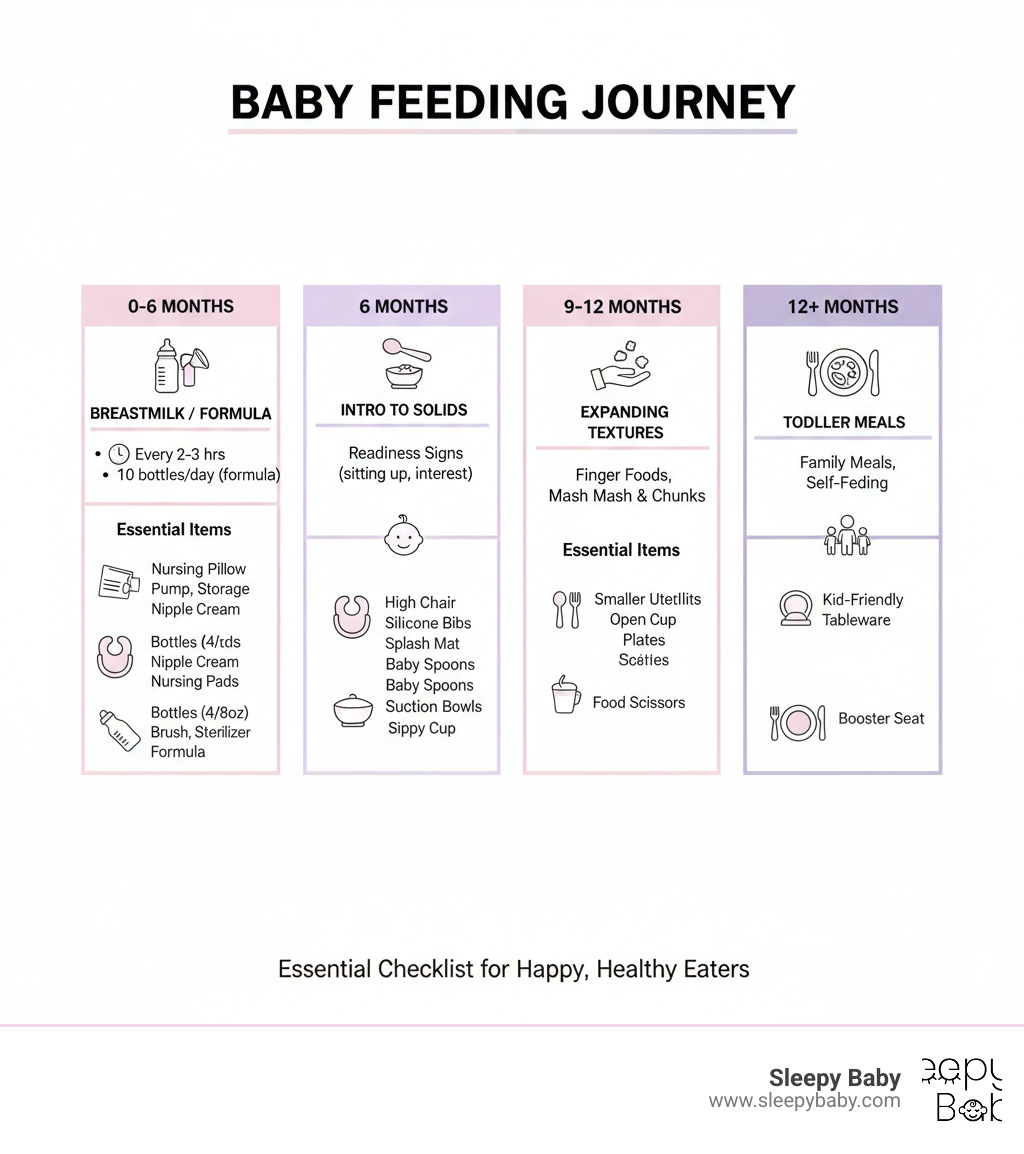
When your baby arrives, feeding becomes a full-time job. Newborns typically feed every 2-3 hours, so you'll spend more time feeding than sleeping initially.
The first big decision is whether to breastfeed, formula feed, or combine both. This is a personal choice based on your health, lifestyle, and what feels right. There's no single "right" answer—only what works for you and your baby.
This baby feeding essentials checklist will help you gather what you actually need for either path.
If you plan to breastfeed, these items can make feeding sessions more comfortable and manageable.
For more on self-care, check out our guide on The Ultimate Postpartum Essentials to Heal and Thrive.
If formula is your choice, the right gear makes preparation smoother. Even breastfeeding parents often keep bottles on hand for flexibility.
For a wider selection of formula preparation tools, you can explore options at Formula Mixers & Accessories | Babylist Shop.
Around six months, your baby's feeding journey takes an exciting turn with the introduction of solid foods. This transition is about expanding their diet with new tastes and textures, not replacing breast milk or formula, which remains their primary nutrition source.
Age is just one factor; developmental readiness is more important. Watch for these key signs:
For detailed recommendations, refer to guidelines like those from Nutrition for Healthy Term Infants: Recommendations from Six to 24 Months.
Once your baby is ready, start simple with single-ingredient foods to identify potential allergies.
Between 6-9 months, begin with smooth textures. Iron-fortified single-grain cereals (rice or oat) mixed with breast milk or formula are a great start, as babies' natural iron stores begin to deplete. Follow with pureed fruits and vegetables like banana, avocado, and sweet potato. Introduce one new food every few days to monitor for reactions.
Around 9-12 months, as chewing skills develop, you can introduce mashed textures and soft finger foods. This is the time for small pieces of well-cooked pasta, soft fruit chunks, and steamed vegetables. You can also start introducing proteins like finely shredded chicken, flaked fish, and mashed lentils.
After 12 months, your toddler can join family mealtimes. Offer a wide variety of foods to ensure balanced nutrition and prevent picky eating. Model healthy eating yourself—your toddler is watching! Be patient, as it can take 10-15 tries for a child to accept a new food. Establish a routine with regular meals and snacks to regulate their appetite.
For a broader perspective on what your growing baby needs, check out our Baby Needs Shopping Guide: Because Tiny Humans Have Big Demands. Your baby feeding essentials checklist will continue to evolve as your little one grows.
As your baby's feeding needs evolve, so does your baby feeding essentials checklist. Having the right gear makes a world of difference for convenience, hygiene, and safety. An organized feeding station helps streamline mealtimes, especially when mess is inevitable.
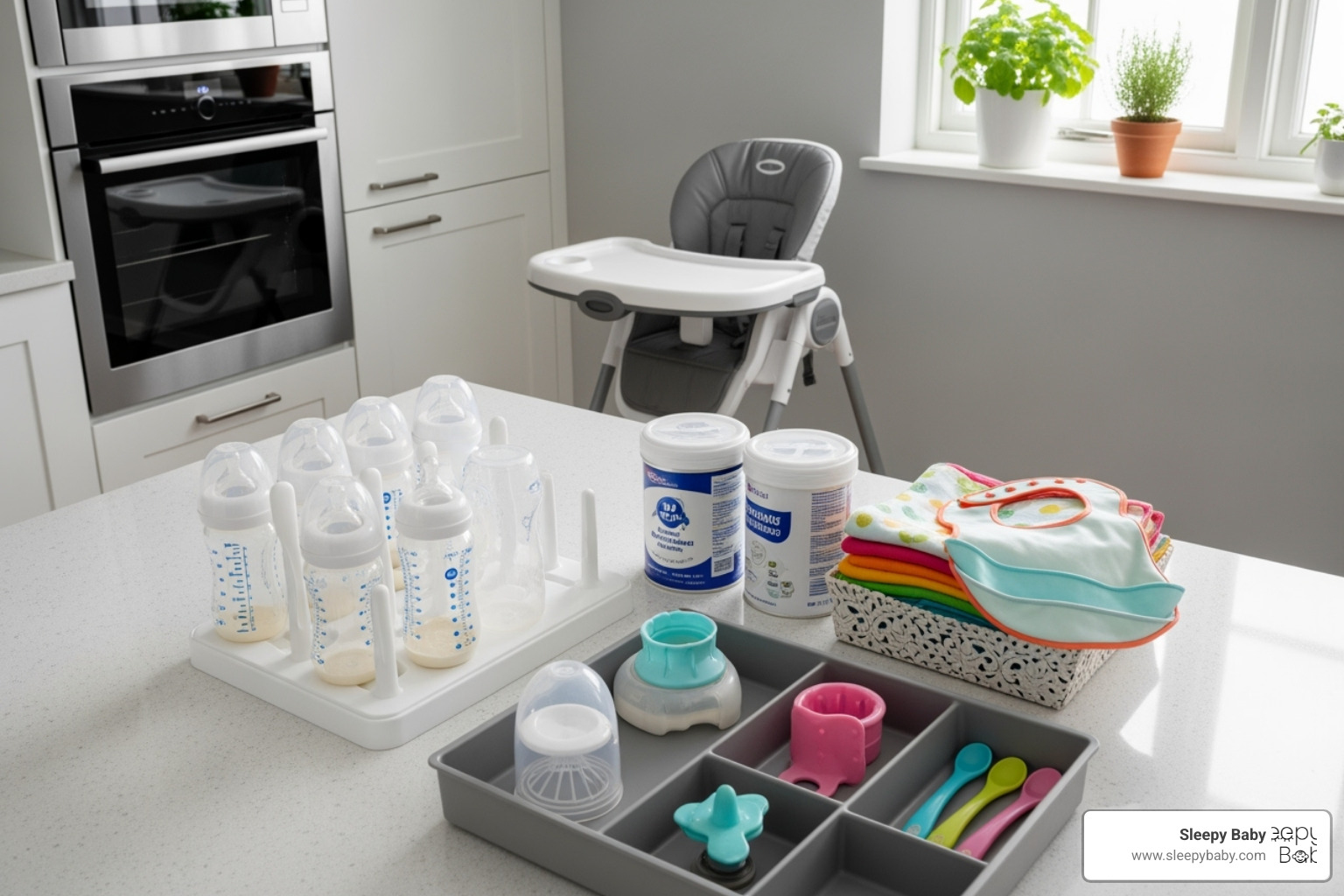
When it comes to bottle materials, you have three main options: durable, chemical-free glass; lightweight, affordable plastic (ensure it's BPA-free); and flexible, shatter-proof silicone. For nipple materials, most are durable silicone or softer latex, which can feel more like a breast but may cause allergies.
If your baby is gassy, look for anti-colic features like special vents that reduce air intake. Nipple flow rates (slow, medium, fast) should match your baby's age and feeding style. Start newborns on slow flow and watch their cues: if they get frustrated, the flow may be too slow; if they're choking or gulping, it's too fast. For bottle size, 4-ounce bottles are great for newborns, while 8-ounce bottles suit older babies.
| Feature | Glass Bottles | Plastic Bottles | Silicone Bottles |
|---|---|---|---|
| Material | Lab-grade borosilicate glass | BPA-free polypropylene, Tritan | 100% Food-grade silicone |
| Durability | Very durable, but can break if dropped | Durable, but can scratch/stain over time | Highly durable, flexible, shatter-proof |
| Safety | Chemical-free, no leaching | Must be BPA-free; some plastics may still leach | Chemical-free, non-toxic |
| Weight | Heavier | Lightweight | Medium weight, easy to grip |
| Cleaning | Easy to clean, resists odors/stains | Can retain odors/stains over time | Easy to clean, resists odors/stains |
| Cost | Higher initial cost | Most affordable | Mid to high range |
| Pros | Eco-friendly, long-lasting, pure | Lightweight, portable, easy for baby to hold | Soft, squeezable, breast-like feel, shatter-proof |
| Cons | Fragile, heavier, can be costly | Can scratch, potential for chemical concerns | Can be harder to clean if not wide-mouthed |
For an in-depth look at bottle options, we recommend consulting resources like Best Baby Bottles of 2025, Tested & Reviewed.
Once solids are on the menu, accept the mess with gear that helps manage the chaos.
Feeding is about safety and sleep, not just nutrition. When introducing common allergens like peanuts and eggs, do so one at a time and consult your pediatrician. Ensure your baby stays hydrated with breast milk, formula, and sips of water with meals, as recommended by resources like Nutrition for Healthy Term Infants.
A full tummy helps babies sleep better. A well-fed baby is a happy baby, and a happy baby sleeps more peacefully. If colic and gas are issues, try anti-colic bottles and proper burping techniques.
After a feed, settling your baby is key. This is where rhythmic tapping devices can provide gentle, mimicking comfort. While some white noise machines can be unsafe, modern safety-rated devices exist that present white noise at safe, low-decibel levels, sometimes on the baby's chest. These tools create a calm environment, helping your baby transition to sleep.
At Sleepy Baby, we understand this connection. Our portable sleep aids feature rhythmic patting and safe white noise to help your baby transition from a full tummy to peaceful rest, giving you a hands-free break.
Let's tackle some of the most common questions from parents navigating their baby feeding essentials checklist.
Newborns feed every 2-3 hours, so an exclusively bottle-fed baby will use about 10 bottles per day. To avoid constant washing, we recommend having 10-16 bottles and nipples in total. This should include a mix of 4-ounce bottles for the early days and 8-ounce bottles for when their appetite grows. This small investment will save your sanity, as you can run the dishwasher just once a day. For more practical advice, check out our Registry Reality Check: Baby Essentials You Won't Regret.
Once solids begin, feeding gets messy. Here’s how to manage it:
Your baby's cues are the best guide. The flow rate determines how quickly milk leaves the bottle.
Start with a slow flow for newborns to mimic breastfeeding and prevent them from swallowing too much air. As your baby becomes a more efficient eater, you can move to medium and then fast flow nipples.
Pay attention to your baby. If they are gulping, coughing, or milk is dribbling from their mouth, the flow is too fast. If they are sucking hard, getting frustrated, or taking a very long time to finish a bottle, the flow is likely too slow. While manufacturers provide age guidelines (0-3 months, 3-6 months, etc.), your baby's behavior is the most reliable indicator. Adjusting the flow rate can lead to a more comfortable feeding experience and a less gassy baby. For detailed comparisons, resources like Best Baby Bottles of 2025, Tested & Reviewed can offer additional guidance.
You've made it through the baby feeding essentials checklist! From quiet midnight feeds to messy toddler meals, feeding your baby is one of the most intimate ways you'll bond.
The journey from liquid gold to first bites is unique for every family. Whether you breastfeed, use formula, or do both, trust your instincts and watch your baby's cues. Don't hesitate to consult your pediatrician with any questions.
At Sleepy Baby, we know that a full tummy and peaceful sleep go hand in hand. A well-fed, comfortable baby is more likely to sleep restfully—and when they sleep better, you do too. Those exhausting late-night feeds won't last forever.
After a good feeding, helping your baby transition to sleep is the next step. While some white noise machines can be unsafe, modern safety-rated devices exist that present white noise at safe, low-decibel levels, sometimes on the baby's chest. Combined with rhythmic tapping devices that mimic a caregiver's gentle pat, these tools can help extend post-feed calm into independent sleep. Our sleep aids are designed with this in mind, giving you a hands-free way to comfort your baby as they learn to self-soothe.
You're doing an amazing job. Feeding challenges pass, but the incredible bond you're building one meal at a time remains.

Happy feeding, happy sleeping, and happy parenting!


