


Baby sleep in crib transitions can feel overwhelming. Many parents find themselves "nap-trapped" under a sleeping baby, afraid to move and wake their little one.
Quick Guide to Baby Sleep in Crib:
The good news? Every baby can learn to sleep independently in their crib. Research shows that back sleeping in a safe crib significantly reduces the risk of sudden infant death syndrome (SIDS), and room sharing (not bed sharing) can decrease this risk by up to 50%.
Creating positive crib associations, establishing consistent routines, and using safe soothing aids can transform sleep battles into peaceful nights. While some babies adjust quickly, others need more time and gentle persistence.
I'm Gary Harutyunyan, a father who struggled with my own newborn's sleep. I understand the desperation to help your baby sleep in crib peacefully. My journey led me to create gentle, rhythmic patting solutions that support safe, independent sleep.
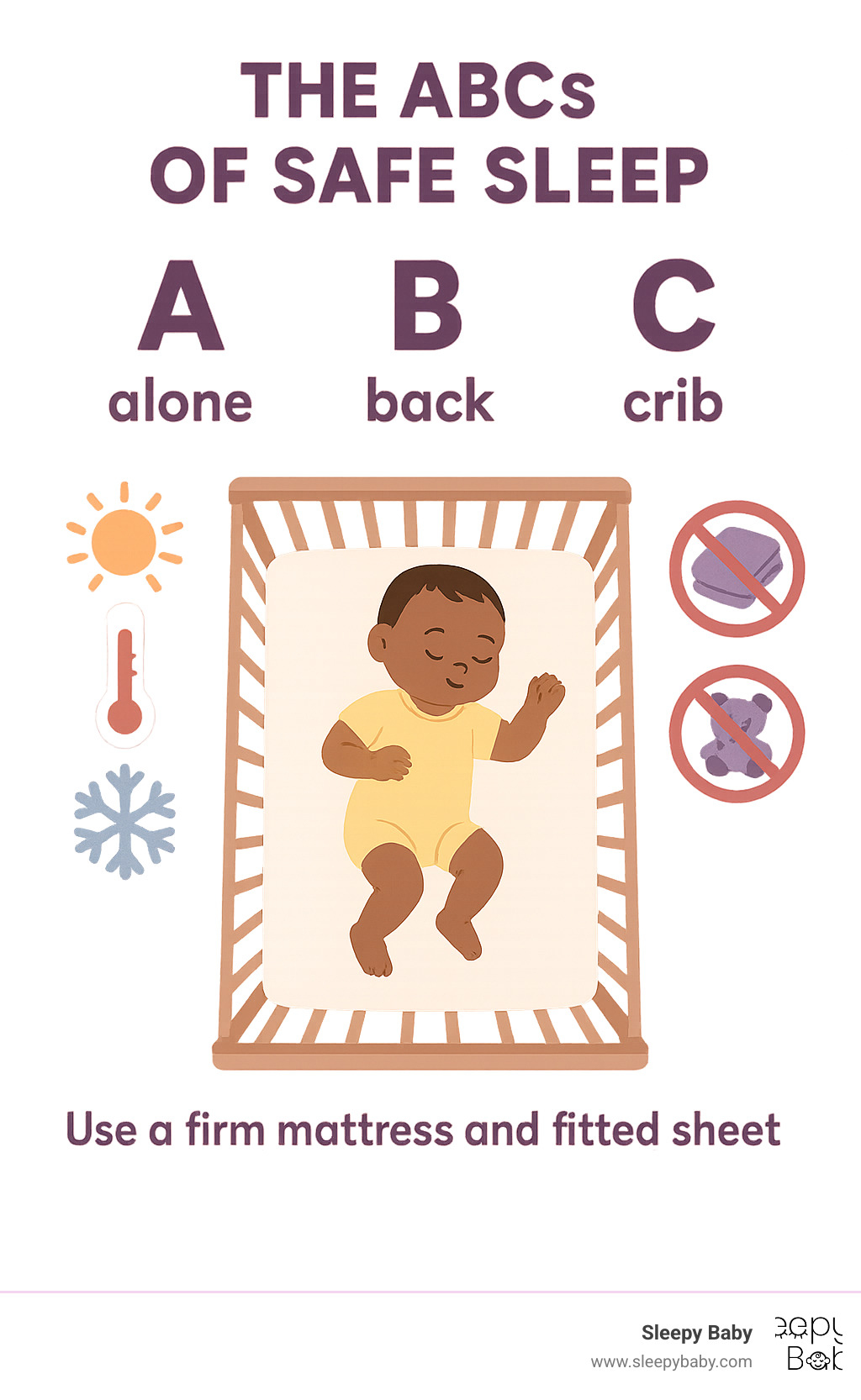
Handy baby sleep in crib terms:
Wondering when to move your baby from a bassinet to a crib? You're not alone. There's no magic date for this transition; instead, it's about watching for developmental signs and prioritizing safety.
Bassinets are great for the first few months—cozy, portable, and perfect for keeping your newborn close. But babies grow fast, and their developing skills often signal it's time for a change, even before they hit the weight limit.
The American Academy of Pediatrics recommends room sharing (keeping baby's sleep area in your room, but not in your bed) for at least the first six months. This reduces SIDS risk by up to 50% and simplifies nighttime care. However, research on room-sharing and sleep outcomes shows that after four months, room sharing might lead to less sleep for everyone and potentially unsafe sleep practices as exhausted parents resort to bed sharing.
When to transition your baby sleep in crib is a personal decision guided by safety and developmental cues. Understanding your baby's newborn sleep patterns will help you choose what's best for your family.
Safety is paramount, and certain milestones are clear signals it's time for a crib. The most obvious sign is when your baby starts pushing up on hands and knees, as they could potentially get out of the bassinet.
Rolling over consistently is another major red flag. A baby who can roll could end up in an unsafe position or even fall out of their bassinet. The moment you see those first rolls, it's time to make the switch.
Always check the bassinet's manufacturer weight and height limits, which typically range from 10 to 20 pounds. Exceeding these limits compromises the bassinet's structural safety.
Subtler signs include your baby appearing cramped or showing increased night waking from discomfort. They may simply need more room to stretch.
Beyond outgrowing their bassinet, other milestones show your baby is ready for a crib. Improved head control means your baby can handle a larger sleep space more safely.
The transition often coincides with when a baby no longer needs a swaddle (around 2-4 months or when rolling starts). Free arms need the extra space a crib provides for safe movement.
The 4-month sleep regression, while challenging, marks a shift in sleep cycles. This makes it an ideal time to establish new, independent sleep habits in their crib. Our guide to the 4-month sleep regression can help you steer this phase.
Bassinet vs. Crib Readiness Signs
| Feature/Sign | Bassinet (Ideal For) | Crib (Transition To When) |
|---|---|---|
| Age | Newborns up to 4-6 months | From birth (if desired) up to 2.5-3 years |
| Weight/Height | Manufacturer's limit (typically 10-20 lbs) | No specific limit for infants |
| Rolling Over | Before baby starts rolling | As soon as baby shows signs of rolling |
| Pushing Up | Before baby pushes up on hands/knees | As soon as baby pushes up on hands/knees |
| Space | Baby fits comfortably without touching sides | Baby needs more room to stretch and move |
| Portability | Keep baby close to parents (room sharing) | Permanent sleep space, often in baby's own room |
If you want to continue room sharing after your baby outgrows their bassinet, a Pack 'n Play or portable crib can be a safe and convenient alternative.
Moving to a crib is a gradual process that requires encouragement and patience. The key is a gradual approach, consistency, and celebrating small wins—even 20 minutes of crib sleep is a victory!
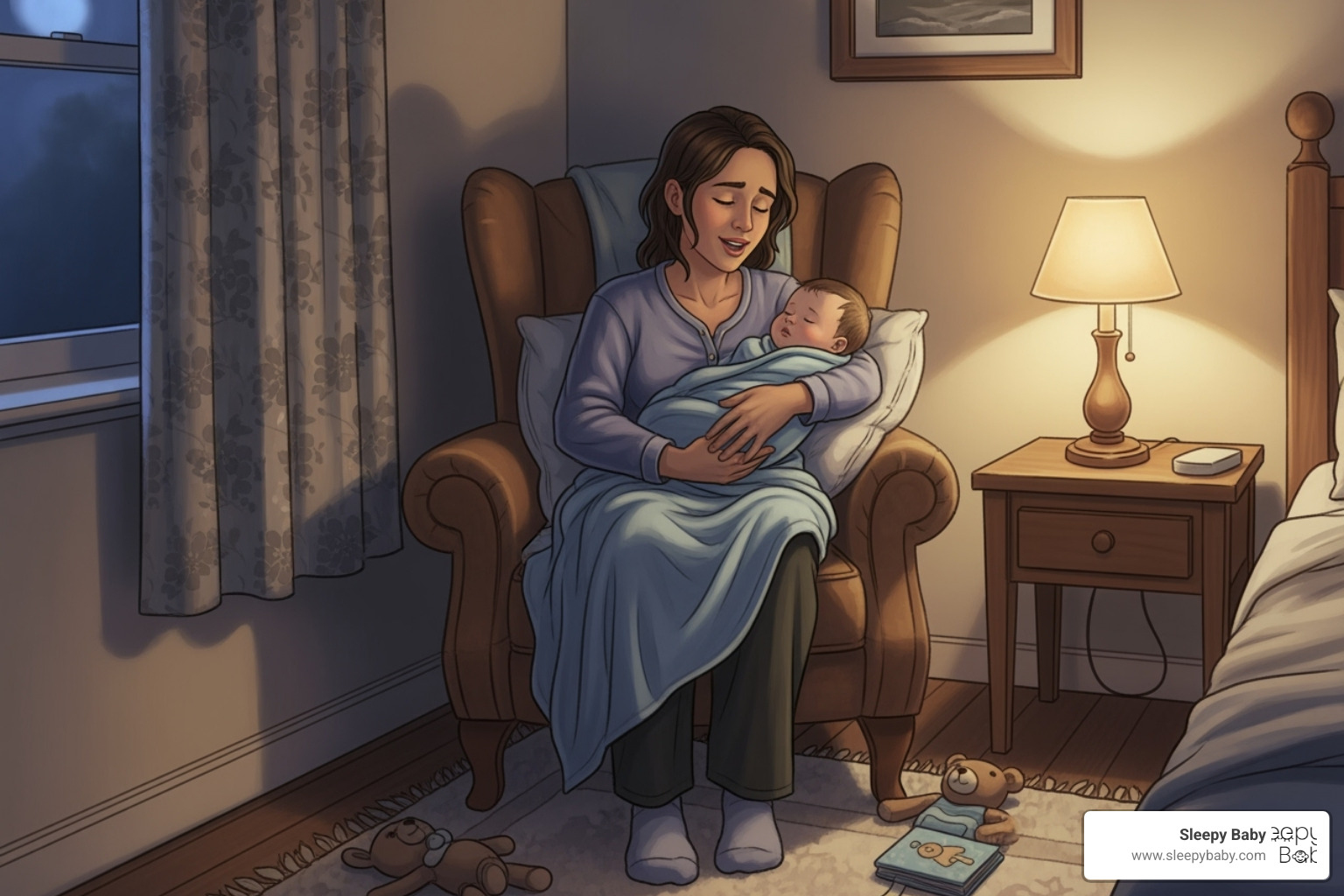
Every baby adjusts to baby sleep in crib routines on their own timeline. Some adapt quickly, while others need more patience. This is completely normal and doesn't reflect on your parenting.
The goal is to make the crib a happy place. Introduce it during happy, awake times by starting with short, 5-10 minute supervised play sessions. Place your baby inside with a few safe toys, let them watch a mobile, or play peek-a-boo through the slats.
Talk to your baby in an upbeat voice about their crib. These no-pressure daytime sessions help your baby get comfortable with the space, seeing it as a happy, familiar place without the stress of needing to fall asleep.
A predictable bedtime routine signals to your baby that it's time to wind down. Consistency helps prevent overtiredness, which can make it harder for babies to fall asleep. Your routine might include calming activities like a warm bath, gentle massage, reading a story, or singing lullabies. The specific activities matter less than doing them in the same order, around the same time, every night.
Timing is important. A baby's internal sleep clock starts developing around 8-11 weeks, and a consistent routine helps train this natural rhythm. A crucial element is to separate feeding from falling asleep. Feed your baby first, then continue the routine before placing them in the crib. This helps them learn to drift off without needing to feed to sleep.
Research shows how powerful consistent bedtime routines are for improving sleep quality. For more ideas, see our guide to creating the best baby bedtime ritual.
To make the baby sleep in crib transition smoother, start with daytime naps. They feel less high-stakes and are perfect for practice. The first nap of the day is often your best bet, as your baby is typically well-rested.
Start with just one nap in the crib, then gradually add more as your baby gets comfortable. Each successful nap builds positive associations, making the space feel more like home. Don't worry if the first few attempts are short; you're both learning. Our tips for mastering baby nap time can help.
Most babies protest being moved from your arms to a crib. The sensation of being lowered can trigger their startle reflex, waking them up.
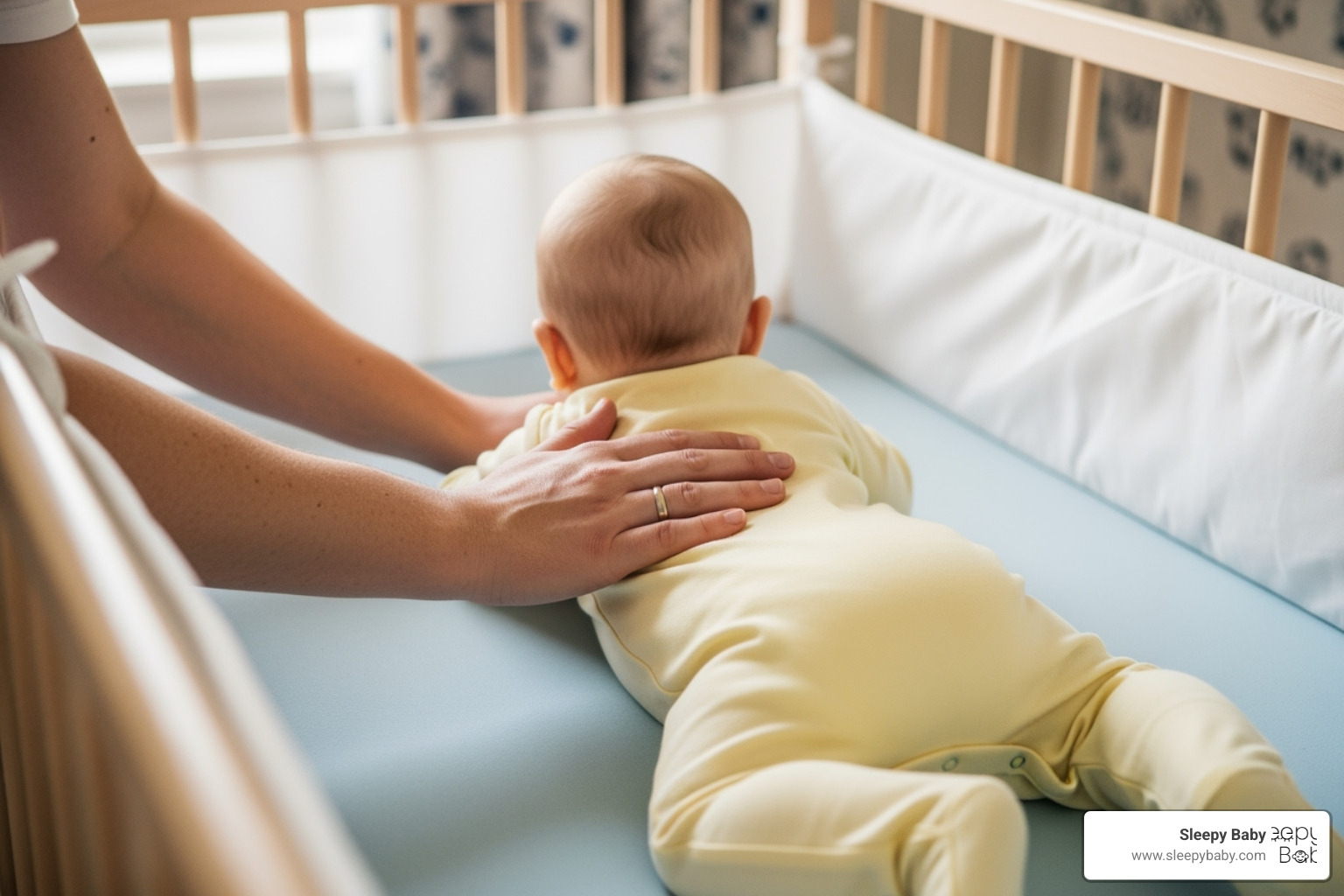
When your baby fusses, stay calm and offer gentle comfort like a hand on their chest, shushing, or rhythmic patting. These techniques help them feel secure without creating a dependency on being held to sleep. If crying escalates, it's okay to use the pick-up/put-down method: comfort them in your arms, then place them back down drowsy but awake.
To transfer a sleeping baby, use the gradual release technique: lower their bottom first while supporting their head to minimize the startling 'falling' sensation.
Modern rhythmic patting devices can be incredibly helpful here. They provide consistent, hands-free soothing that mimics a caregiver's comforting touch, helping your baby feel secure in their crib while learning to self-soothe.
Consistency is key. Commit to the process, even when it's hard. Mixed messages will only confuse your baby and prolong the adjustment. Some crying is normal, but consult your pediatrician if you suspect a medical issue like reflux. With patience, babies can learn to fall back to sleep more easily in their new environment.
You might imagine a crib filled with fluffy blankets and cute toys, but the safest crib is a bare one. Unsafe sleep environments are a leading risk factor for infant sleep-related deaths, and creating a safe sleep space dramatically reduces this risk.
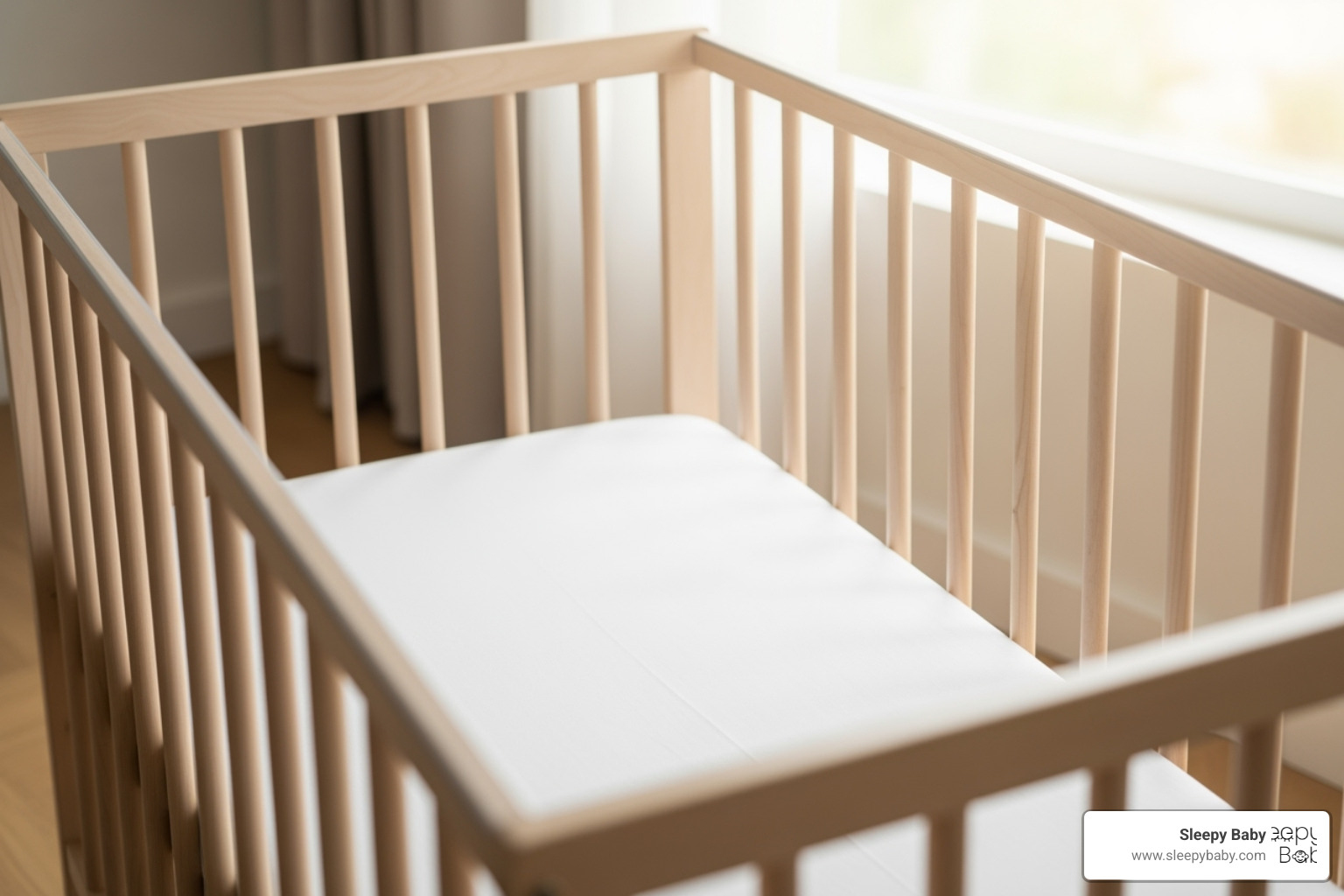
The American Academy of Pediatrics' message is clear: baby sleep in crib should happen in a bare space. Their safe sleep policy confirms that for crib safety, less is more.
A safe crib environment is simple. Your baby needs a firm, flat mattress designed for your crib model, fitting snugly with no more than a two-finger gap at the sides to prevent entrapment. Cover it with a tight-fitting sheet and nothing else.
Blankets, pillows, bumper pads (even breathable ones), toys, and any loose bedding all pose serious suffocation, entrapment, or strangulation risks and must be kept out of the crib. A bare crib is the safest crib.
For used cribs, check the CPSC website for recalls. Cribs made before September 1986 are unsafe and should not be used.
A bare crib doesn't mean an unsoothing environment. You can create a calming space with safe aids around the crib.
Creating a safe, soothing environment is about understanding your baby's needs: a safe space and gentle comfort to develop independent sleep skills.
Here are answers to common questions about the transition to baby sleep in crib.
Yes, a newborn can safely sleep in a crib from birth. Cribs meet strict safety standards, making them one of the safest options. While bassinets are convenient for keeping baby close, they aren't a safety necessity. Starting with a crib is a long-term solution that your baby can use until they are ready for a toddler bed (around 18-24 months or 35 inches tall), meaning fewer transitions and more consistency. For more guidance, see our From Cradle to Bassinet guide.
This is a common struggle. Babies are natural "contact sleepers," especially during the "fourth trimester" (the first three months). This is normal behavior driven by the need for security and a strong startle reflex that can wake them when put down. You can gradually help your baby feel secure in their crib by putting them down drowsy but awake and lowering their bottom first to minimize the falling sensation. If they fuss, offer gentle reassurance with your voice or a calm hand.
Rhythmic patting devices are incredibly helpful here. They mimic your comforting touch, making the crib feel more secure. Combined with safe, low-decibel white noise, these tools help bridge the gap between your arms and independent sleep. For more strategies, check out Why babies fight sleep and how to help.
The answer varies for every baby. Temperament and consistency play huge roles. Some babies adapt quickly, while others need more time and patience. With consistent effort, most babies adjust to baby sleep in crib within a few days to two weeks. Some initial fussing is a normal part of the process. With your patient reassurance and the right soothing tools, they will learn that their crib is a safe, comfortable place.
Developing independent sleep skills is a process. Research shows that even at three months, many babies don't fall asleep independently. Every small victory is progress worth celebrating. Patience and persistence are your greatest allies.
The transition to successful baby sleep in crib is a major milestone. The goal is to establish safe, independent sleep habits that will benefit your entire family. When your baby learns to fall asleep on their own and feels secure in their crib, everyone gets better rest.
Every baby is different, and their adjustment timeline is unique. Most babies adjust within a few days to two weeks, but don't be discouraged if it takes longer. Your consistency, patience, and love are your most powerful tools. Trust the process, celebrate small victories, and know that you're giving your baby the incredible gift of safe, independent sleep.
For families who want more comprehensive support, our Ultimate Guide to Baby Sleep Solutions offers additional strategies. At Sleepy Baby, we understand these challenges, which is why our products are designed to support crucial sleep transitions.
Our rhythmic patting devices mimic a caregiver's comforting touch, providing consistent, gentle soothing that helps babies feel secure in their cribs. Combined with safe, low-decibel white noise, these innovative sleep aids offer hands-free support that can make all the difference during transition nights. We're proud to help families worldwide achieve the peaceful nights and joyful mornings every family deserves.


