


Learning how to give gripe water properly can feel overwhelming when you're dealing with a fussy, crying baby at 2 AM. Here's what every parent needs to know about safe administration:
Quick Guide: How to Give Gripe Water
When your little one is crying inconsolably despite being fed and changed, many parents turn to gripe water, hoping this herbal remedy will ease their baby's gas or colic. But while gripe water has been used for generations, proper administration is crucial for both safety and effectiveness.
Because gripe water isn't regulated by the FDA like medications, quality and safety vary between brands. Some have been recalled for contamination or choking hazards. This makes understanding how to give gripe water correctly—and whether to use it at all—more important than ever.
I'm Gary Harutyunyan, and as a father who steered sleepless nights with a colicky newborn, I understand the desperation for safe, effective solutions. My research into baby soothing methods has given me deep insight into how to give gripe water safely and when alternative approaches might work better.
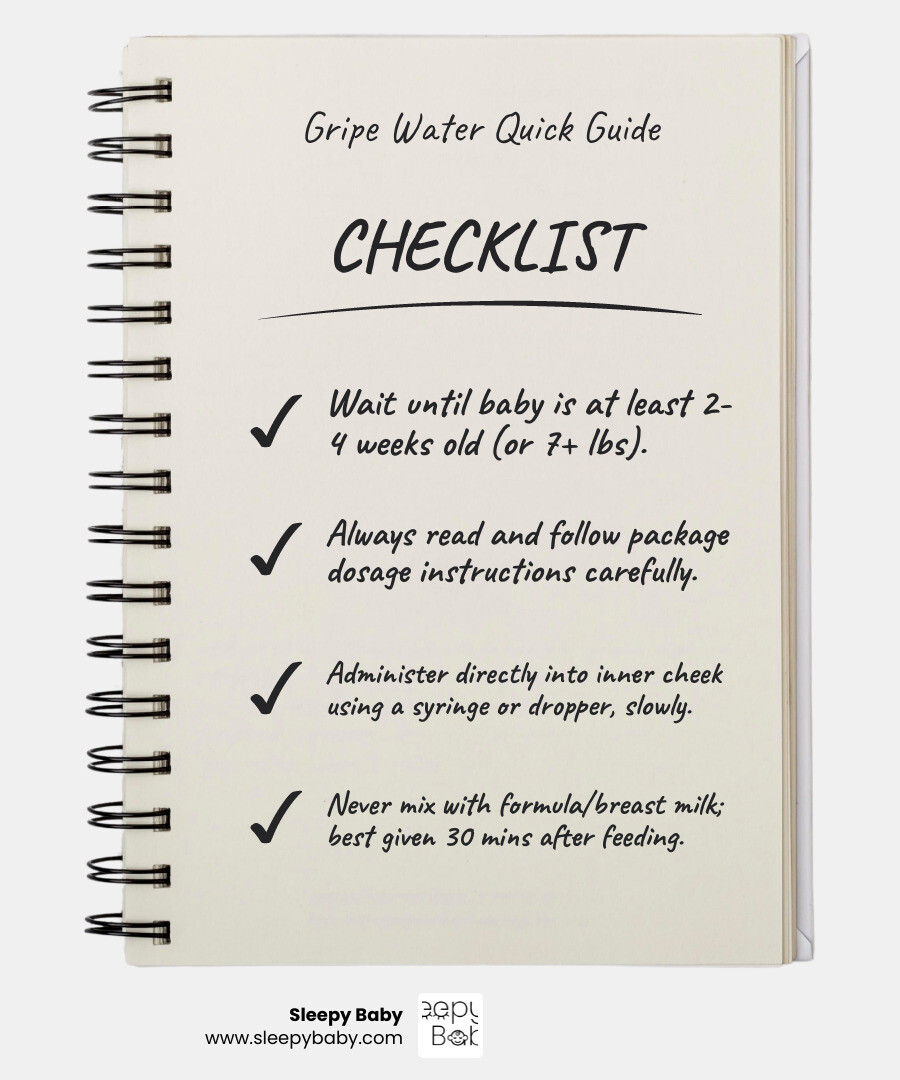
How to give gripe water basics:
If you've found yourself pacing the floor at 3 AM with a crying baby, you've probably heard about gripe water. But what exactly is it?
Gripe water is an herbal supplement, classified by the FDA as a dietary supplement, not a medication. It's a liquid blend of water, sweeteners, and botanicals intended to ease infant tummy troubles like gas, colic, and general fussiness.
No two gripe water brands are exactly alike. Most formulations include herbs like fennel for digestion, ginger to calm upset stomachs, and chamomile for soothing. You might also find dill, lemon balm, or even licorice and cinnamon. Many modern versions have moved away from older ingredients like sodium bicarbonate (baking soda) due to safety concerns. The base is typically sweetened, which plays a role in its calming effect.
Parents often turn to gripe water for gas, colic, persistent hiccups, or teething pain. If you're dealing with colic specifically, our guide Colic Conundrum: How to Soothe Your Baby offers additional strategies. The theory is that these ingredients relax a baby's digestive system, but the sweet taste itself may also have a calming effect.
Does this stuff actually work? The answer is complicated.
Countless parents swear by gripe water, sharing powerful anecdotal reports of their babies feeling better within minutes. However, there is very little scientific proof to back this up. Much of its reputation may be due to other factors:
In fact, a study involving 335 mothers found that gripe water didn't prevent colic and was associated with higher rates of vomiting and constipation. Most pediatrician opinions lean toward caution. As Dr. Ashanti Woods notes, the link between gripe water and calming babies is "possible" but "not a strong association."
The bottom line is that while many parents find it helpful, its benefits are based on personal experience, not scientific evidence. It's important to approach it with realistic expectations and prioritize safety when learning how to give gripe water.
When it comes to your baby's safety, gripe water sits in a gray area. Unlike prescribed medications, it's classified as a dietary supplement by the FDA. This means it doesn't undergo the same rigorous testing for safety and effectiveness. You can learn more at Facts about Dietary Supplements from the FDA.
This regulatory gap creates some real risks. In the past, some gripe water contained alcohol, which is dangerous for babies. While most modern U.S. formulas are alcohol-free, you should always check the label.
Other ingredients of concern include:

Perhaps most concerning are contamination recalls. Some products have been recalled for containing dangerous parasites or bacteria, or for undissolved ingredients that pose a choking hazard.
When learning how to give gripe water, you must also watch for potential side effects. Allergic reactions to herbal ingredients can cause hives, watery eyes, or swelling. Ironically, some studies show that gripe water may increase vomiting and constipation.
Before opening a bottle, consult your pediatrician. They can help determine the true cause of your baby's fussiness—it could be reflux, a milk allergy, or normal newborn behavior—and advise if gripe water is appropriate. You can use resources like Find a Pediatrician to connect with a professional.
If your doctor gives the green light, read labels critically. When choosing a brand, look for products that are alcohol-free, sucrose-free, and free from sodium bicarbonate. You should also avoid vegetable carbon (charcoal), which can cause constipation. While not a guarantee, products made in the USA may have better quality control. The decision is yours, but make it an informed one.
Alright, you've talked to your pediatrician and chosen a gripe water. Now for the practical part. Giving liquid to a squirming baby can be a challenge, but a calm, precise approach makes it manageable.
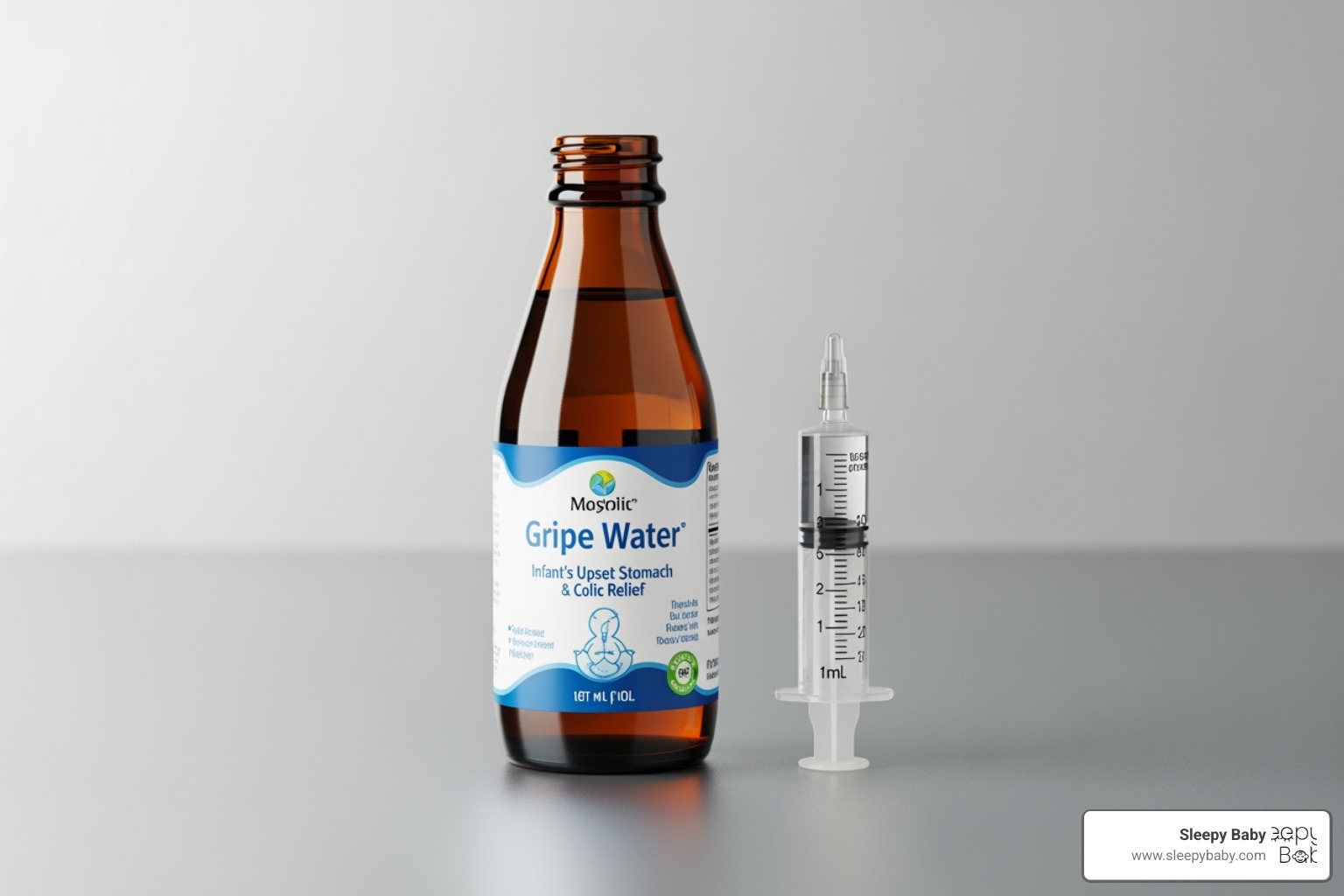
First, shake the bottle well. Then, read the package instructions carefully, as dosage and frequency vary by brand. It's crucial to stick to the maximum daily dose recommended on the package and by your doctor. With infant remedies, more is not better.
This is the most crucial step for safety. Generally, gripe water is not recommended for babies younger than 1 month old, as their digestive systems are too immature. Many products also have a minimum weight requirement, often at least 7 pounds, so check the label.
Each product has a specific dosage chart based on age or weight. For example, a brand might recommend different amounts for babies 1-6 months old versus those over 6 months. These are just examples, so always follow the package directions exactly. We highly recommend confirming the exact amount and frequency with your baby's healthcare professional. For more on timing, see our article: Gripe Water Clock: How Soon Will Your Baby Feel Better?.
How you give the dose is key to safety and effectiveness. Use the provided measuring syringe or dropper for precision—never a kitchen spoon.
Administer it directly into their mouth. Gripe water should never be diluted in water, breast milk, or formula, as this reduces its effectiveness and can lead to bottle refusal.
Hold your baby upright. Gently place the syringe tip inside their mouth, aiming for the side of their inner cheek, not straight down their throat. This helps prevent gagging. Most importantly, use slow administration. Dispense a few drops at a time, giving your baby time to swallow. Never give liquids to a crying child, as they are more prone to choking. A calm approach helps keep your baby calm.
When you give gripe water can make a difference. Many parents find it most effective immediately after feedings to proactively prevent gas pain. Others wait 30 minutes after a feeding to reduce spit-up. If your baby is too fussy to eat, you might try a dose 30 minutes before a feeding. Experiment to see what works best for your little one.
After giving the dose, monitor for relief. If symptoms don't improve or they get worse, stop giving gripe water and contact your pediatrician. You should also plan to stop use by the time your baby is 4 to 6 months old. At this age, a baby's digestive system matures, and gassiness typically becomes less of an issue.
While understanding how to give gripe water is useful, we believe in exploring non-medicinal soothing methods first. These alternatives are often more effective and can provide lasting comfort for a gassy or colicky baby.

Simple physical interventions often work wonders. Burping techniques are your first line of defense. Tummy time across your lap applies gentle pressure to the abdomen, helping move gas. Infant massage, with light, clockwise tummy rubs, and leg bicycling are also great for working out gas bubbles.
For more detailed techniques, our guide covers everything: Gas Relief 101: Easing Your Baby's Discomfort.
At Sleepy Baby, we know the impact a calm baby has on the whole family. Our mission is to support you with products that provide reliable soothing, giving you a break when you need it most.
When dealing with intense colic, a multi-faceted approach is best. Swaddling mimics the womb's security, while rocking and gentle movement are naturally calming. Pacifiers can also help, as sucking is a powerful self-soothing mechanism.
Sound therapy deserves special attention. While soft humming can help, white noise often provides the most consistent relief. Safety is crucial—modern safety-rated devices exist that present white noise at safe, low-decibel levels, sometimes on the baby's chest, ensuring the sound soothes without harming delicate ears.
This is where rhythmic tapping devices truly shine. Our Sleepy Baby products incorporate this innovative feature, mimicking a caregiver's comforting pat with consistent, gentle tapping. This hands-free approach provides soothing touch even when you're exhausted.
Feeding adjustments can also make a difference. For formula-fed babies, ask your pediatrician about switching formulas. Breastfeeding mothers might consider eliminating common irritants like dairy from their diet, under medical guidance. Using anti-colic bottles and keeping your baby upright during and after feedings can also help. For more tips, the Cleveland Clinic offers valuable advice for managing colic.
As parents learn how to give gripe water, a few questions always come up. Here are the most common concerns.
Many parents report seeing immediate relief within minutes, but results vary by baby. Some calm down almost instantly, while others might take 15-20 minutes. It's important to give the full dose as recommended for it to be effective. If you don't notice any improvement within 30 minutes, gripe water likely isn't the right solution for your baby's discomfort.
No, this is not recommended. The proper way for how to give gripe water is to administer it directly into your baby's mouth using the provided syringe or dropper.
Mixing it with formula or breast milk reduces its maximum effectiveness by diluting it. There's also a risk of bottle refusal if your baby starts associating their milk with an unpleasant flavor. Always give gripe water by itself.
Most babies should stop receiving gripe water by 4-6 months of age. By this time, their digestive system matures and they naturally experience less gassiness. The colicky phase that leads parents to try gripe water typically resolves by 3-4 months.
You should discontinue use immediately if gripe water seems ineffective or if you notice side effects like increased fussiness, constipation, vomiting, or signs of an allergic reaction. It's meant to be a temporary solution for a temporary problem.
Navigating the early months of parenthood can be a whirlwind, especially when your little one is fussy and you're exploring remedies like how to give gripe water. Your baby's comfort and safety are always the top priority.
Here are the most important takeaways to keep in your parenting toolkit:
At Sleepy Baby, we believe in empowering parents with innovative tools that support natural soothing. Our products mimic the comforting touches and sounds that babies instinctively respond to, offering hands-free, customizable solutions like rhythmic patting and safe, low-decibel white noise. We designed our products to reduce the guesswork and help you feel more effective when responding to your baby's needs.
Every baby is unique, and finding their perfect soothing solution is a journey. Whether you lean on gripe water or explore other avenues, we're here to support you on the path to a calmer, happier baby—and a more rested, happier you. For more insights, you might find our review of gas drops helpful: Relief in a Drop: Top Infant Gas Drops Reviewed.


