


If your 6 month old fighting sleep is leaving you exhausted, you're facing a common challenge of early parenthood. It's confusing, draining, and can make you feel like you're doing something wrong. You're not.
Quick Answer: Why 6-Month-Olds Fight Sleep
Around 6 months, a baby's brain develops at lightning speed. They're learning new skills, their sleep cycles are maturing, and they're more aware of their surroundings. This can turn good sleepers into tiny insomniacs.
Research shows that while infants this age need 12-16 hours of sleep daily, many experience night wakings and short naps. The good news is this phase is temporary. This guide offers practical, step-by-step solutions to help you and your baby get the rest you need.
I'm Gary Harutyunyan, founder of Sleepy Baby. I created our products after my own newborn struggled with sleep. Having steerd the challenges of a 6 month old fighting sleep firsthand, I'm here to share what actually works.
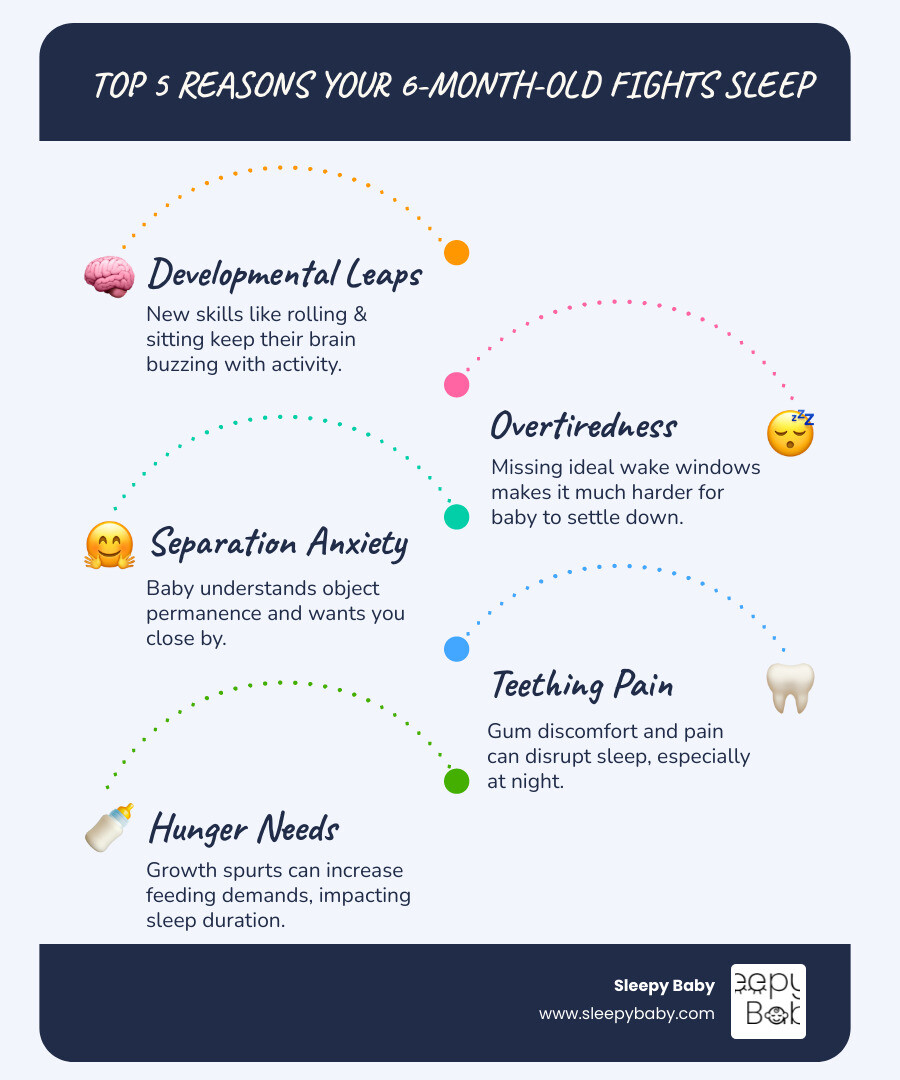
6 month old fighting sleep terms to learn:
At 6 months, your baby is experiencing explosive brain growth. This shows up in exciting new skills like rolling, pushing up, and maybe even sitting unassisted. But this progress can make sleep challenging.
Your baby's mind is buzzing with new information, making it hard to shut down at bedtime. They'd rather practice their new skills. At the same time, their sleep cycles are maturing into more adult-like patterns through a process called sleep consolidation. This transition can be bumpy, making your baby more sensitive to their environment. A room that's too bright or a sudden noise can easily disrupt their rest. They might even wake up in the middle of the night ready to practice sitting up.

What's often called a "sleep regression" is actually a "sleep progression." Your baby's development is moving forward so quickly that sleep is temporarily disrupted.
Signs of the 6-month sleep regression include:
This phase is temporary, usually lasting a few days to a few weeks. Your baby's brain is working overtime to master milestones like rolling, sitting, and babbling. They can't help but practice these exciting new skills, even at 2 AM. Maintaining consistent routines is key to navigating this period. If you've experienced the 4-month sleep regression, you'll find the strategies for managing it are similar.
It can be hard to tell if teething or a sleep regression is disrupting your baby's sleep. The key difference is the cause: teething is physical discomfort, while a sleep regression is developmental.
Look for these telltale signs to distinguish between the two:
Interventions differ accordingly. For teething, offer relief with safe teething toys or a cold washcloth. For more information, consult resources on teething and tooth care. For a sleep regression, focus on maintaining consistent routines and encouraging self-soothing. If both are happening at once, address the physical discomfort from teething first, then focus on sleep habits.
At 6 months, your baby's brain is too excited to switch off. They are mastering thrilling new skills like sitting up, rolling, and babbling, and they want to practice them constantly—even at bedtime. This isn't defiance; it's a natural part of their development.
Compounding this is the emergence of separation anxiety. Around this age, babies develop object permanence—the understanding that you still exist even when you leave the room. This cognitive leap can lead to:
To ease this anxiety, practice short separations during the day (e.g., leave the room for a minute and then return), always reassuring them you'll be back. A consistent, predictable bedtime routine is also crucial for providing comfort. For more tips, see these resources on how to ease separation anxiety. Understanding this stage is key to figuring out why your 6-month-old keeps waking up.
Ironically, a 6 month old fighting sleep is often exhausted. When babies become overtired, their bodies release stress hormones that make it harder to fall asleep. The key to preventing this is a solid schedule.
At 6 months, your baby needs 12-16 total hours of sleep, and adequate daytime sleep is crucial for better nights. Many babies are also consolidating their naps around this age, which can temporarily disrupt their schedule.
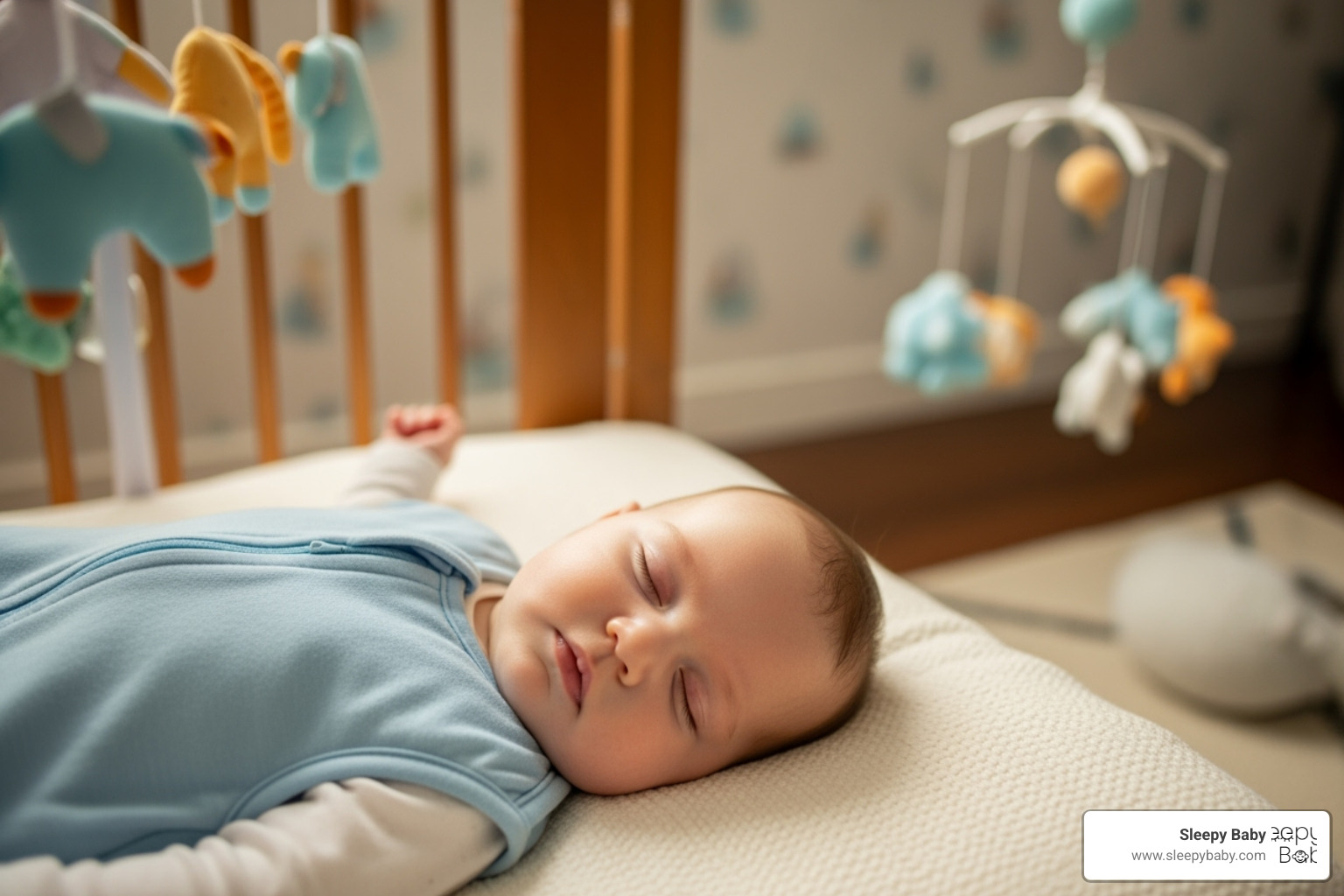
A "wake window" is the amount of time your baby can stay awake between sleeps before getting overtired. For a 6-month-old, the sweet spot is 2-3 hours. Stretching this window can lead to a cortisol spike that makes it nearly impossible for them to relax.
Watch for sleepy cues like yawning, eye rubbing, staring into space, or fussiness. Catching these early and putting your baby down while they are drowsy but still awake makes falling asleep much easier. For a deeper dive, learn the secret to understanding 6-month-old wake windows.
Most 6-month-olds need 3 naps a day to prevent the overtired cycle that leads to a 6 month old fighting sleep at bedtime. A typical day might follow this pattern:
If your baby consistently takes short naps (30-45 minutes), their wake windows may need adjusting. The goal is a flexible routine, not a rigid schedule, using wake windows as your guide. For more help, read about why your 6-month-old needs three naps a day and how to go about mastering the 6-month-old nap schedule.
Now that you know the "why" behind your 6 month old fighting sleep, let's focus on the "how." Actionable strategies and consistency are your best tools for building a strong sleep foundation.
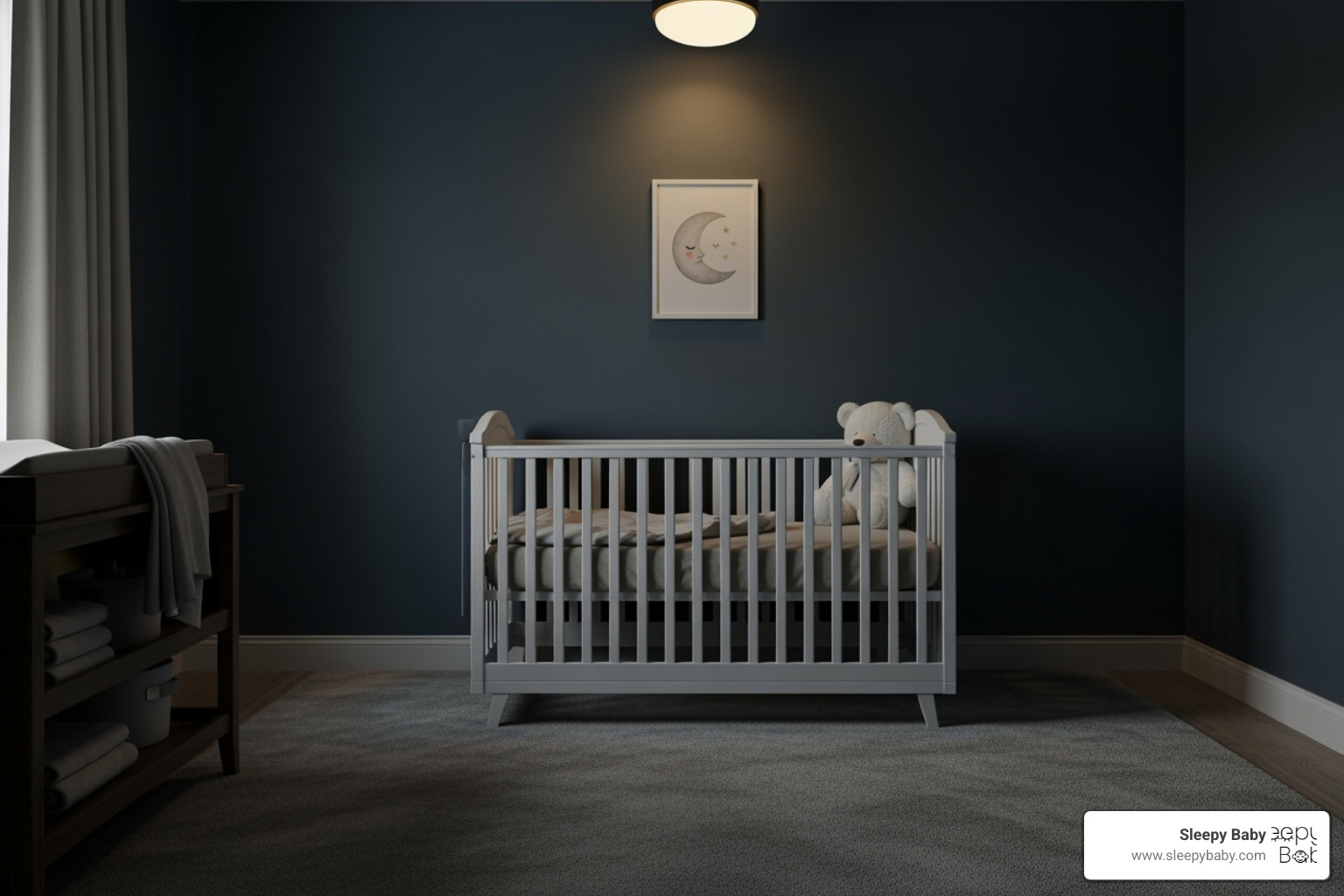
A predictable bedtime routine acts as a "power down" sequence, signaling to your baby that it's time to sleep. Aim for a calming, 20-30 minute routine in the same order every night.
Effective routine ideas include:
Consistency is more important than the specific activities. This predictability helps your baby feel secure. For more ideas, see our guide to mastering the 6-month-old sleep schedule.
A great sleep environment is crucial. Focus on these key elements:
Always follow AAP safe sleep guidelines: place your baby on their back in a crib free of loose items. For more details, see this guide on how to keep your sleeping baby safe.
Teaching your baby to fall asleep independently is a valuable life skill. The cornerstone of this is the "drowsy but awake" method: place your baby in the crib when they are sleepy but still conscious. This helps them learn to fall asleep without being rocked or fed to sleep.
Gentle sleep training methods for 6-month-olds don't involve leaving your baby to cry endlessly. They focus on responding to cries in a structured way, offering comfort with gentle pats or quiet words while gradually encouraging them to settle on their own.
When your baby cries at night, pause before rushing in. They may resettle on their own. If crying continues, offer minimal, brief comfort. This process requires patience and consistency. For a breakdown of different approaches, explore these effective sleep training methods for 6-month-olds.
When your 6 month old fighting sleep, the exhaustion can feel overwhelming. Please know that you are not failing. Parental stress and fatigue during sleep regressions are normal. A well-rested parent is not a luxury; it's a necessity for being patient and present with your baby. Lean on your partner, family, and friends for support.
Self-care is essential for survival during this phase.
While sleep regressions are normal, consult your pediatrician if sleep issues are accompanied by any of the following:
You should also seek help if you've consistently tried sleep strategies for 2-3 weeks with no improvement, or if the situation is causing significant distress to your family. A doctor or pediatric sleep specialist can rule out underlying medical issues and provide personalized guidance. Asking for help is a sign of proactive parenting.
This phase is temporary. Most families see symptoms of a 6 month old fighting sleep resolve within a few days to a few weeks. The exact duration depends on the cause (e.g., a developmental leap, teething) and your consistency with routines. A steady approach helps the phase pass more quickly.
Yes. In fact, 6 months is an ideal age for sleep training. Establishing independent sleep skills can help you steer the regression more smoothly. Sleep training is about teaching self-soothing while providing comfort and reassurance. Choose a method that feels right for your family and apply it consistently. For a breakdown of options, see our guide to effective sleep training methods for 6-month-olds.
This is a common sleep association, where your baby has learned that sleep only happens in your arms. When they wake between sleep cycles, they need you to fall back asleep. This is often intensified by separation anxiety. The solution is to gently teach independent sleep skills using the "drowsy but awake" method. By placing your baby in the crib while they are sleepy but still awake, you give them the chance to learn how to fall asleep on their own.
Dealing with a 6 month old fighting sleep is challenging, but remember: this is temporary. These sleep struggles are a normal sign of incredible brain growth, not a reflection of your parenting.
By understanding developmental leaps, wake windows, and separation anxiety, you now have a roadmap. Consistency is your best friend. Sticking to a soothing bedtime routine, optimizing the sleep environment, and gently encouraging self-soothing skills will help this phase pass more quickly and build a foundation for healthy sleep habits.
You don't have to do this alone. For extra support, intelligent sleep aids from Sleepy Baby can mimic your soothing touch with gentle patting and white noise, helping your baby learn to self-soothe. Having the right tools can make all the difference.
Take a deep breath. You're doing a great job, and sweet dreams are on the horizon.
Explore more tips and guides on our blog


