


White noise for baby is a continuous sound containing all audible frequencies at equal volumelike a fan's hum or steady rainfallthat masks sudden noises to create a calming sleep environment. Here's what you need to know:
Quick Answer: White Noise Benefits for Babies
If you're a sleep-deprived parent, you know the challenge of helping a baby settle. When rocking and swaddling aren't enough, white noise offers a science-backed solution that works with your baby's biology. The constant, gentle sound creates an auditory cocoon that blocks startling noises and recreates the familiar, rhythmic environment of the womb.
Modern solutions have evolved significantly. While some older machines posed safety concerns due to high volume, today's safety-rated devices deliver soothing sounds at safe, low-decibel levels. Some innovative models even rest gently on your baby's chest, combining sound with rhythmic patting for both auditory and tactile comfort.
I'm Gary Harutyunyan, and my own newborn's sleep struggles inspired me to create the Sleepy Babya device pairing rhythmic patting with womb-like sounds. My journey from desperate parent to sleep solution innovator taught me that the right combination of sound and comfort can transform impossible nights into peaceful rest for the whole family.
White noise for baby terms simplified:
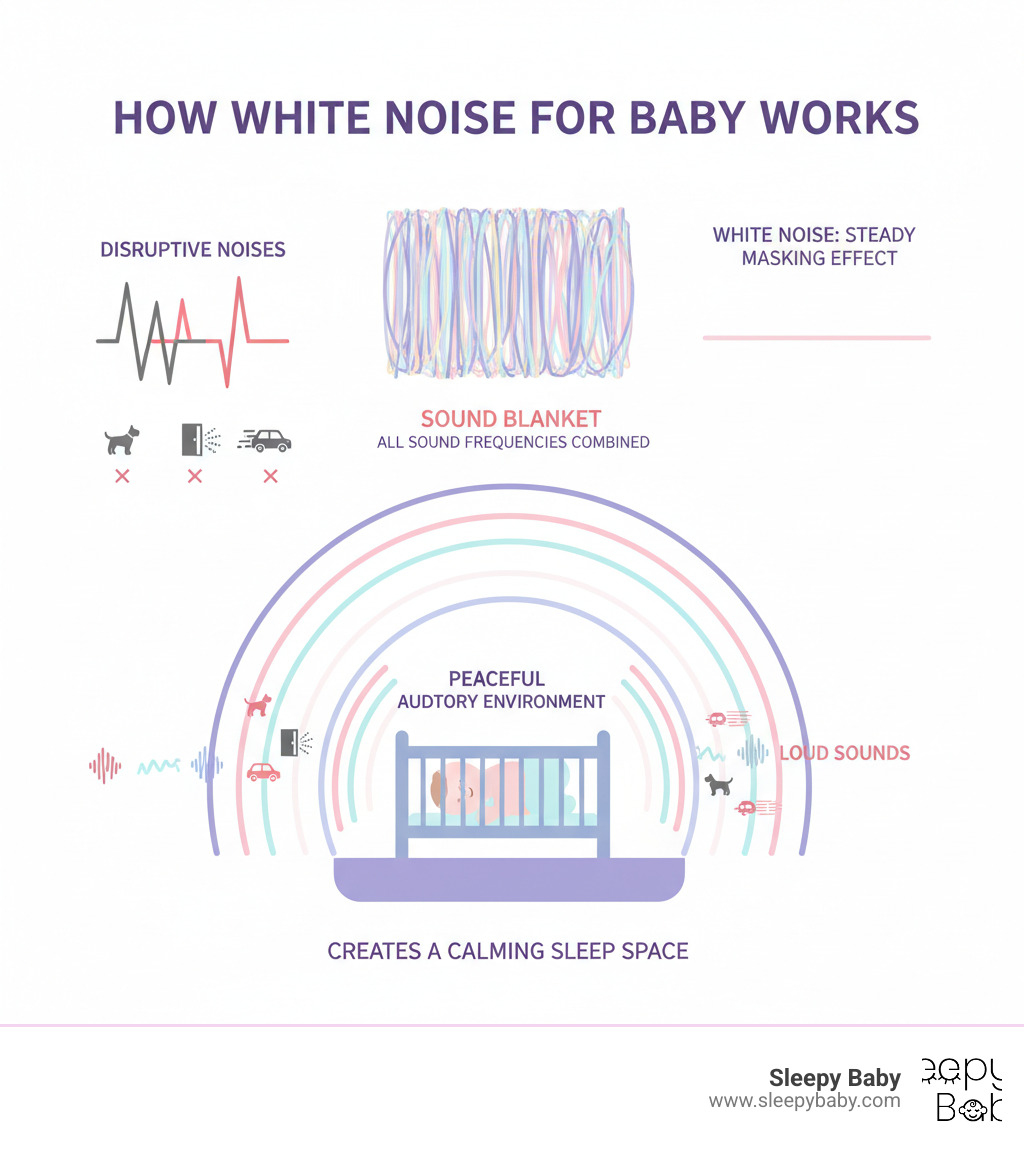
If you've ever wondered why white noise for baby sleep seems to work like magic, the answer lies in biology and physics. White noise is a unique sound containing all audible frequencies at equal intensity, like the steady hum of a fan or the whoosh of an air conditioner.
What makes this so special for babies is the "calming reflex." For nine months, your baby lived in a surprisingly loud environment. The womb isn't a quiet sanctuary; it's filled with the whooshing of blood flow and your heartbeat, reaching 85-90 decibels—as loud as a vacuum cleaner. When babies enter our relatively silent world, it can feel jarring. White noise for baby sleep works by recreating that comforting womb soundtrack, providing an auditory bridge to the security they once knew.
Beyond familiarity, white noise excels at masking distractions. A dog barking, a door closing, or even a creaky floorboard can easily startle a baby awake. White noise creates a consistent "sound blanket" that absorbs these sudden noises, preventing frustrating wake-ups. The science backs this up: A 1990 study found that 80% of newborns exposed to white noise fell asleep within five minutes, compared to only 25% of babies without it.
This masking effect can also help soothe internal discomforts like gas or teething fussiness by providing a consistent auditory backdrop. For more insight into your baby's earliest experiences with sound, check out the sounds of the womb.
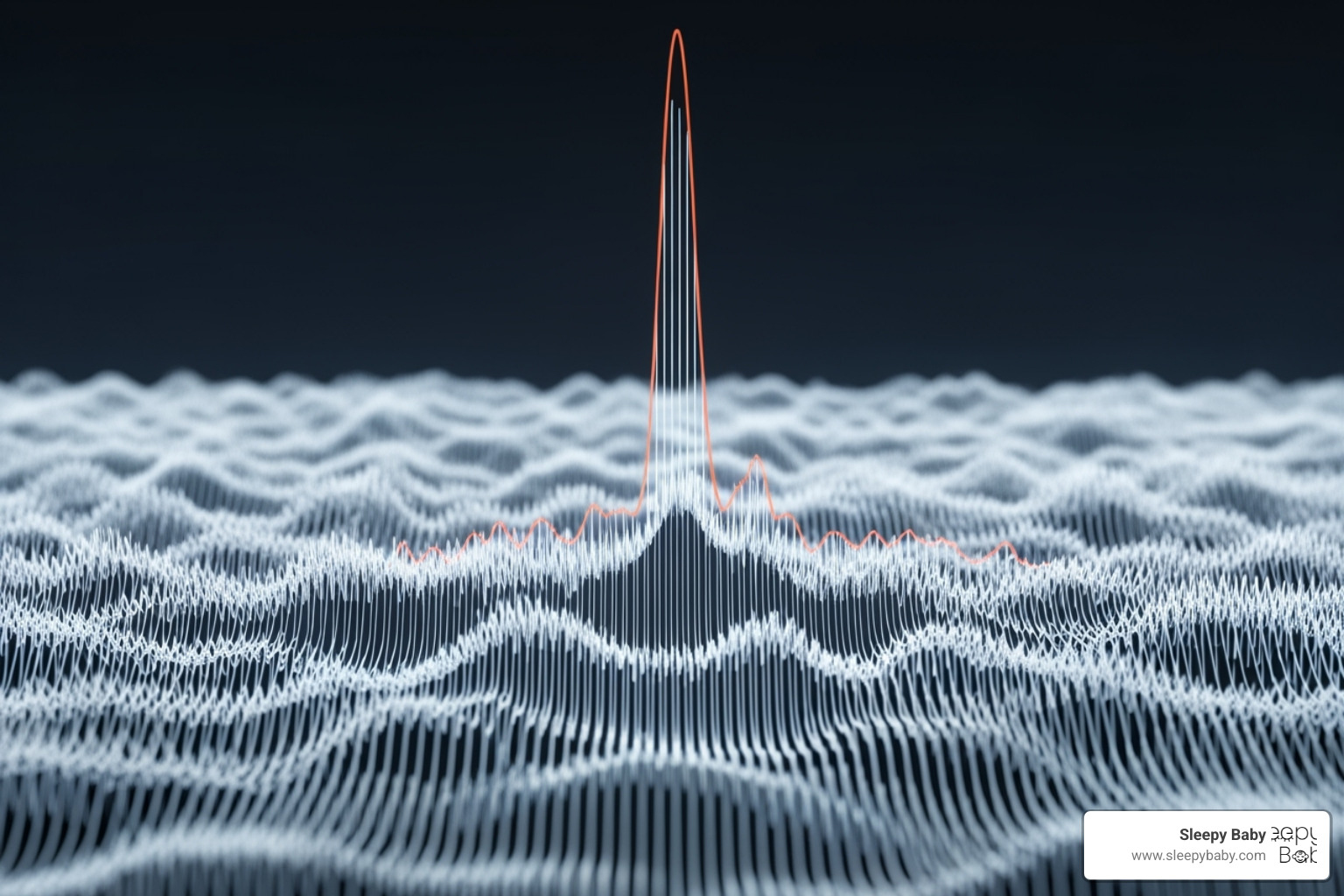
"White noise" is often used as a catch-all term, but there are different "colors" of noise with unique characteristics.
White noise contains all frequencies at equal intensity, creating the familiar "shhh" or static sound. It's excellent at masking a wide range of sudden noises.
Pink noise is deeper and less harsh. Its energy decreases as the frequency gets higher, resulting in a sound like steady rainfall or rustling leaves. Many find it more natural, and some research suggests it promotes deep sleep.
Brown noise (or red noise) emphasizes low frequencies even more, sounding like a deep rumble or a powerful river. This low-pitched sound is especially comforting because it closely resembles the deep, internal sounds of the womb, like blood flow. It can be particularly effective for fussy or colicky babies.
| Characteristic | White Noise | Pink Noise | Brown Noise |
|---|---|---|---|
| Sound Feels Like | Static, Hissing, 'Shhh' | Steady Rain, Rustling Leaves, Waterfall | Deep Rumble, Roaring River, Thunder |
| Frequency Focus | All frequencies equally | Higher intensity at lower frequencies, decreasing with higher octaves | Even higher intensity at lower frequencies, deep and powerful |
| Best For Baby | Masking sudden sharp noises, simulating womb for some | More soothing, less harsh, great for deeper sleep | Extremely calming for some, very womb-like, good for masking very low-frequency sounds |
Lower frequencies are often more soothing because they best replicate the predominantly low-pitched, rumbly sounds of the womb. When you use modern, safety-rated devices to deliver these sounds at safe levels, you're not just masking noise—you're actively recreating a familiar environment that tells your baby it's time to rest.
As a parent, it's natural to ask, "Is white noise for baby sleep actually safe?" While it offers incredible benefits, responsible use is key. Concerns about hearing damage and dependency are valid, especially since some older studies found that many machines could reach dangerously high sound levels. That's why the American Academy of Pediatrics recommends caution with volume.
Fortunately, modern, safety-rated devices are designed with your baby's delicate hearing in mind, delivering sound at safe, low-decibel levels. Some innovative devices even rest gently on your baby's chest, combining white noise with rhythmic patting to mimic a caregiver's touch. As for "addiction," it's better to think of it as a positive sleep association—a cue that signals rest time, much like a favorite blanket. It fosters independent sleep rather than preventing it. For help choosing a device, see our ultimate checklist for choosing a sleep machine.
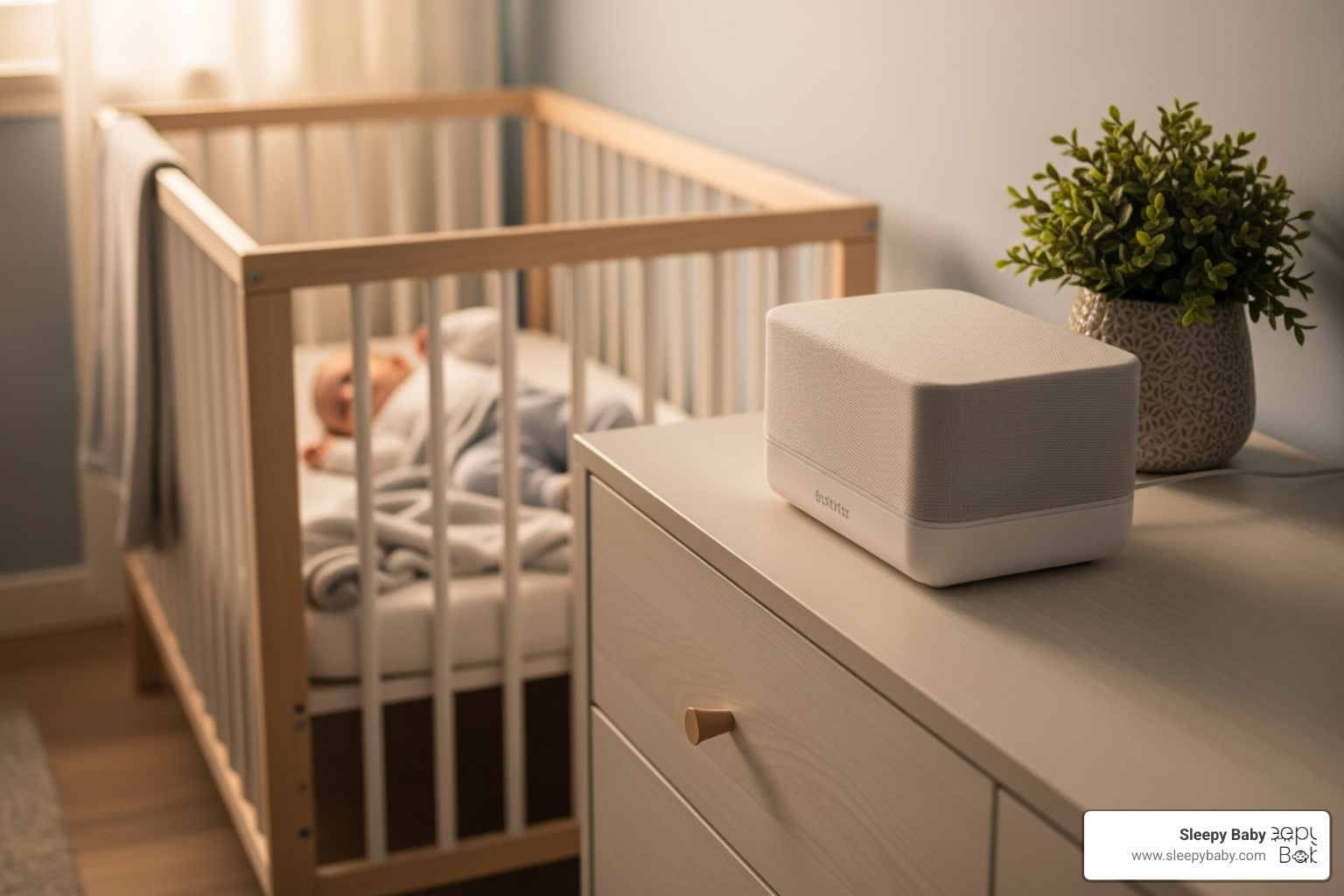
Follow these simple guidelines to protect your little one while maximizing sleep benefits.
Don't worry about creating a lifelong dependency. Many people use white noise for years because they sleep better with it, but if you decide to wean your child, it's a straightforward process. Most parents consider it after 12-18 months, once their child is sleeping well.
The gradual reduction method is least disruptive. Over 1-2 weeks, slowly lower the volume each night by a tiny notch. Continue until the sound is barely audible, then turn it off completely. If your baby struggles, just maintain the current volume for an extra night or two before continuing. Patience and consistency are key.
The world of white noise for baby products is vast, with options ranging from simple sound machines to sophisticated, multi-sensory devices. This variety means there's a perfect solution for every family's lifestyle and needs. When choosing, prioritize portability, sound options, and, most importantly, safety features. While some older machines posed risks with excessive volume, today's market is filled with modern, safety-rated devices designed for a baby's delicate hearing. For more on this, explore the top benefits of white noise machines.
If you appreciate modern convenience, smart sound machines are a great fit. Their standout feature is app control from your phone, allowing you to adjust settings without entering the nursery and risking waking your baby. These devices often offer customizable schedules for naps and nighttime, as well as night light functions with adjustable colors and brightness. They also provide a wide range of multiple sound options, including white, pink, and brown noise, nature sounds, and womb-like hums, so you can find what your baby responds to best.
Consistency is key to a baby's sleep routine, especially when you're away from home. Portable white noise devices are lifesavers for travel, visits to relatives, or even just a day out. They are compact enough for a diaper bag but powerful enough to create a familiar sleep environment anywhere. Look for features like rechargeable batteries and stroller straps or clips for convenience. Many portable options specialize in rhythmic shushing sounds, which are particularly effective for calming fussy babies on the go by mimicking a parent's soothing efforts.
The newest generation of sleep aids recognizes that babies experience the world through multiple senses. These modern, safety-rated devices combine low-decibel white noise with other comforting sensations to create a more holistic soothing experience. This approach mimics how you naturally comfort your baby—with sound, touch, and closeness.
Wearable and chest-placed devices are a major innovation. These aids rest gently on your baby's chest, delivering sound and physical sensations right where they are most comforting. The benefits of rhythmic tapping devices are significant; they are designed to mimic a caregiver's comforting touch through gentle, consistent patting motions. This combination of sound and touch activates the same calming pathways in your baby's brain as being held and soothed.
Our Sleepy Baby device embodies this philosophy, combining womb-like sounds with rhythmic patting to replicate the sensations of the womb. By providing hands-free, customizable soothing that engages both hearing and touch, these devices help babies learn to self-soothe and develop healthy sleep skills. For more on how these innovations are changing baby sleep, check out more on baby sleep noise machines.
We hear the same questions from parents exploring white noise for baby solutions. Let's address the concerns that might be keeping you up at night.
This is a common worry, but it's more accurate to call it a "sleep association" rather than an addiction. Think of it like your own pre-sleep routine, such as reading a book or having a fan on. For a baby, white noise is a positive and predictable cue that signals it's time to rest. It helps them feel secure and builds a healthy routine. And if you ever want to stop using it, you can. The gradual weaning process described earlier is typically a smooth and easy transition.
This depends on your situation, and either approach can work. Many parents play it continuously to mask disruptive noises—like a dog barking or a door slamming—that can wake a baby during lighter sleep cycles. This helps them transition between sleep stages without interruption. Others use a timer to turn the machine off after an hour or two, once the baby is deeply asleep and the house is quiet. The most important factor is following safety guidelines: keep the volume under 50 decibels and the machine at least 7 feet away. Observe your baby and choose what works best for your family.
For a colicky baby dealing with intense discomfort, low-pitched, rumbly sounds are often the most effective. This is because they closely replicate the loud, low-frequency environment of the womb—the whooshing of blood flow, the rumble of digestion, and the rhythmic heartbeat. Brown noise is often the best choice for colicky babies due to its deep, encompassing quality. You can also find machines or apps with specific womb sounds or heartbeat sounds, which can be profoundly calming.
A practical tip: when your baby is crying intensely, the sound may need to be slightly louder than usual to help them calm down. However, it is crucial to reduce the volume back to a safe level (under 50 dBA) as soon as they begin to settle.
As we've explored, white noise for baby is more than a parenting hack—it's a scientifically supported tool that can transform exhausting nights into peaceful rest. By recreating the comforting sounds of the womb and masking disruptive noises, white noise helps babies settle faster and sleep more soundly.
We've covered the science, the different types of sound, and the essential safety guidelines—always keep the volume under 50 decibels and the device at least 7 feet away. Modern parents have access to a range of solutions, from smart machines to portable aids. While some older white noise machines posed safety concerns, today's safety-rated devices are designed to be safe and effective. The most innovative options combine low-decibel sound with rhythmic patting, mimicking a caregiver's touch to provide multi-sensory comfort.
At Sleepy Baby, our mission is personal. We understand the desperation of sleepless nights and are committed to developing safe, innovative sleep aids that work. Our devices create a multi-sensory experience that helps babies learn to self-soothe, giving the whole family the rest they need.
Every baby deserves sweet dreams, and every parent deserves to feel confident in their approach to sleep. For more solutions to challenging sleep situations, explore our collection of gadgets and devices for colic relief and better sleep. Here's to quieter nights and well-rested families.


