


Baby crying for no reason is one of the most exhausting challenges new parents face. The truth is, babies always cry for a reason—it's just that the reason isn't always obvious. From their first cry at birth, crying is a baby's primary language to signal hunger, discomfort, or simply feeling overwhelmed.
What you need to know right now:
When you've checked the diaper, offered a feeding, and they're still crying, it's natural to feel helpless. But understanding the common patterns of infant crying can transform frustration into confidence.
I'm Gary Harutyunyan, and as a first-time father, I faced the same battle with baby crying for no reason. My journey from overwhelmed parent to inventor of the Sleepy Baby device taught me that most "unexplained" crying has patterns we can understand and address.
Key baby crying for no reason vocabulary:
While it might feel like they're crying for no reason, your baby is sending you messages. Let's explore what your little one might be trying to tell you.
If you've ruled out the obvious, do a quick head-to-toe check for things like a hair wrapped around a toe (a hair tourniquet), which can cause intense, unexplained crying.
For more insights, the Healthline article "Why Is My Baby Crying? Common Reasons and How to Soothe Them" offers helpful guidance. Understanding the difference between normal fussiness, colic, and illness can also save worry:
| Feature | Normal Fussiness | Colic | Illness |
|---|---|---|---|
| Duration of Crying | 1-3 hours/day, usually easily soothed | 3+ hours/day, 3+ days/week, 3+ weeks; inconsolable | Often persistent, unusual for the baby, and accompanied by other symptoms |
| Timing | Varies, often linked to specific needs | Often predictable, typically in the late afternoon/evening | Can occur at any time, may worsen suddenly |
| Baby's Demeanor | Happy/content between crying spells | Appears to be in pain during crying, but otherwise healthy | Lethargic, irritable, poor feeding, not alert, abnormal behavior |
| Physical Signs | Mild fussing, stretching | Flushed face, tense body (arched back, stiff legs/arms, clenched fists), bloated belly | Fever (especially <12 weeks), vomiting, bulging soft spot, changes in stool/urine, rash, weakness |
| Response to Soothing | Responds well to feeding, changing, cuddling | Resists most soothing efforts | May not respond to typical soothing, or only temporarily |
Let's clear up some common myths about baby crying.
Learning your baby's unique cries takes practice, but there are general patterns.

Body language is also a key indicator. A baby arching their back after feeding might have reflux, while clenched fists often signal hunger. For more detailed guidance, our article on "Why Your Baby Won't Stop Crying" dives deeper.
You've checked everything, yet your baby continues to cry. This is one of the most helpless feelings a parent can experience. But there's almost always a reason, even when we can't see it. The crying isn't random; it might be developmental, sensory overload, or simply your baby's nervous system learning to regulate itself.
Understanding these less obvious causes can help you approach your baby's tears with more patience and less panic. When we talk about unexplained crying, we're often dealing with a well-documented phase that many healthy babies go through. The Mayo Clinic provides comprehensive information on conditions like colic, a common reason parents feel their baby is crying without cause.
It's okay to feel frustrated or exhausted. The key is recognizing that this phase is temporary and that help is available.
Colic is frequent, prolonged, and intense crying in an otherwise healthy infant, affecting about 1 in 10 babies. It's defined by the "Rule of 3s": crying for three or more hours a day, three or more days a week, for three or more weeks.
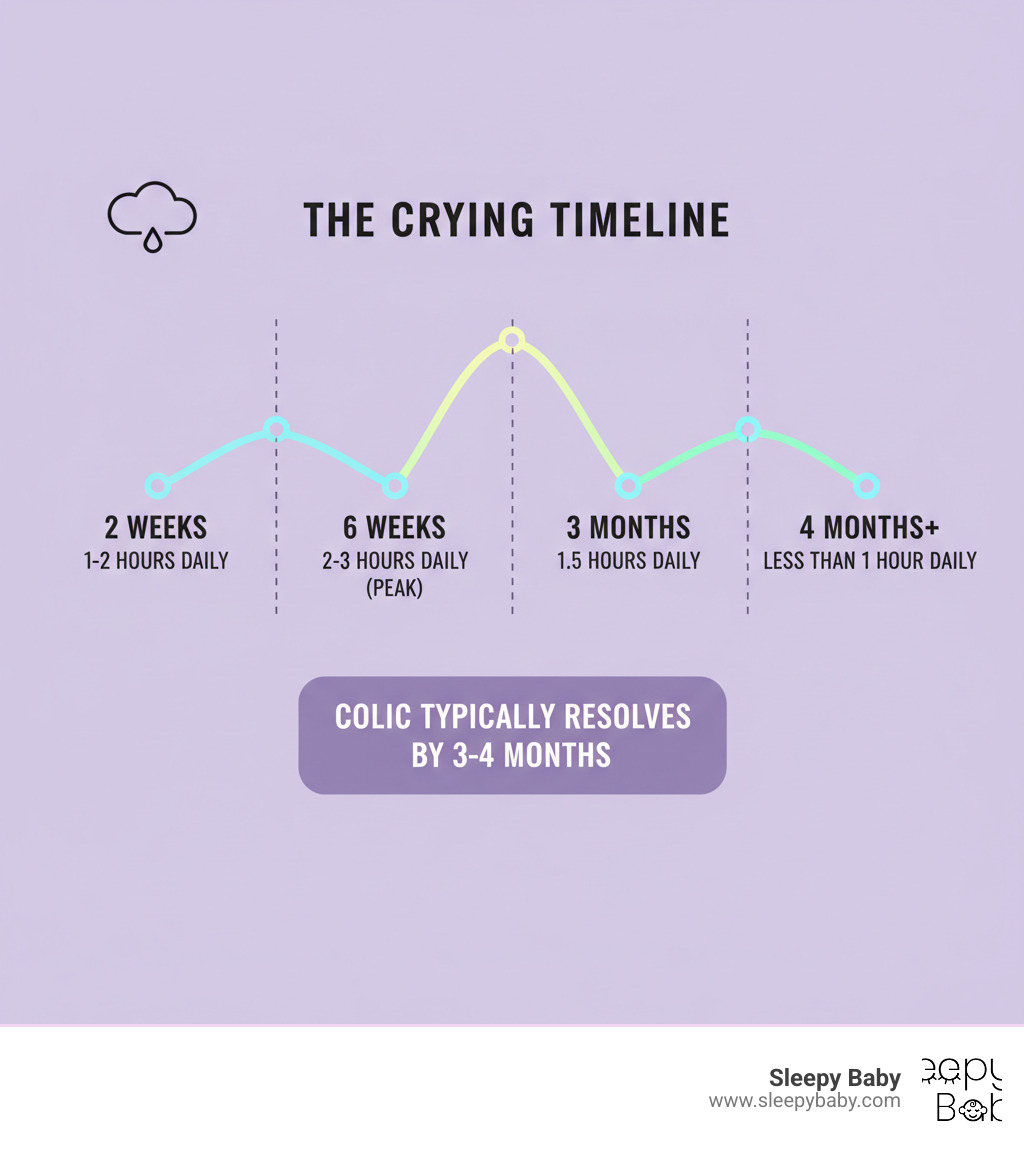
Colic typically starts around 3-4 weeks, peaks at 6 weeks, and resolves by 3-4 months. The crying is intense, high-pitched, and often occurs in the late afternoon or evening. A colicky baby's face may flush, and their body becomes tense: legs pulled up, fists clenched, and back arched. The cause isn't fully known but may involve an immature digestive system, food sensitivities, or an early form of childhood migraine.
While colic doesn't cause long-term medical problems for the baby, it's incredibly stressful for parents and is linked to postpartum depression and feelings of guilt and exhaustion. For a deeper understanding, read "The Colic Chronicles: Understanding Your Infant's Unstoppable Tears."
Beyond colic, there's a normal developmental phase called the Period of PURPLE Crying. PURPLE is an acronym that describes this intense crying phase:
This period begins around 2-3 weeks and resolves by 3-4 months. Understanding this phase helps parents realize they aren't failing; it's a normal, though challenging, part of infant development.

The "witching hour" is a predictable period of evening fussiness, typically striking between 5 p.m. and midnight. It starts around 2-3 weeks of age and improves by 3 months. The main causes include:
This phase is temporary. For more tips, our guide on "How to Calm a Fussy Newborn and Finally Get Some Sleep" offers practical advice.
When basic checks don't stop the crying, it's time to use your soothing toolkit. Many effective techniques work by recreating the comforting sensations of the womb.
One of the best frameworks is Dr. Harvey Karp's "5 S's," designed to activate a baby's "calming reflex." Beyond that, several other strategies can work wonders:
The key is finding what works for your baby, and remember that their preferences may change over time. For more insights, explore "From Fuss to Peace: How Baby Soothing Devices Help."
Here's how to use the 5 S's to calm your baby:

You can use these techniques individually or layer them together. The combination often works best to help your baby's nervous system shift from overwhelmed to calm.
Dealing with a constantly crying baby is emotionally and physically draining. The exhaustion and helplessness can be overwhelming, increasing the risk of postpartum depression, which affects up to 1 in 7 new mothers. Struggling doesn't make you a bad parent—it makes you human.
It's also critical to discuss shaken baby syndrome. In moments of extreme frustration, shaking a baby can cause severe brain damage or death. If you ever feel yourself losing control, put your baby down in a safe place like their crib and walk away. Your baby will be safe crying alone for a few minutes while you step into another room to breathe and regroup. This is responsible parenting.
Taking breaks is essential, not optional. Tag-team with a partner, or if you're solo, use moments when the baby is safe in their crib to step away. Asking for help is a sign of strength. Let family and friends bring meals or watch the baby so you can rest. Even small moments of self-care, like a five-minute walk or a warm cup of tea, are vital survival tools.
If feelings of sadness or anxiety persist for more than two weeks, please contact a healthcare provider. Postpartum depression and anxiety are treatable medical conditions.

While most crying is normal, trust your instincts. It's always better to call your pediatrician and be reassured than to wait and worry. Contact your doctor for:
If something feels wrong, even without obvious symptoms, call your pediatrician. For more guidance, see the American Academy of Pediatrics' resource on when to seek medical attention for excessive crying.
No parent should face this challenge alone. A strong support network is essential.
No. While it can feel that way, experts agree there is almost always a reason. It might be something subtle we can't easily identify, like overstimulation, overtiredness, a developmental leap, or an intense need for comfort. Periods like PURPLE crying are normal developmental phases where crying is intense and hard to soothe, but it's a physiological response to their rapidly developing nervous system, not truly "for no reason."
This intense phase is temporary. Crying typically peaks around 6 weeks of age and then significantly decreases by 3 to 4 months. This improvement happens as your baby's nervous system matures and they develop early self-soothing skills. While babies will still cry to communicate their needs, the prolonged, inconsolable crying of the early weeks usually subsides. If intense crying continues past 4 months, consult your pediatrician.
No, you absolutely cannot spoil a newborn. This is an outdated myth. In the early months, babies need physical contact to feel secure. When you respond promptly to your baby's cries, you are not creating bad habits; you are building a secure attachment. This teaches your baby that their needs matter and that the world is a safe place, which is a critical foundation for healthy development. Holding your baby, responding to their cries, and providing comfort is essential caregiving.
Navigating baby crying for no reason is a bewildering journey, but those tears are your baby's earliest form of communication. They are learning to manage an overwhelming new world, and you are their safe harbor. This intense period of crying is temporary. Most babies cry significantly less by 3 to 4 months of age as their nervous systems mature. The witching hours will pass, and the colic will resolve.
Until then, arm yourself with knowledge and patience. Practice soothing techniques like the 5 S's and, most importantly, take care of yourself. You cannot pour from an empty cup.
At Sleepy Baby, our mission is to bring tranquility to your home by supporting both babies and parents. We understand the profound exhaustion of fussy nights. That's why we created intelligent sleep aids that mimic a caregiver's comforting touch, offering rhythmic patting and safe, low-decibel white noise to promote better sleep for your little one—and much-needed rest for you. These modern, safety-rated devices can be used right on your baby's chest, providing the gentle, consistent comfort they crave.
When the crying feels overwhelming, know that you are not alone. You are doing an amazing job. For additional solutions, we invite you to discover top colic relief devices for babies on our blog.
From tears to tranquility—it's a journey we're honored to take with you.


