


Average diaper use per day depends on your baby's age, but here's what you can expect:
Quick Answer: Daily Diaper Usage by Age
| Baby's Age | Average Diapers Per Day | Monthly Total |
|---|---|---|
| 0-1 month (Newborn) | 8-12 diapers | 240-360 diapers |
| 2-4 months | 8-10 diapers | 240-300 diapers |
| 5-8 months | 6-9 diapers | 180-270 diapers |
| 9-12 months | 6-8 diapers | 180-240 diapers |
| 12+ months (Toddler) | 4-6 diapers | 120-180 diapers |
Understanding diaper usage is crucial, whether you're budgeting for your new arrival or building a baby registry. The reality is stark: most parents will use nearly 3,000 diapers in their baby's first year. This starts with 8-12 daily changes for newborns and gradually decreases to 4-6 as they become toddlers.
This guide breaks down what to expect at each stage, covering sizing, costs, and other factors so you can prepare without overbuying or running out at 2 AM.
I'm Gary Harutyunyan, and as a first-time father, I quickly learned that knowing the average diaper use per day was essential for budgeting and my baby's comfort. My experience, combined with a background in logistics, showed me how critical preparation is for new parents.
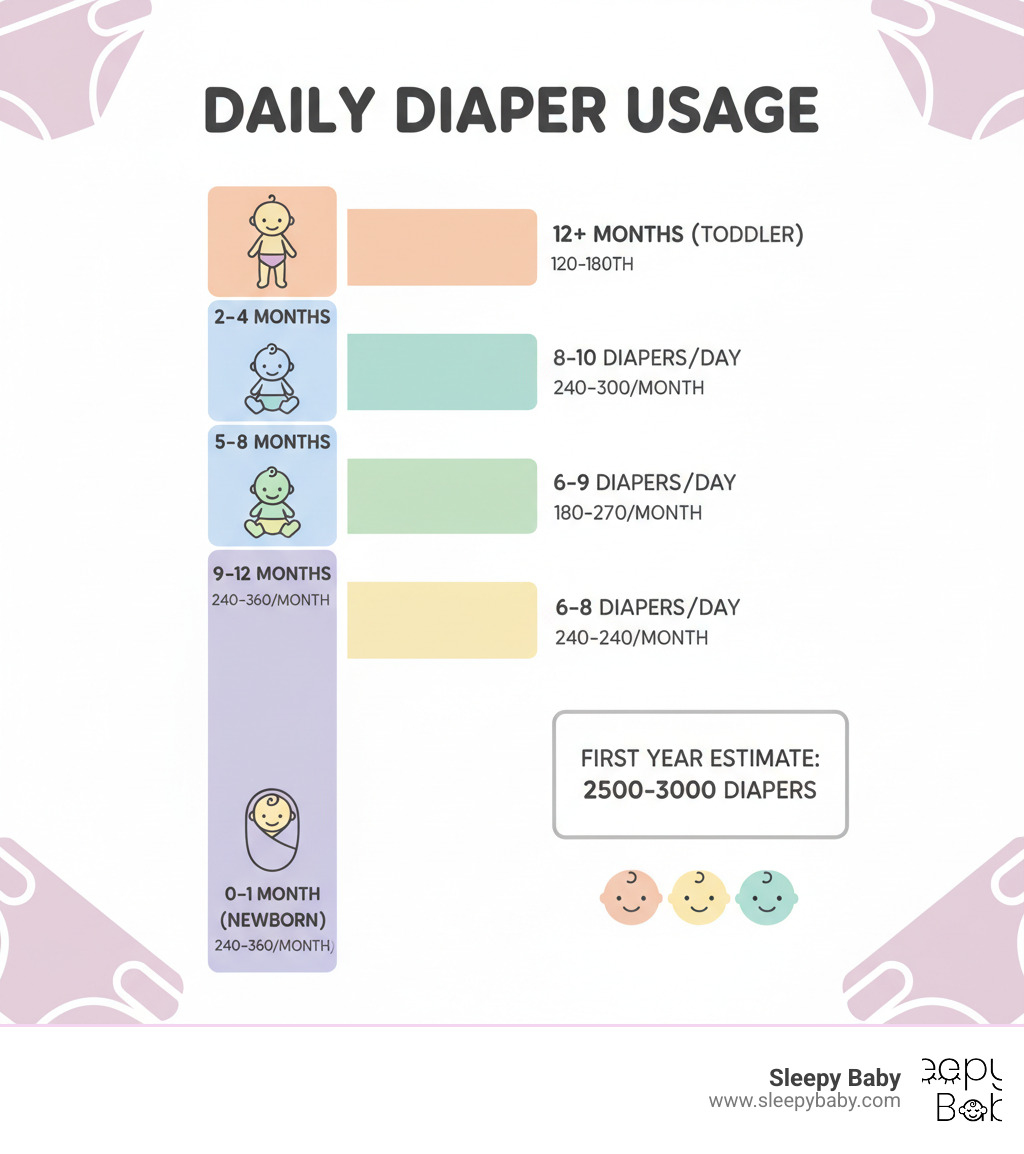
Average diaper use per day terms made easy:
Understanding the general patterns of average diaper use per day can help you prepare and budget. The changing frequency starts during the newborn weeks and gradually decreases as your baby grows. By the end of the first year, you'll have changed thousands of diapers. We'll break down what to expect at each stage so you can stock up smartly. For more insights into your baby's early development, check out our guide on newborn development at 3 weeks.
During the newborn stage (birth to one month), expect to change 8 to 12 diapers per day. This high frequency is due to tiny bladders and fast digestive systems, leading to urination every one to three hours and multiple daily bowel movements, especially for breastfed babies. The American Academy of Pediatrics notes that frequent feeding contributes to this. To prevent diaper rash, change the diaper after every urination or bowel movement, or at least every 2-3 hours. This amounts to 300 or more diapers per month, so be sure to stock up.
The good news? As your baby grows, diaper changes become less frequent as their bladder capacity increases and their digestive system matures.
During months 2 through 5, usage decreases slightly to 8 to 10 diapers daily as their bladder holds more and bowel movements become more predictable.
Between 6 and 12 months old, the average diaper use per day drops to 6 to 8 diapers. This often coincides with introducing solid foods, which changes the frequency and consistency of bowel movements.
Once your baby reaches the toddler stage (12 months and beyond), you'll typically change 4 to 6 diapers daily. Their bodies are more regulated, and they are developing bladder control, moving closer to potty training.
Most parents go through approximately 2,500 to 3,000 diapers during their baby's first year. This number varies based on factors like feeding method, metabolism, and growth rate, but a monthly breakdown helps with planning.
Estimated Diapers Needed Per Month (First Year):
This first year represents a serious investment in both money and effort, but every change keeps your baby clean, comfortable, and healthy. Though it feels endless in the moment, the first year flies by.
While averages are a helpful guide, the actual number of diapers your baby needs can vary. Every baby is an individual. Factors like metabolism, feeding method (breastfed babies often need more changes), overall health, and sleep patterns all influence diaper usage. Growth spurts can temporarily increase the number of changes, while longer sleep stretches might decrease it.
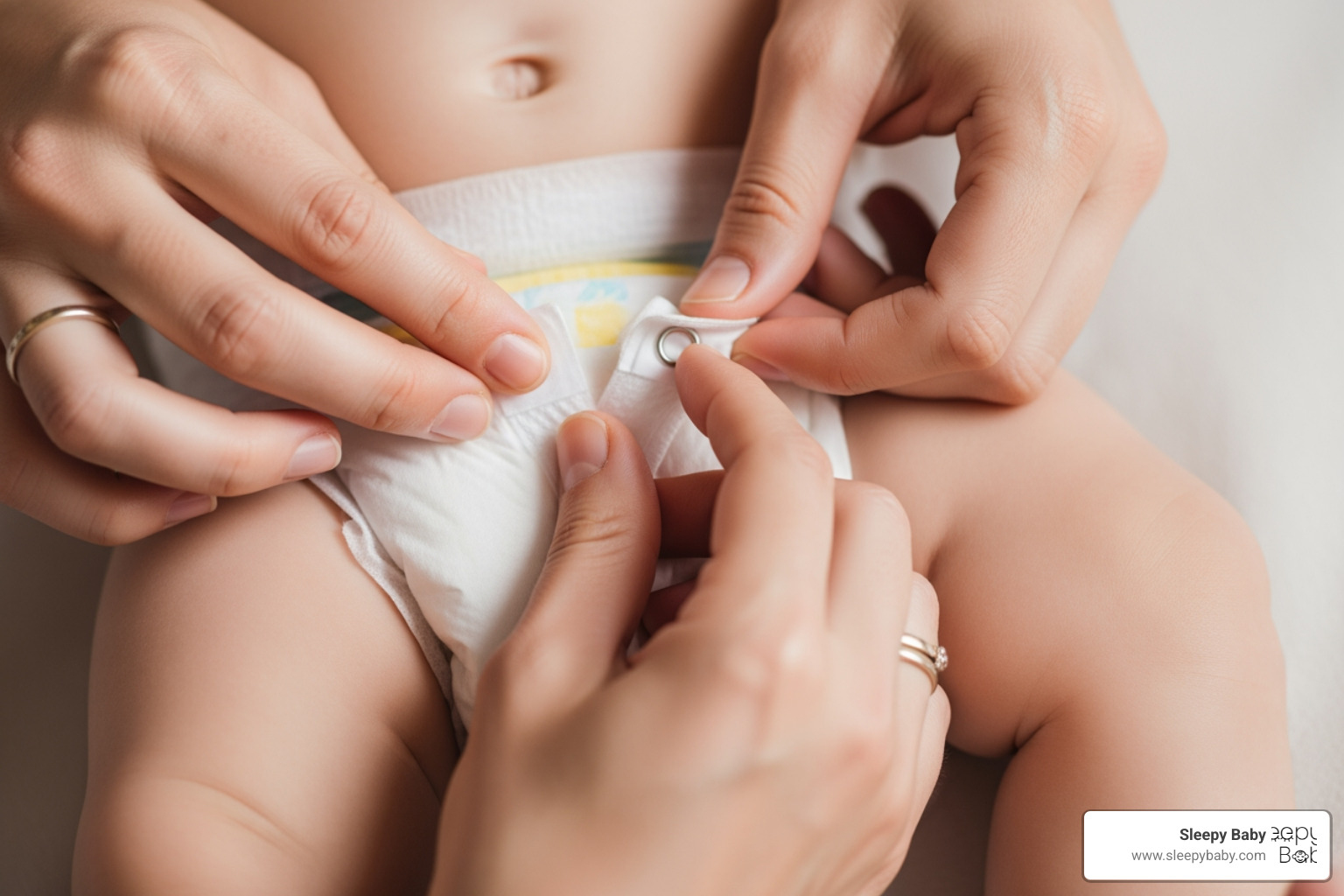
The key is to be flexible and respond to your baby's unique needs. Knowing the average diaper use per day helps with planning, but keeping your baby comfortable, dry, and healthy is what matters most, whether that means eight changes or twelve.
Diaper sizes are based on weight, not age, because babies grow at different rates. Always refer to the sizing chart on the package, as weight ranges can vary between brands. The Mayo Clinic information on infant growth confirms the wide range of normal growth, making weight the best guide for sizing.
The overlap in weight ranges provides flexibility between sizes. The key takeaway is to shop by weight for the most reliable fit.
The newborn diaper phase is often surprisingly brief. Healthy newborns grow rapidly, often gaining up to three pounds in their first month alone. This means most babies stay in newborn-sized diapers (for babies up to 10 lbs) for only 3 to 4 weeks on average. Some larger babies might even skip the newborn size entirely and go straight into Size 1.
This is why we recommend not overbuying newborn diapers. A couple of packages should be enough, with the bulk of your stock in Size 1. For more guidance on those early diapering days, our guide From Zero to Diaper Hero: Mastering Newborn Diapering walks you through everything you need to know.
A properly fitting diaper keeps your baby comfortable and prevents skin irritation. Here’s how to know when it's time to size up:
When your baby's weight is between two sizes, we recommend choosing the larger one for better absorbency and comfort.
Choosing between disposable and cloth diapers is a major decision involving your budget, lifestyle, and environmental values. There's no single right answer. Disposables create landfill waste, while cloth diapers use water and energy for washing. This choice impacts daily routines and finances, with disposables being an ongoing cost and cloth requiring a larger upfront investment. For a deeper dive, our article Choosing Wisely Between Disposable and Reusable Nappies can help you weigh the options.
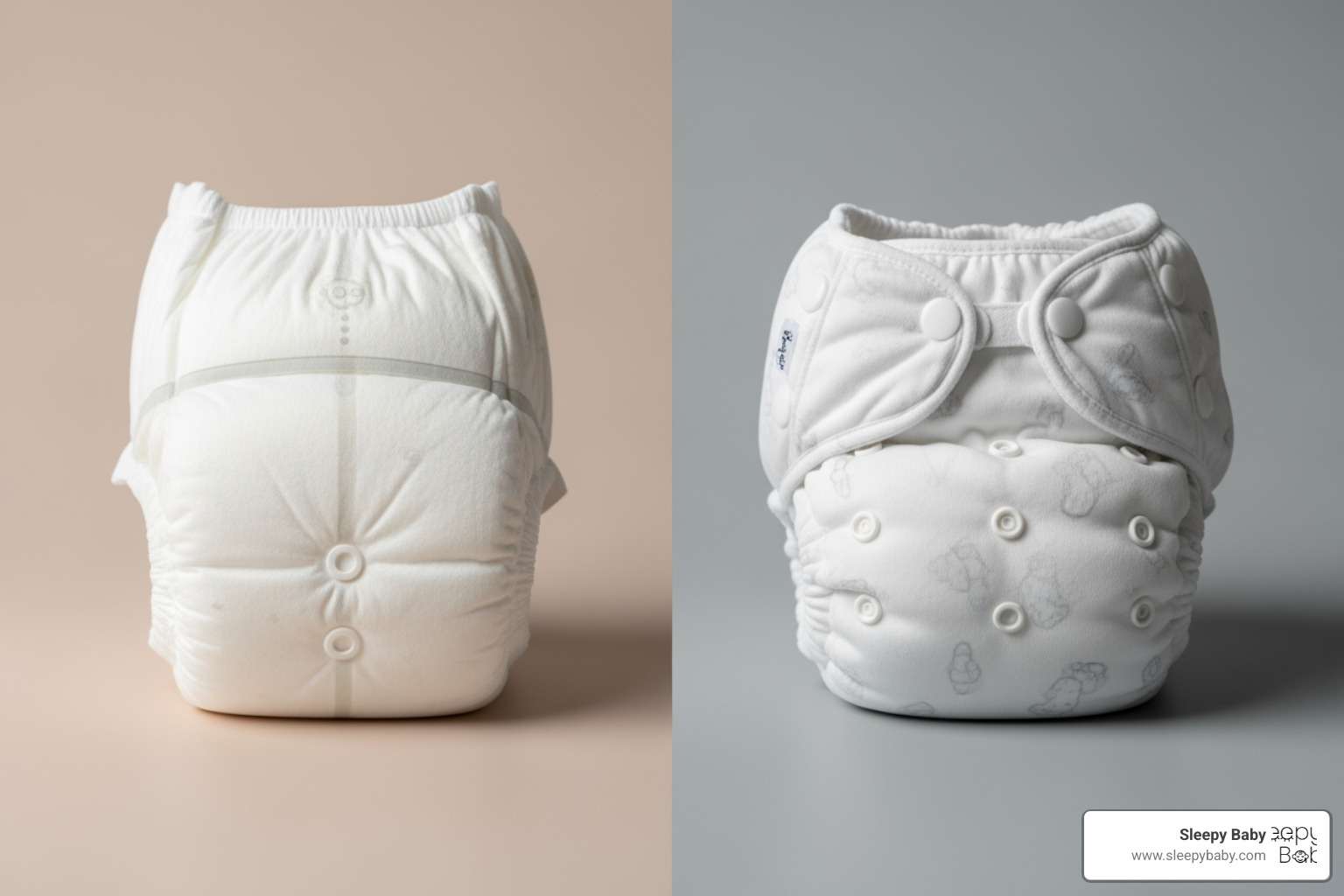
Yes, the average diaper use per day differs between disposable and cloth diapers, mainly due to absorbency.
Disposable diapers contain super-absorbent polymers that lock away liquid, sometimes allowing for more time between changes for wet-only diapers. However, frequent changes are always the priority to keep skin clean and dry.
Cloth diapers work differently and typically need to be changed more frequently to prevent rashes. A wet cloth diaper needs attention sooner than a disposable one.
To stay ahead of the laundry cycle (washing every 2-3 days), you'll need a stash of around 24-36 cloth diapers for a newborn.
The cost of diapers is a significant factor for many families.
Disposable diapers cost an average of $0.20 to $0.30 each. This adds up to roughly $50 to $90 per month. Over the first year, families can expect to spend $500 to over $900. Some estimates are even higher, depending on brand and bulk buying.
Cloth diapers require an initial investment of $300 to $600 for a complete stash. After this, ongoing costs are mainly for washing (water, electricity, detergent), typically running $150 to $300 for one year. Over 2-3 years, cloth diapers offer significant long-term savings, especially if reused for multiple children.
We understand that diaper costs can be a major financial burden. A 2023 National Diaper Bank Network survey highlighted this challenge. Organizations like the National Diaper Bank Network have local branches across the United States, Canada, and other regions where we operate, providing diapers to families in need. If you're facing diaper insecurity, please explore these valuable programs.
We've gathered the most common concerns about average diaper use per day and practical diapering situations to help you feel more prepared.
To avoid running out of diapers while away from home, a good rule of thumb is to pack one diaper for every two hours you plan to be out, plus at least two extras. For a quick four-hour trip, pack 2-3 diapers; for a full day, bring 6-8, especially for a newborn. Don't forget other essentials like wipes, a changing pad, and a wet bag for soiled clothes. For a complete list, see our guide on Newborn Diaper Bag Necessities You Didn't Know You Needed.
Stocking up on diapers before birth can save money and time, but it has risks. Babies grow incredibly fast, so overbuying one size can leave you with unusable diapers. Newborns often stay in that size for only 3-4 weeks, and some larger babies skip it entirely.
Our recommendation: Have a modest supply of newborn diapers (2-3 weeks' worth) but focus your stocking efforts on Size 1 diapers, which get more use. On your baby registry, ask for various sizes or gift cards. Since babies spend the most time in Sizes 3 and 4, stocking up on these during a sale is a smart long-term investment. It's also wise to try smaller packs of different brands first to see what fits best.
For more guidance on preparing for your baby's arrival, check out our comprehensive From Onesies to Cribs: Your Complete Baby Registry Checklist.
This question is about balancing your baby's comfort with everyone's need for sleep. The good news is, you can often let sleeping babies lie.
Overnight diapers are designed with extra absorbency to handle longer stretches. Investing in quality overnight diapers can make a significant difference. Our general philosophy is: if your baby is sleeping peacefully and their diaper isn't leaking or soiled with poop, there's no need to wake them. Modern diapers wick moisture away, and a good barrier cream adds extra protection.
That said, always change a poopy diaper immediately to prevent diaper rash. A change is also needed if the diaper is leaking or your baby seems uncomfortable. If you do a dream feed, you can do a quick diaper check, but only if it won't fully wake your baby.
This is where Sleepy Baby's mission comes in. Our intelligent sleep aids feature rhythmic patting and white noise to promote better sleep. While some white noise machines can be unsafe, modern safety-rated devices exist that present white noise at safe, low-decibel levels, sometimes integrated into devices placed on the baby's chest. The rhythmic tapping devices we've developed mimic a caregiver's touch, providing hands-free soothing that helps babies resettle without fully waking. This means more restful sleep for everyone.
For tips on preventing diaper rash, our article Beat the Rash: Best Remedies for Your Baby's Bottom offers excellent advice.

Understanding the average diaper use per day—from 2,500 to 3,000 diapers in the first year—equips you for the journey ahead. The initial pace of 8-12 daily changes will slow as your baby grows. The most important thing is to focus on a proper fit for your baby's comfort, which means fewer leaks and a happier baby.
Our best advice is to be prepared but flexible. Stock up sensibly on Size 1 diapers, avoid overbuying newborn sizes, and watch for signs that it's time to size up.
At Sleepy Baby, we know a comfortable, dry baby is more likely to be a sleeping baby. This is central to our mission of supporting parents and promoting better sleep for the whole family. Through proper diapering advice or our intelligent sleep aids with rhythmic patting and safe white noise, we help create the peaceful moments you deserve. When your baby sleeps well, everyone thrives.
Ready to find more ways to support your baby's comfort and sleep? Explore more baby care tips on our blog for practical guidance on every aspect of your parenting journey.


