


When to use baby powder and diaper cream is a common question for new parents. The answer from medical experts is clear: use diaper cream for diaper rash and avoid baby powder for infants due to serious inhalation risks. Diaper cream, with ingredients like zinc oxide, creates a protective barrier against moisture. In contrast, baby powder (talc or cornstarch) poses lung damage risks if inhaled and offers no benefit that diaper cream doesn't provide more safely.
| Product | When to Use | Medical Recommendation |
|---|---|---|
| Diaper Cream | At first sign of redness; with every diaper change during a rash; for prevention on sensitive skin | ✓ Recommended by AAP and pediatricians |
| Baby Powder | Not recommended for diaper area | ✗ AAP advises against use due to inhalation risks |
For decades, baby powder was a diaper bag staple, used to keep skin dry and prevent rashes. However, research has revealed significant safety concerns. The American Academy of Pediatrics (AAP) now advises against using talc powder on babies due to the risk of severe lung damage from inhalation. Cornstarch powder also poses inhalation dangers and can worsen yeast infections.
Diaper rash affects at least half of all babies, appearing as red, irritated skin. Most cases clear up in 2-3 days with proper home treatment using barrier creams. The rash is typically caused by prolonged exposure to moisture and waste, which diaper cream effectively blocks by creating a protective shield.
I'm Gary Harutyunyan, and as a first-time father who struggled through countless sleepless nights, I learned that understanding when to use baby powder and diaper cream is crucial for keeping babies comfortable, which directly impacts their ability to sleep well. This knowledge helped me create solutions for better baby rest, and I'm here to share what medical experts recommend based on current research.
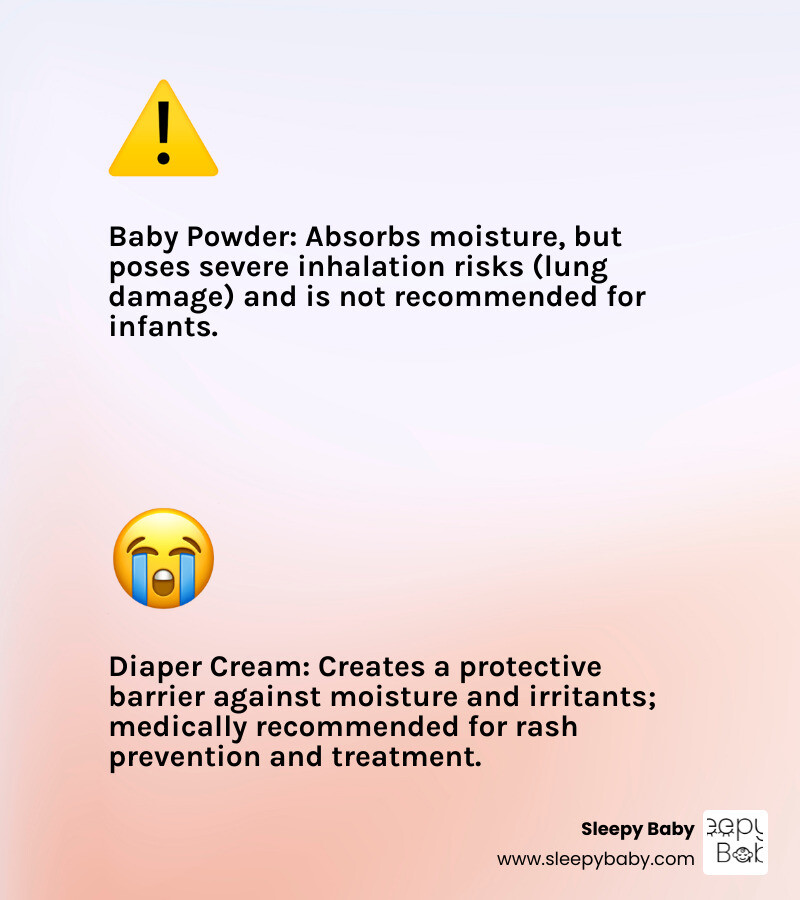
Simple when to use baby powder and diaper cream glossary:
To know when to use baby powder and diaper cream, understand their different functions. Though both are traditional diapering products, their mechanisms and safety profiles are vastly different.
Baby powder was designed to absorb moisture and reduce friction. Made from talc or cornstarch, its fine particles sit on the skin to soak up dampness, with the goal of preventing irritation.
Diaper cream works by creating a protective barrier. Instead of absorbing moisture, it shields the skin from wetness, urine, and stool. Key ingredients like zinc oxide and petroleum jelly form a water-resistant layer that prevents irritation and allows skin to heal. In short, baby powder mops up moisture after contact, while diaper cream prevents contact altogether.
| Feature | Baby Powder | Diaper Cream |
|---|---|---|
| Purpose | Absorbs moisture to reduce chafing and friction | Creates a protective barrier against moisture and irritants |
| Key Ingredients | Talc (not recommended by AAP) or cornstarch | Zinc oxide, petroleum jelly, calendula, lanolin |
| How It Works | Fine particles sit on skin surface and absorb dampness | Forms a thick, water-resistant shield on the skin |
| Medical Recommendation | ✗ AAP advises against use due to inhalation risks | ✓ Recommended by AAP and pediatricians for prevention and treatment |
The medical community's stance has shifted dramatically. The American Academy of Pediatrics strongly advises against using talc powder on babies due to the risk of lung damage if inhaled. Cornstarch-based powders also pose inhalation dangers and can worsen yeast infections by providing a food source for the fungus.
Diaper cream has no inhalation risk and is recommended by pediatricians for both preventing and treating diaper rash. Its ingredients also promote healing. Zinc oxide has mild antiseptic and soothing properties, while petroleum jelly locks in natural moisture and blocks external wetness, creating an ideal healing environment.
If you're looking to build a complete diapering setup, check out our guide on newborn diaper essentials that every parent should have on hand.
Understanding these core differences makes it clear why modern guidance has shifted so dramatically. When you know when to use baby powder and diaper cream—or more accurately, when to skip the powder entirely—you're setting your baby up for healthier, more comfortable skin.
Despite its nostalgic image, medical professionals universally advise against using baby powder on infants. The risks significantly outweigh any benefits when deciding when to use baby powder and diaper cream.
The primary risk of any baby powder is inhalation. The fine particles can easily become airborne and enter a baby's delicate lungs, causing serious harm.
Inhaling these particles can lead to severe lung damage and breathing problems like coughing and wheezing. A baby's respiratory system is not equipped to handle these foreign bodies, and exposure can cause inflammation, irritation, and even chronic respiratory issues. The American Academy of Pediatrics (AAP) explicitly advises against using talc powder on babies for this reason.
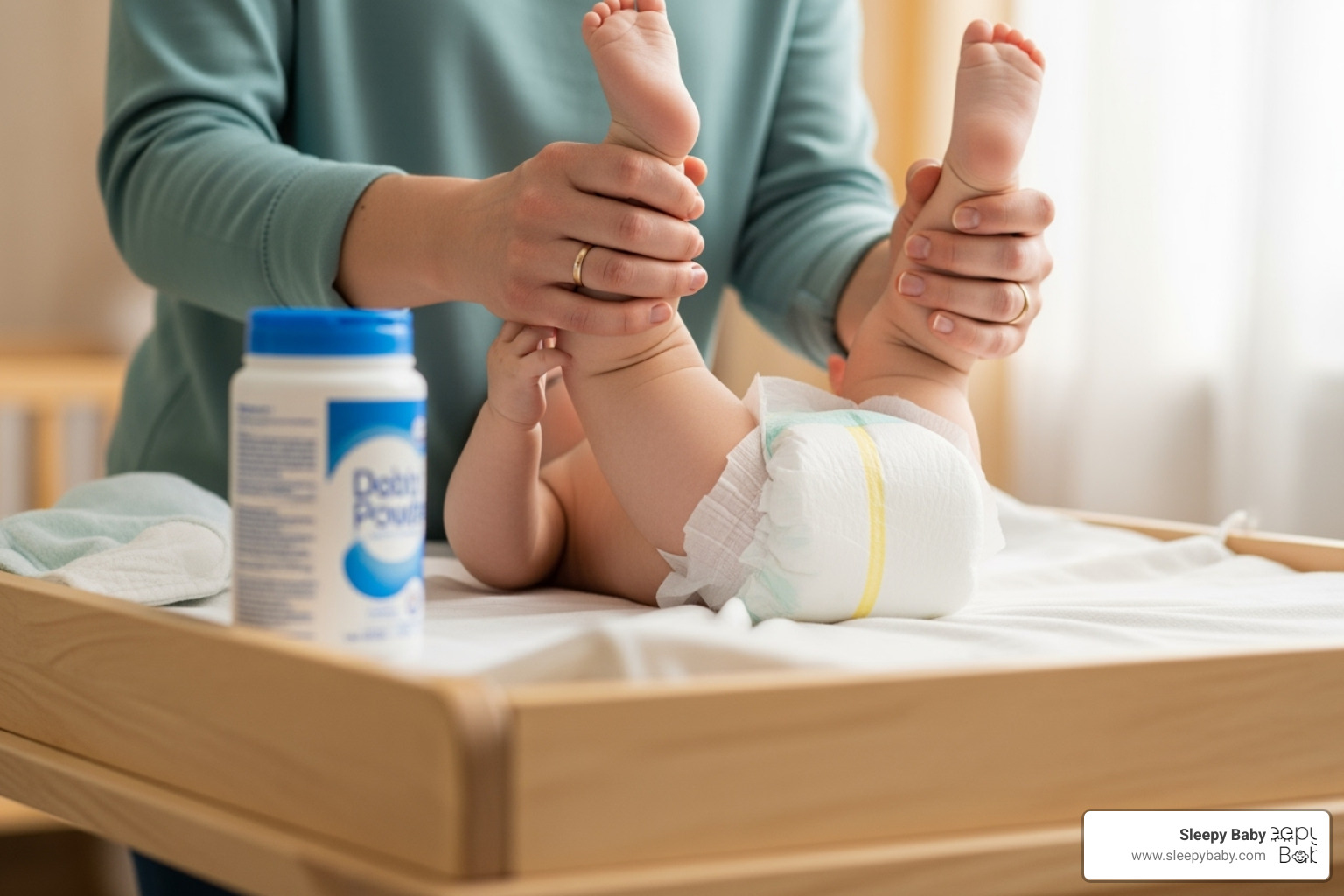
Traditional baby powders were made from talc, a mineral with its own set of concerns.
Asbestos contamination is a major issue. Talc is mined near asbestos, a known carcinogen. While cosmetic-grade talc is supposed to be asbestos-free, historical contamination has led to lawsuits alleging a link between long-term genital use of talc powder and ovarian cancer. The International Agency for Research on Cancer (IARC) classifies genital talc use as "possibly carcinogenic to humans." Given the documented link between talc and asbestos, it's an unnecessary risk for babies.
Though it avoids the asbestos issue, cornstarch-based powder is not a safe alternative.
First, cornstarch can worsen yeast infections. Yeast feeds on cornstarch, so applying it to a yeast-related diaper rash can aggravate the infection and delay healing.
Second, cornstarch powder poses the same inhalation risk as talc. Its fine particles can be inhaled, leading to the same respiratory dangers.
Due to these risks, neither talc nor cornstarch powder is recommended for babies. When considering when to use baby powder and diaper cream, the clear answer is to skip the powder and use diaper cream for safe protection.
The question of when to use baby powder and diaper cream has a simple answer from modern medicine: always choose diaper cream. Here’s a guide on when and how to use it effectively.
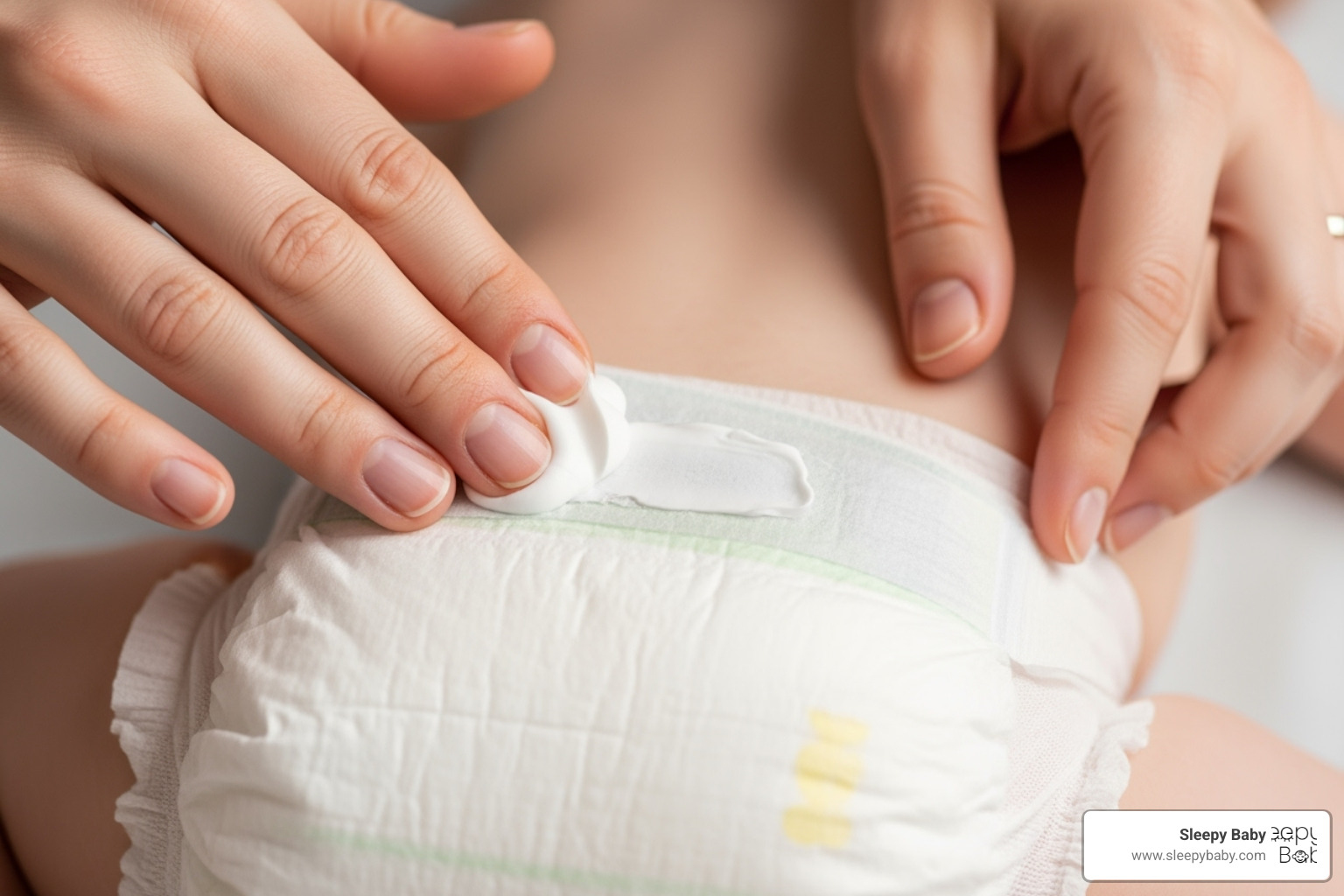
Diaper cream serves as both a preventative shield and a healing treatment.
For more helpful strategies on dealing with those pesky rashes, check out our guide on Beat the Rash: Best Remedies for Your Baby's Bottom.
Proper application is key for the best results.
While baby powder is not recommended for infants, some adults use talc-free powder for chafing, though they should still be mindful of inhalation risks. Safer alternatives like anti-chafing creams are often more effective.
On the other hand, diaper cream is a versatile tool. Its barrier and healing properties work well on other minor skin issues, such as drool rash on a baby's chin, minor scrapes, or dry, chapped skin patches.
Diaper rash is common, affecting at least half of all infants, especially between 9-12 months. Fortunately, most cases are preventable and treatable at home.

Preventing diaper rash is easier than treating it. The main cause is prolonged skin contact with moisture from urine and stool.
Most diaper rashes improve within 2-3 days with home care. However, call your pediatrician if you notice:
For more details, the American Academy of Pediatrics offers guidance on Common Diaper Rashes & Treatments.
When selecting a diaper cream, focus on the ingredients.
Look for:
Avoid:
Always read labels carefully to ensure the product is safe and effective for your baby.
Here are answers to common questions about when to use baby powder and diaper cream.
No. Using them together is not recommended. The powder can cause the cream to clump, which traps moisture against the skin and reduces the cream's effectiveness. This can worsen irritation. Furthermore, applying powder still creates an inhalation risk for your baby. Stick to using only diaper cream in the diaper area.
This depends on your baby's skin. For prevention, especially if your baby has sensitive skin, a thin layer applied once or twice a day (like before bedtime) can be helpful. However, diaper cream is primarily for treatment. At the first sign of redness, start applying it with every diaper change until the skin is clear. Then, you can go back to using it only as needed.
For the diaper area, the safest and most effective alternative to powder is diaper cream. It provides a protective barrier without any inhalation risks.
For absorbing moisture in other areas like neck or armpit folds, the best practice is to keep the area clean and dry. While some talc-free powders exist, they still pose an inhalation risk and must be used with extreme caution (apply to your hands away from the baby, then pat on). A safer approach is to ensure the folds are thoroughly dried after bathing and, if needed, apply a thin layer of a gentle cream.
When it comes to when to use baby powder and diaper cream, modern medical research makes the choice simple: reach for the diaper cream and leave the powder on the shelf. Diaper cream safely creates a protective barrier, soothes skin, and promotes healing. Baby powder, in contrast, carries serious inhalation risks and should be avoided for infants.
A rash-free baby is a happier, more comfortable baby, and a comfortable baby sleeps better. When your little one isn't fussing with irritated skin, they can settle more easily and sleep more soundly, which means more rest for the whole family.
While proper diaper care is a foundation for comfort, you can improve your baby's sleep environment even further. While some white noise machines can be unsafe if too loud, modern, safety-rated devices like those from Sleepy Baby are designed with your infant's well-being in mind. Our sleep aids deliver white noise at safe, low-decibel levels—sometimes directly on the baby's chest—to soothe without risk. They also feature gentle, rhythmic tapping that mimics a caregiver's comforting touch, creating a consistent and calming space that helps babies drift off to sleep and stay asleep longer. It's all about giving your little one, and you, the peaceful rest you both deserve.
We hope this guide has helped you feel more confident in caring for your baby's delicate skin. Every diaper change is an opportunity to keep your baby comfortable and happy.
Explore more expert tips on our baby blog for more ways to support your baby's comfort and sleep.


