


6 month old wake windows are the ideal amount of time your baby should be awake between sleeps. For most 6-month-olds, this is 2-3 hours. Getting this timing right is crucial for preventing the overtiredness cycle where an exhausted baby fights sleep.
Quick Answer for 6 Month Old Wake Windows:
Think of wake windows as your baby's internal clock. As they stay awake, sleep pressure builds. Hit the sweet spot, and they fall asleep easily. Miss it, and stress hormones like cortisol make sleep nearly impossible.
At 6 months, your baby's circadian rhythm is maturing, allowing for more predictable sleep patterns. They need about 14 hours of total sleep in 24 hours, with 11-12 hours at night and the rest in 2-3 naps. My own struggles with my baby's sleep led me to dive deep into understanding 6 month old wake windows and create solutions that help families find their rhythm and well-being.
A wake window is the time from when your baby wakes up until you put them down for their next sleep. Getting this timing right is the difference between a peaceful nap and a struggle.
The science behind 6 month old wake windows involves sleep pressure. As your baby is awake, a chemical called adenosine builds in their brain. When it reaches the right level, they are primed for sleep. If they stay awake too long, their body releases cortisol, a stress hormone that causes a "second wind" and makes it hard to settle. On the other hand, putting them down too early means not enough sleep pressure has built up, leading to short naps or nap resistance.
Research on the development of the circadian system shows that by working with your baby's maturing internal clock, you encourage better naps and longer night sleep.
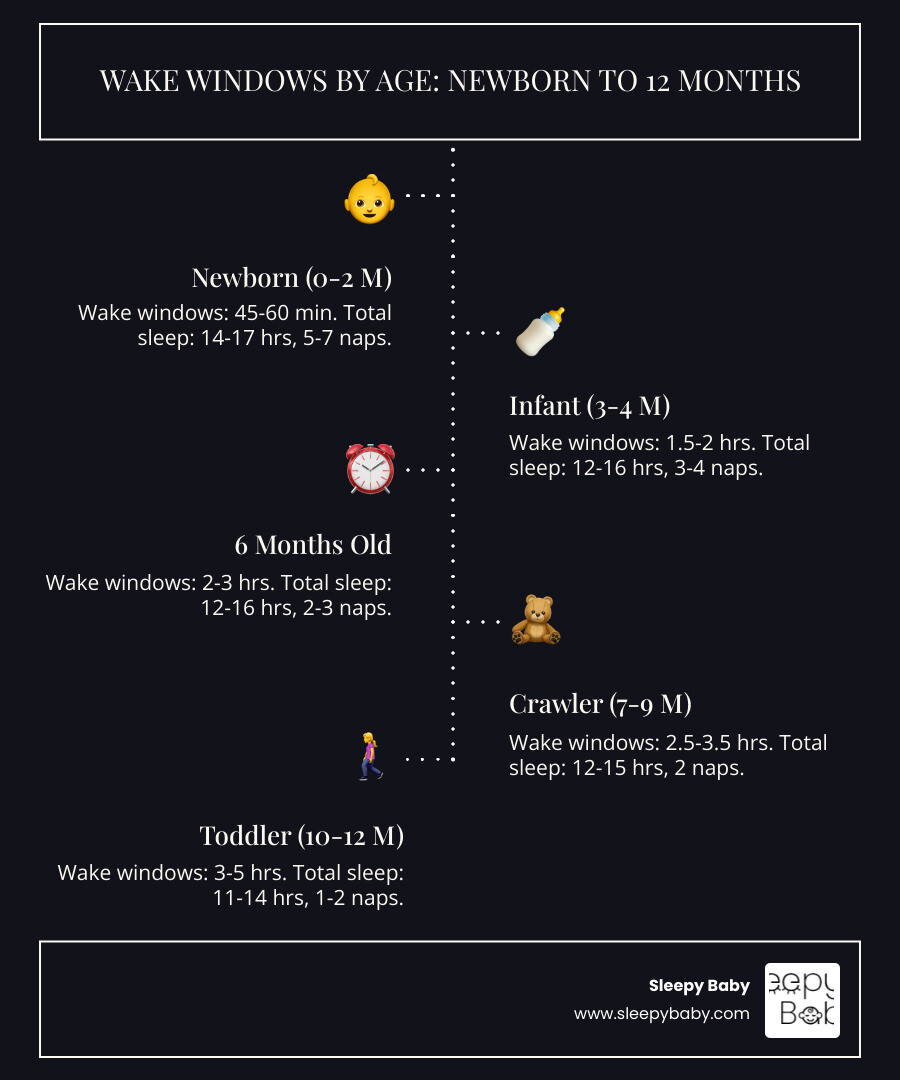
Wake windows lengthen as your baby develops. Newborns can only handle 45-60 minutes of awake time. By 3-4 months, their circadian rhythm matures, and windows stretch to 1.5-2 hours. At 6 months, their sleep is more adult-like, and they can manage 2-3 hour wake windows. This is also a time of major developmental leaps like rolling and sitting, which requires more energy and leads to more consolidated sleep. This is when many babies transition from 4 naps to 3, and then to 2 between 6 and 9 months.
Should you follow wake windows or a fixed nap schedule? For a 6-month-old, wake windows are generally better because they offer flexibility. A baby's naps can vary in length, and wake windows allow you to adapt. If a nap is short, the next one simply comes sooner, preventing overtiredness.
A "by-the-clock" schedule offers predictability but can be too rigid for a 6-month-old whose needs still fluctuate. As your baby gets closer to 7-9 months, a hybrid approach can work well, using set times as a guide but adjusting based on the day.
Here's how the two approaches compare for a 6-month-old:
| Feature | Wake Windows (Flexible) | By-the-Clock Schedule (Fixed) |
|---|---|---|
| Pros | Highly responsive to baby's needs; reduces overtiredness; works with natural rhythms | Predictable routine; easier scheduling for caregivers; consistent bedtime |
| Cons | Less predictable day-to-day; requires close observation; challenging with inconsistent naps | Risk of overtiredness if baby wakes early; less flexible; may not suit variable needs |
| Best For 6-Month-Olds | Recommended approach – offers necessary flexibility | Can work as a loose guide, but avoid being too rigid |
The bottom line: Wake windows give you the flexibility to meet your 6-month-old's daily needs, leading to better sleep for everyone.
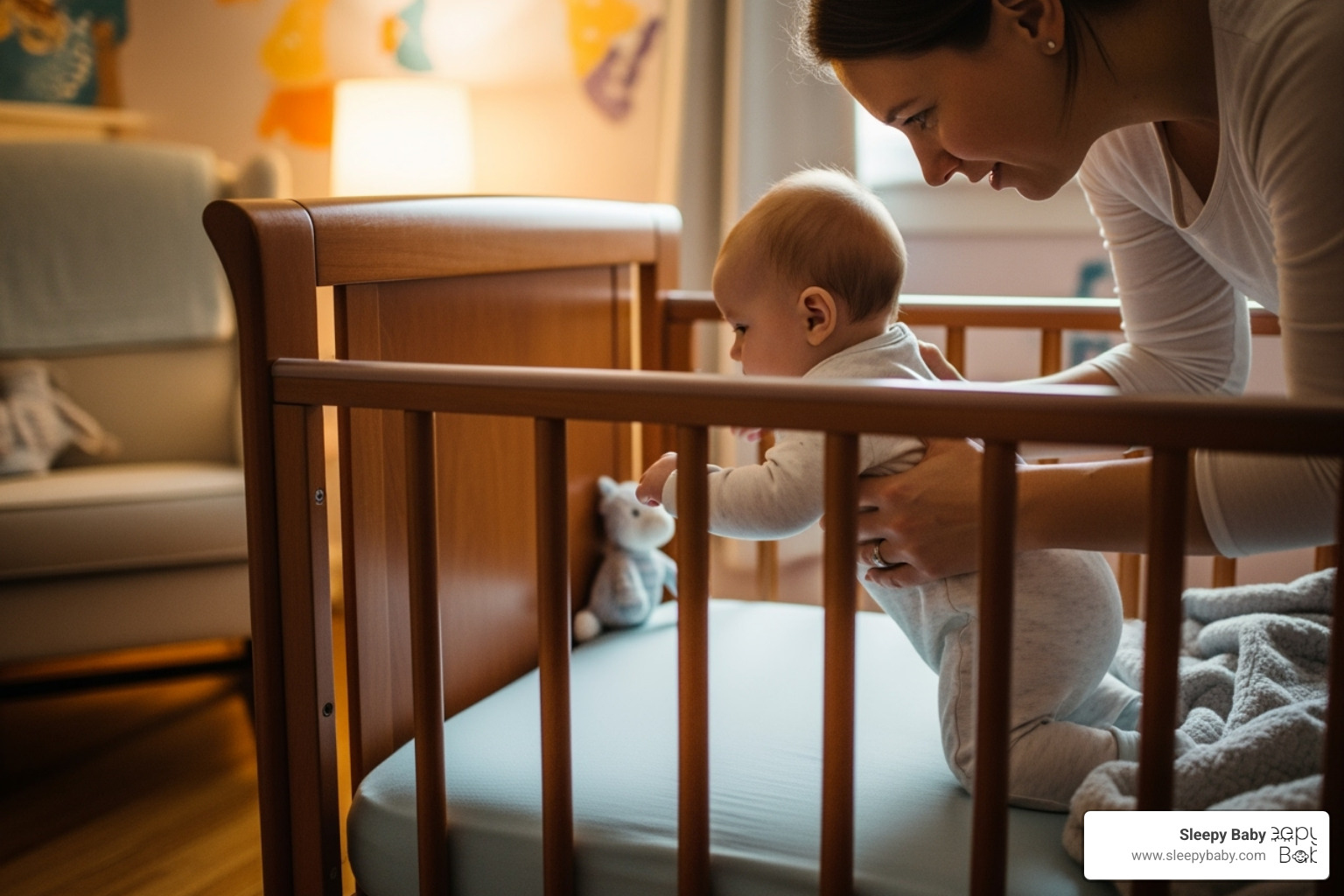
At 6 months, your baby is ready for longer awake times, typically 2 to 3 hours between sleeps. These wake windows are not static; they progressively get longer throughout the day.
These are guidelines, not strict rules. Every baby is different, so it's important to watch your child for their unique sleepy cues.
To fine-tune wake windows, consider your baby's total sleep needs. The American Association of Sleep Medicine recommends 12-16 hours of total sleep in a 24-hour period for babies this age. This typically breaks down into 11-12 hours of night sleep and 2.5-3.5 hours of daytime naps.
Correctly timed wake windows are key to achieving this balance. Too short, and your baby won't be tired enough for a long nap. Too long, and overtiredness will make sleep a battle. When you get it right, good daytime sleep promotes better nighttime sleep, creating a positive cycle.
Most 6-month-olds are on a three-nap schedule. Their wake windows aren't quite long enough to manage the day with only two naps without becoming overtired by bedtime.
A typical pattern includes two longer naps (60-90 minutes each) and a third, shorter "catnap" (30-45 minutes). This third nap is crucial for bridging the gap to bedtime and preventing an evening meltdown. While some babies start showing signs of dropping the third nap around this age, the transition usually happens between 7-9 months. If your baby starts resisting the last nap, you may need to gradually lengthen their other wake windows and consider an earlier bedtime.
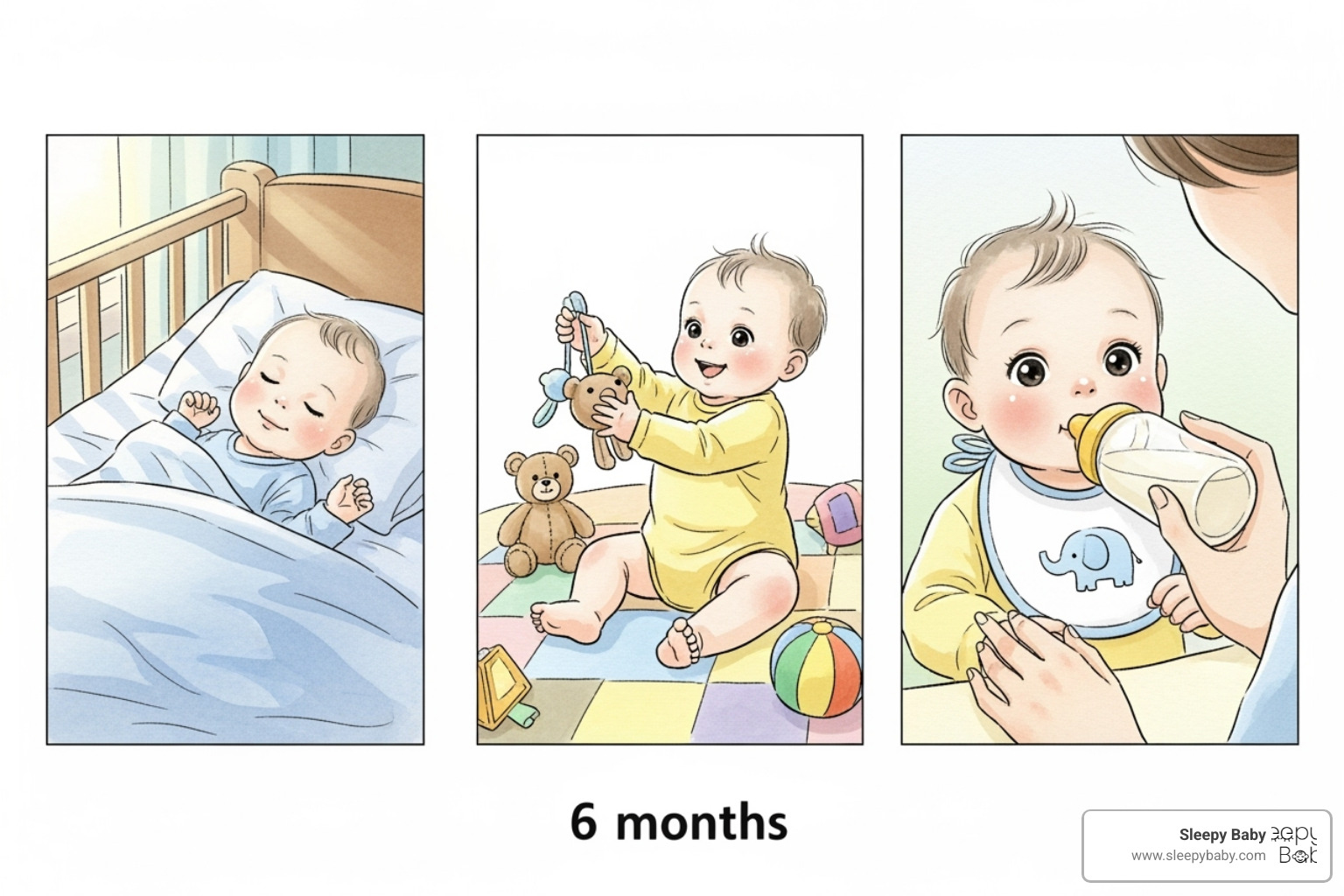
A schedule based on wake windows provides a predictable daily rhythm without being rigid. Once you know your baby's ideal 6 month old wake windows, you can anticipate when they'll need to sleep, making the day smoother.
Sample 3-Nap Schedule (2/2.5/2.5/2.5 windows):
Sample 2-Nap Schedule (2.5/3/3.5 windows):
These are just examples. The key is flexibility; if a nap is short, the next wake window starts when they wake up. Consistent pre-sleep routines (a bath, a story) are also vital, as they signal to your baby that it's time to wind down.
Your baby will give you feedback on their wake windows.
To adjust, add or subtract 15 minutes at a time and observe for 3-4 days. A change of scenery or a quiet activity can help stretch a window without causing overstimulation.
Learning your baby's sleep signals is a superpower. Act on the early cues.
Start your wind-down routine as soon as you spot early cues.
What your baby does while awake matters. Focus on activities that support development and build healthy sleep pressure.
Shift to calmer activities as naptime approaches to help them transition to sleep.
Even with perfect 6 month old wake windows, sleep can be disrupted. This is normal, as your baby's world is rapidly expanding.
Common culprits include:
A "sleep regression" around 6 months is not a step backward but a sign of major brain development. You might see increased fussiness, nap resistance, or more frequent night wakings. The best response is not to abandon your routine, but to stick with it. Your established 6 month old wake windows and pre-sleep rituals provide an anchor for your baby during this temporary phase (usually 2-6 weeks). Offer extra comfort, but be mindful of creating new, unsustainable sleep habits.
A calm, safe sleep space is critical. Following AAP safe sleep guidelines is non-negotiable:
Thoughtful sleep aids can improve this environment. While some white noise machines can be unsafe due to high volumes, modern safety-rated devices deliver sound at safe, low-decibel levels. Some innovative designs can even be placed on your baby's chest for optimal sound delivery. Additionally, rhythmic tapping devices can be incredibly soothing, mimicking a caregiver's touch to help babies relax and fall asleep independently. This sensory input complements a well-timed wake window perfectly.
Here are answers to the most common questions parents have about their 6-month-old's sleep.
Many 6-month-olds are developmentally ready to sleep 11-12 hours without a feeding, but it's not true for all. The key is whether they are gaining weight well and getting enough nutrition during the day. Always consult your pediatrician before dropping night feeds. If you get the green light, you can gradually wean them. A "dream feed" (feeding them around 10-11 PM while they're mostly asleep) can also help them sleep for a longer stretch. For more details, see our complete guide on the 6-month-old sleep and feeding schedule.
Short naps are frustrating and usually point to a timing issue. The most common cause is that their 6 month old wake windows are slightly off. If they wake up happy, try stretching the window by 15 minutes. If they wake up cranky, they may be overtired, so try shortening it by 15 minutes.
Other tips include:
No, six months is an excellent age for sleep training. At this stage, babies have a mature circadian rhythm and can learn the skill of falling asleep independently. Most pediatricians agree that healthy 6-month-olds are ready. There are many methods, from gentle approaches to more direct ones. The best method is one you are comfortable with and can apply consistently. Teaching independent sleep is a valuable life skill that leads to better, more consolidated sleep for everyone. Our guide on mastering the 6-month-old sleep schedule can help you get started.
Mastering your baby's sleep is possible. Understanding 6 month old wake windows is the key to opening up peaceful nights and restorative naps. By honoring your baby's natural rhythm of 2-3 hours of awake time, you create the foundation for better sleep.
Remember these key points:
A safe, dark, and quiet sleep space supports your efforts. Intelligent sleep aids can be powerful allies. Our devices at Sleepy Baby are designed to work with your routine, providing soothing rhythmic patting and safe, low-decibel white noise. By combining the science of wake windows with the right tools, you're not just solving tonight's sleep—you're building healthy habits for years to come.
Trust the process and your instincts. Better sleep is within reach. Explore our blog for more expert sleep tips.


