


How fast gripe water works is one of the most searched questions by exhausted parents dealing with colicky babies. The quick answer: it varies dramatically from baby to baby, with some parents reporting relief within 10-15 minutes, while others see no effect at all - and the science doesn't support consistent results.
Quick Timeline Overview:
As a new parent, there's nothing more heartbreaking than watching your baby struggle with discomfort. When your little one is crying inconsolably at 2 AM, you'll try almost anything for relief.
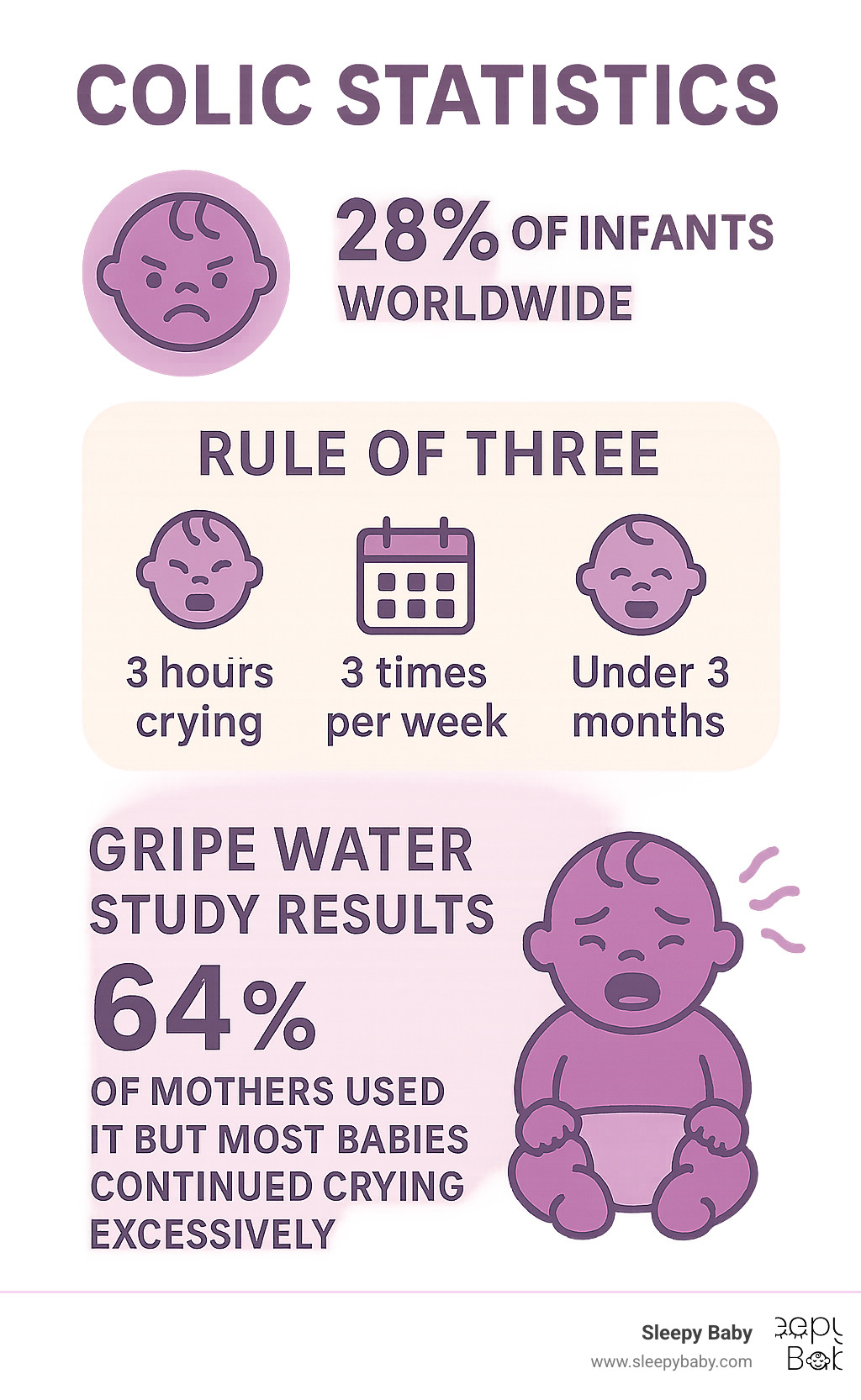
The reality is that colic affects up to 28% of infants worldwide and follows what doctors call the "rule of three": crying for three hours at a time, at least three times a week, starting before three months of age. During these desperate moments, gripe water often seems like a miracle solution.
But here's what the research actually shows: while gripe water has been around since the 1800s, there's no scientific evidence confirming it's safe or effective. In fact, a study of 335 mothers found that most babies who received gripe water continued crying excessively, and some experienced increased vomiting and constipation.
I'm Gary Harutyunyan, and as a father who spent countless sleepless nights researching how fast gripe water works for my own colicky baby, I learned that evidence-based solutions often work better than quick fixes. My journey led me to develop safer alternatives that actually help babies and parents get the rest they desperately need.
When your precious little one is crying inconsolably, every minute can feel like an hour. We've all been there, desperately searching for anything that promises quick relief. This often leads us to wonder, how fast gripe water works? Unfortunately, there's no simple, universally agreed-upon answer. The speed and effectiveness of gripe water are as varied as babies themselves, with anecdotal reports, manufacturer claims, and scientific studies offering vastly different perspectives.
Parents, in their earnest quest for solutions, often share their experiences online, painting a very mixed picture of gripe water's speed. Some report what feels like "instant relief" for hiccups, almost as if by magic. For general fussiness, many parents suggest a calming effect within 10-15 minutes, often followed by the satisfying sound of "a bunch of farts" or a "rumbling and pooting session" about 5-10 minutes later. This immediate calming might be due to the sweet taste of the gripe water, which can provide a momentary distraction from discomfort, rather than a direct medicinal effect. As one parent candidly put it, "it just tastes good to her and she's momentarily distracted from the crying and pain."
On the other hand, manufacturers offer their own timelines, which can sometimes be quite different from these hopeful parent reports. Brands like Woodwards Gripe Water suggest it "can take a few days to start working," depending on the severity of trapped air. This starkly contrasts with the "within minutes" claim from brands like Mommy's Bliss for their products. The reality is, "it’s really just a matter of testing and seeing how it works for your baby," as individual responses vary greatly. Some parents find it a miracle, while for others, it does "jack nothing" or even makes gas worse.
The speed at which gripe water might appear to work (or not work) is influenced by several factors unique to each baby and situation. It's like trying to predict the weather – there are many variables!
Baby's Age and Development: Most pediatricians and product labels strongly advise against giving gripe water to babies younger than one month old. A newborn's tiny digestive system is still incredibly immature, and introducing any supplement can be risky. Their bodies are just learning how to process food and sensations.
Severity and Cause of Discomfort: Is your little one experiencing a simple case of hiccups, which gripe water is anecdotally very effective for? Or is it persistent, severe gas, or even full-blown Colic? The more profound the discomfort, the less likely a mild herbal remedy is to provide rapid, lasting relief. Sometimes, the fussiness might simply stem from overeating or gulping air during feeding, which gripe water proponents suggest it can help with.
Gripe Water Formulation: The ingredients vary widely between brands, and this can certainly play a role. Historically, gripe water even contained sugar and alcohol, which are now known to be harmful for babies. Modern formulations typically include herbal ingredients like fennel, ginger, chamomile, and sodium bicarbonate (baking soda). The specific blend and concentration of these ingredients could affect how a baby responds.
Dosage and Timing of Administration: It’s crucial to always follow product instructions for dosage. As for timing, some parents and brands suggest giving gripe water 30 minutes after a feeding to prevent spit-up due to fullness. Others recommend administering it 30 minutes prior to a feeding if gas and fussiness are preventing the baby from completing their meal. Experimentation and, most importantly, consultation with your pediatrician are key to finding what's best for your unique little one.
Despite its long history and how often parents reach for it, the scientific community often views gripe water with a healthy dose of skepticism. This isn't because doctors want to make your life harder! Instead, it's because there's simply not enough strong, independent research to back up the claims made about gripe water's effectiveness or even its safety. It's a tricky situation, as parents are looking for answers, but the science just isn't there.

Here in the United States, gripe water is seen as a dietary supplement, not a medication. This difference is really important. Think about it this way: before a new medication can be sold, it has to go through tough tests to prove it's both safe and effective. It needs special approval from the FDA (U.S. Food and Drug Administration).
But dietary supplements? They don't need that same stamp of approval before they hit the shelves. Manufacturers are responsible for making sure their products are safe and that any claims they make are true. However, there's no "pre-market approval" process for supplements. This means that when you buy gripe water, there's no official assurance from the FDA that it's safe or that it will actually work as promised. It leaves parents in a position where they have to largely trust the manufacturer, without the rigorous testing that medications undergo. You can learn more about this by reading the FDA's Facts about Dietary Supplements.
When we search for solid scientific proof about gripe water, the cupboard is pretty bare. The research is very limited, and the studies that do exist often suggest that the benefits are unproven.
For example, a notable study in India looked at 335 mothers. It found that even though a large number (64%) were giving their babies gripe water, most of those infants continued to cry excessively. This really brings into question how fast gripe water works, or if it works at all, for many babies. The study even went a step further, suggesting that giving gripe water was actually linked to more infantile colic, vomiting, and constipation. It also hinted that it could even make exclusive breastfeeding harder. You can dive deeper into this research in the Gripe water administration in infants study.
So, if the science doesn't fully back it up, why do so many parents feel it helps? One big reason might be the sweet taste found in many gripe water formulas. For a crying baby, a sweet liquid can offer a moment of distraction or comfort. Another common ingredient is sodium bicarbonate, which is basically baking soda. This ingredient acts as an Antacid, helping to neutralize stomach acid. While this might offer some relief if acid reflux is the issue, acid isn't usually the main cause of most babies' gas or fussiness.
As Dr. Christina Vernace, a pediatrician, wisely points out, there's "no scientific evidence confirming gripe water is safe or effective and it's not something they tend to recommend." She understands why desperate parents might try anything to soothe their little one, but she stresses how important it is to be aware of the risks, especially because of the lack of regulation and scientific support.
When you're holding a screaming baby at 3 AM, it's natural to reach for anything that promises relief. But before you give your little one gripe water, it's crucial to understand that this "natural" remedy isn't as harmless as it might seem. The lack of FDA regulation means you're essentially playing roulette with your baby's safety.
The reality is that how fast gripe water works becomes irrelevant if it causes your baby harm. Even if some parents report quick results, the potential risks can far outweigh any temporary relief.
While many parents use gripe water without obvious problems, side effects are more common than you might think. Your baby's delicate system can react unpredictably to the herbal ingredients found in these supplements.
Gastrointestinal upset is the most frequently reported issue. Many parents notice vomiting and diarrhea after giving their baby gripe water, which can quickly lead to dehydration in infants. What's particularly concerning is that these symptoms can make your baby even more uncomfortable than before.
Skin reactions are another red flag to watch for. Hives and itchy skin often appear within hours of administration, signaling that your baby's immune system is fighting off what it perceives as a threat. Some babies also develop watery eyes or changes in their breathing patterns.
The most serious concern is swelling of the lips or tongue, which requires immediate medical attention. In rare but terrifying cases, babies can experience anaphylaxis, a life-threatening allergic reaction that can cause their airways to close.
If you notice any of these symptoms, stop using gripe water immediately and contact your pediatrician or seek emergency care. Your baby's safety is worth more than any potential relief.
The most alarming aspect of gripe water isn't just the lack of proven benefits—it's the documented safety failures that have led to serious recalls. These incidents highlight exactly why medical professionals remain skeptical about these products.
Parasite contamination has been a recurring nightmare. Multiple gripe water products have been recalled due to potential contamination with Cryptosporidium, a dangerous parasite that causes severe watery diarrhea in babies. Imagine giving your fussy baby something that could make them violently ill.
Even more frightening is the case of bacterial contamination with Pseudomonas aeruginosa. This bacteria actually caused septic shock in a 9-month-old baby, a life-threatening condition that required intensive medical intervention. The product was recalled, but not before this family's world was turned upside down.
Choking hazards present another serious risk. Several recalls have occurred because of "undissolved ingredients" floating in the liquid—essentially giving your baby something that could block their tiny airways.
The American Academy of Pediatrics shares several gripe water recalls on their website, reinforcing why most pediatricians don't recommend these products. When the nation's leading child health experts are concerned enough to track and publicize these safety issues, it's time to listen.
The bottom line is simple: no amount of potential relief is worth risking your baby's health and safety. There are proven, safer alternatives that can help soothe your little one without the gamble.
When your little one is struggling with discomfort, the search for relief can feel endless. After all the uncertainty surrounding how fast gripe water works (or doesn't), and its safety, many parents understandably look for different ways to soothe their fussy or gassy babies. We absolutely get that desperate feeling that makes you want to try anything. But the good news is, there are truly effective, safe, and evidence-based solutions out there. These methods focus on gentle physical techniques, medically-proven aids, and creating a calm environment, sometimes even involving simple feeding adjustments.
Sometimes, all our little ones need is a bit of physical comfort and a helping hand to ease their tummy troubles. These gentle techniques can make a big difference:
One of the simplest yet most effective methods is burping. Make sure you burp your baby often, both during and after feedings. This helps release any air they might have swallowed. You can try different positions, like holding them upright against your shoulder, sitting them on your lap, or laying them face down across your arm. Another great trick for gas is bicycle legs; gently moving your baby's legs in a bicycling motion while they’re on their back can really help trapped gas work its way out.
Tummy time, always supervised, not only helps strengthen your baby’s neck muscles but also puts gentle pressure on their abdomen, which can aid in expelling gas. A gentle belly massage, using a warm hand and moving in a clockwise direction, can also be very soothing. You can even find specific infant massage techniques to learn! Beyond gas, a warm bath can be incredibly relaxing for a fussy baby, helping them to calm down and potentially easing tummy discomfort. And for newborns, swaddling them snugly mimics the secure feeling of the womb, reducing startling reflexes and promoting calmness. Finally, never underestimate the power of rocking and movement. Consistent, rhythmic motion, whether you're rocking, swaying, or even going for a gentle car ride, can often calm a crying baby like magic.
Beyond comforting physical techniques, there are remedies backed by medical understanding that offer a more reliable way to manage infant gas and colic:
For gas relief, gas drops containing Simethicone are a popular choice. Unlike gripe water, Simethicone is actually FDA-approved. It works by breaking down large gas bubbles in your baby's stomach and intestines into smaller, easier-to-pass ones. The best part? It's not absorbed into your baby's system, making it a safe option. You can learn more about it here: Simethicone.
Probiotics are another area gaining attention. Research, including studies published by the National Institutes of Health, suggests that certain probiotics, especially Lactobacillus reuteri for colic relief, might be helpful for colicky babies. Always, always talk to your pediatrician before giving your baby any probiotic supplement. Sometimes, the fussiness might be linked to what your baby is eating. For breastfeeding parents, gently exploring dietary adjustments by temporarily removing common allergens like dairy or soy from your own diet can sometimes make a big difference if an intolerance is suspected. If your baby is formula-fed, your pediatrician might suggest trying a different type of formula.
Our top recommendation for any persistent concern is always to consult a pediatrician. A children's healthcare provider, like Dr. Christina Vernace, can rule out any underlying medical conditions, offer personalized advice custom to your baby's unique needs, and guide you toward the most appropriate and effective solutions. They are your best resource for keeping your baby healthy and happy.
For a brand new baby, the world outside the womb can feel overwhelming. Recreating that familiar, soothing environment can significantly help calm a fussy little one:
The consistent, gentle hum of white noise can be incredibly comforting. It blocks out jarring household sounds and provides a steady backdrop that reminds babies of the constant whoosh they heard for months in the womb. While some older white noise machines might have safety concerns, modern safety-rated devices like those from Sleepy Baby present white noise at safe, low-decibel levels, ensuring optimal hearing development.
Another powerful tool is rhythmic tapping. The gentle, consistent motion mimics the natural swaying and heartbeat a baby experiences while being held by a caregiver or in the womb. This can be incredibly effective in lulling a baby to sleep and providing comfort. Our Sleepy Baby aids are designed to mimic a caregiver’s comforting touch, offering hands-free, customizable soothing for babies and crucial support for caregivers. We understand that when your baby sleeps, you can too. That's why we're proud to offer our products in Australia, Austria, Belgium, Canada, Czechia, Denmark, Finland, France, Germany, Hong Kong SAR, Ireland, Israel, Italy, Japan, Malaysia, Netherlands, New Zealand, Norway, Poland, Portugal, Singapore, South Korea, Spain, Sweden, Switzerland, United Arab Emirates, United Kingdom, and the United States.
It's completely normal to have a million questions swirling in your head when you're a new parent, especially when your little one is uncomfortable. We've compiled some of the most common inquiries about gripe water to help shed some light on this widely discussed remedy.
This is a really important question, and the general rule of thumb is not before your baby is one month old. Think of your newborn's tiny digestive system – it's still very much a work in progress! Introducing any new supplement too early can be risky for their developing body.
You'll always want to check the specific product label of any gripe water you're considering, as ingredients and recommendations can vary between brands. But even more importantly, we can't stress this enough: always, always consult your pediatrician before giving your baby any new supplement or remedy. They know your baby's unique health history best and can offer personalized advice that's just right for your little one.
Ah, the great timing debate! The truth is, there isn't one universal answer here, as it can really depend on your baby and the specific brand of gripe water. Some parents find that giving gripe water about 30 minutes after a feeding works well. This gives a little time for your baby's meal to settle and can help prevent spit-up, especially if their tummy is already quite full.
However, if your little one is struggling with gas or fussiness before a feeding, making it hard for them to even eat, some brands suggest giving gripe water about 30 minutes prior to a feeding. The idea here is to try and soothe that discomfort so they can have a more peaceful meal. It often comes down to a bit of gentle experimentation to see what brings your baby the most comfort, and always, always with your pediatrician's blessing.
Yes, absolutely, and this is a really crucial distinction for parents to understand! While both are marketed for baby gas and fussiness, they are fundamentally different.
Let's look at gripe water first. As we've explored, it's generally considered an herbal supplement. It typically contains a mix of ingredients like fennel, ginger, chamomile, and often sodium bicarbonate (baking soda). The key thing to remember is that in places like the U.S., gripe water isn't regulated by the FDA as a medication. This means its safety and how fast gripe water works (or even if it works consistently) haven't been rigorously tested or proven in the same way prescription drugs are. Its supposed benefits are largely based on anecdotal evidence or the theoretical effects of its ingredients, like the sweet taste providing a momentary distraction or baking soda acting as an antacid.
Now, gas drops are a different story. These are often sold under well-known names like Mylicon or Little Remedies Gas Relief. Their active ingredient is simethicone, which is an FDA-approved drug. Simethicone works in a very specific way: it's an anti-foaming agent that physically breaks down those large, uncomfortable gas bubbles in your baby's stomach and intestines into smaller ones. This makes them much easier for your baby to pass. A big plus is that simethicone isn't absorbed into your baby's bloodstream, making it a generally safe and effective over-the-counter option for gas relief when used as directed.
Understanding this difference empowers you to make more informed choices for your little one's comfort and well-being. Always chat with your pediatrician to figure out the best path for your unique baby.
When you're in the thick of it, trying to comfort a fussy baby, the question of how fast gripe water works can feel like the only thing that matters. That promise of immediate relief? It's incredibly tempting, isn't it? But as we've explored together, the reality is a little more complicated than a simple, speedy solution. The truth is, how quickly (or if at all) gripe water seems to work varies wildly from one baby to the next. More importantly, there's just not enough scientific evidence to back up its claims, and frankly, its unregulated nature has led to some serious safety concerns and recalls in the past.
It's completely understandable to want a quick fix for your little one's discomfort. We've all been there! But as loving parents, our baby's safety and long-term well-being always come first. This means moving away from remedies that aren't well-supported by science and instead, embracing care that's proven to be both safe and effective.
So, what does work? Your pediatrician is your best friend here. They can help figure out the real reason behind your baby's fussiness and guide you to the safest, most effective solutions. Instead of relying on products with questionable scientific backing, we encourage you to lean into proven soothing techniques. Think of gentle, loving physical methods like bicycle legs or tummy massages. Consider medically-supported aids like simethicone gas drops or even certain probiotics, always after a chat with your doctor.
And don't forget the power of creating a wonderfully calm and comforting environment for your little one. This is where tools like our Sleepy Baby aids shine. While some older white noise machines can be unsafe, our modern, safety-rated devices offer white noise at safe, low-decibel levels, often designed to be placed gently on your baby's chest. Plus, our rhythmic tapping feature cleverly mimics your comforting touch, providing hands-free, customizable soothing. This helps your baby find independent sleep, and let's be honest, helps you get that much-needed rest too!
Choosing evidence-based care doesn't just provide a safer path to comforting your baby; it also gives you, the parent, confidence and peace of mind. For more insights into effective, safe solutions for infant gas, you can explore our detailed guide: Relief in a Drop: Top Infant Gas Drops Reviewed. You're doing an amazing job, truly. With the right information and support, you can help your baby feel better and thrive, and that's a win for everyone.


