


Baby travel essentials are the key to turning a potentially stressful journey into a smooth adventure. Whether you're planning a family vacation or visiting relatives, having the right gear can mean the difference between chaos and calm.
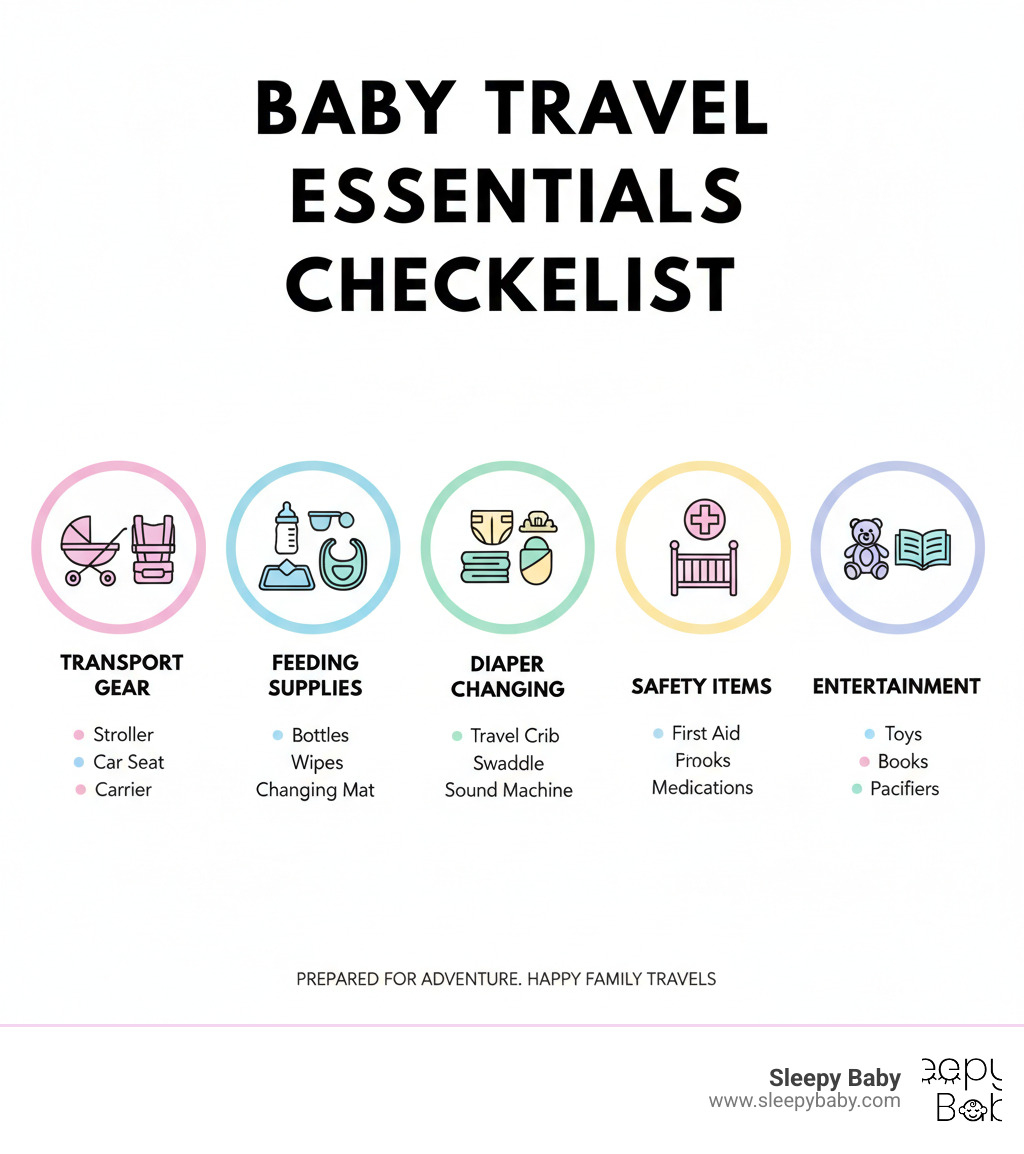
Essential Baby Travel Items at a Glance:
As one parent shared, "Seasoned traveling parents will tell you it's wise to always bring a bit more of the basics than you need – especially diapers."
Before you go, most doctors recommend waiting until your baby is at least three months old for longer trips. For air travel, the American Academy of Pediatrics advises that babies fly in their own seat with an FAA-approved car seat for maximum safety. Also, keep in mind that formula and breast milk are exempt from TSA's liquid restrictions, and gate-checking strollers is often free.
As a father who has steerd newborn sleep challenges, I know how exhausting travel can be. My experience has taught me that the right baby travel essentials, including safe, portable sleep aids, can make family adventures possible again.
Smart upfront decisions about when to travel, how to get there, and where to stay will set you up for a successful first trip with your baby. Getting these fundamentals right ensures your baby travel essentials will work for you, not against you.
Because a baby's immune system needs time to develop, most pediatricians recommend waiting until your baby is at least three months old for longer trips. The American Academy of Pediatrics is particularly cautious about air travel for very young infants due to increased germ exposure.
Always consult your pediatrician before planning a trip. They can advise you based on your baby's specific health and vaccination schedule. This is crucial for international travel, which may involve different health risks. For more medical perspectives, see Is Air Travel Safe for an Infant? from Mayo Clinic.
Your choice of travel will dramatically affect what you pack.
Road trips offer ultimate control. You can stop for diaper changes or feedings whenever needed and pack as much gear as your car can hold. However, a critical safety rule is that babies shouldn't spend more than two hours in a car seat at a time. This makes frequent stops mandatory, so plan your route accordingly.
Air travel offers speed but less flexibility. You'll face luggage restrictions and more germ exposure. For safety, even though airlines allow lap infants under 2 to fly free domestically, both the FAA and pediatric experts strongly recommend buying your baby their own seat. Using an FAA-approved car seat provides crucial protection that your arms cannot. Check for the FAA approval label on your car seat before you fly.
Regardless of how you travel, research your destination for baby-friendly accommodations and local resources like pharmacies or clinics. For more guidance, the American Academy of Pediatrics offers excellent Travel Safety Tips that cover everything from car seat safety to international travel considerations.
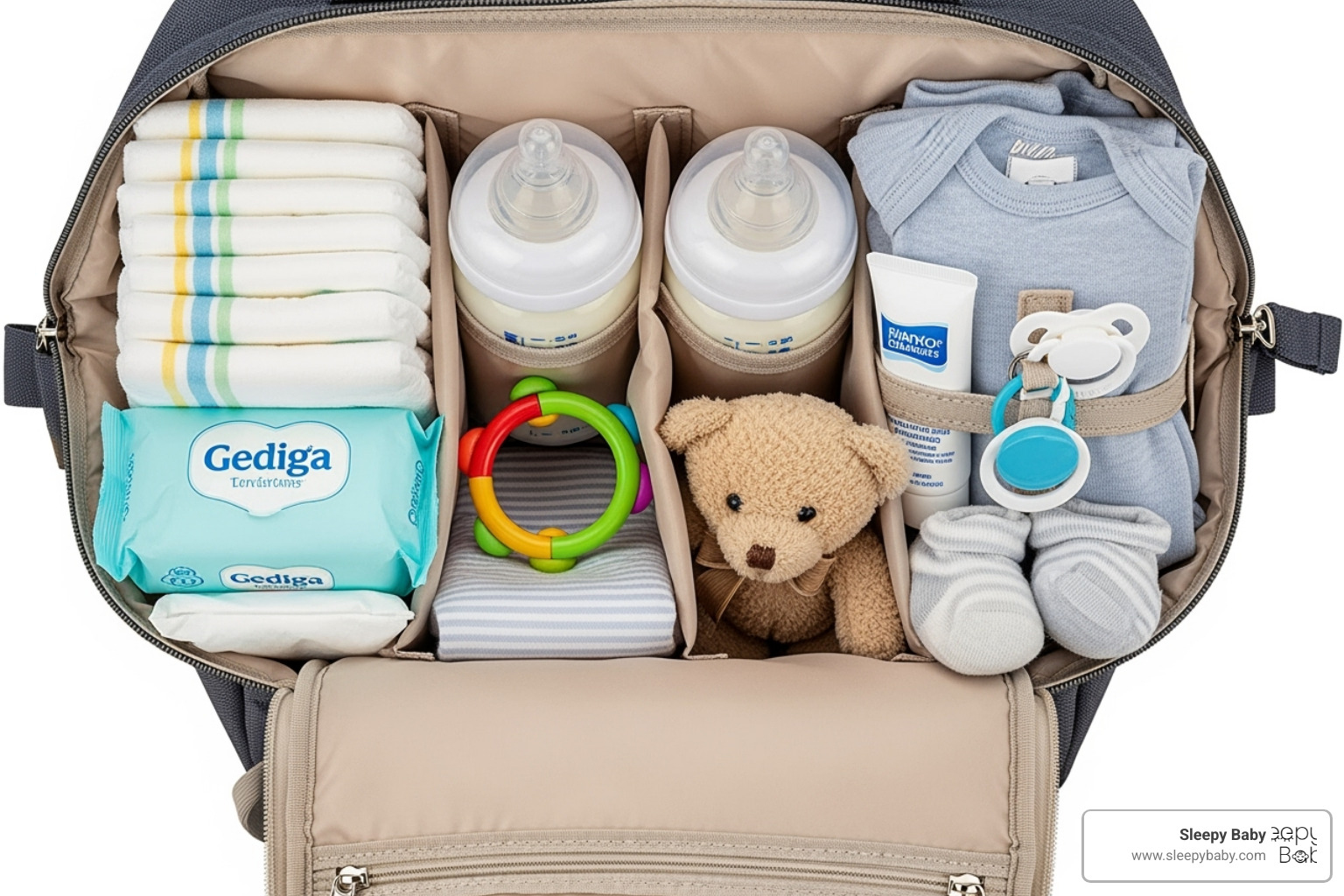
Mastering baby travel essentials means bringing the right things in the right places. Your strategy should distinguish between your carry-on (for in-transit survival) and checked luggage (for everything else). Use packing cubes to stay organized and always pack more diapers and wipes than you think you'll need to account for delays or blowouts. Focus on versatile, lightweight items like muslin blankets that can serve multiple purposes.
A backpack-style diaper bag keeps your hands free and should contain your "survive anything" kit.
For more tips, see our guide on Newborn Diaper Bag Necessities You Didn't Know You Needed.
The good news for parents is that breast milk, formula, and juice are exempt from TSA's 3.4-ounce liquid rule. Declare them to TSA officers for separate screening. For detailed rules, check the TSA guidelines for traveling with children.
A well-stocked first-aid kit is crucial. Include infant pain reliever (acetaminophen/ibuprofen), gas drops, a nasal aspirator with saline, a digital thermometer, band-aids, and antiseptic wipes. For sunny destinations, pack baby-safe sunscreen (for 6+ months) and insect repellent. Universal outlet covers can quickly baby-proof a room.
Your checked luggage is for bulk items: extra diapers and wipes, full-size toiletries, and 2-3 outfits per day. If your accommodation doesn't provide one, a portable travel crib is a must.
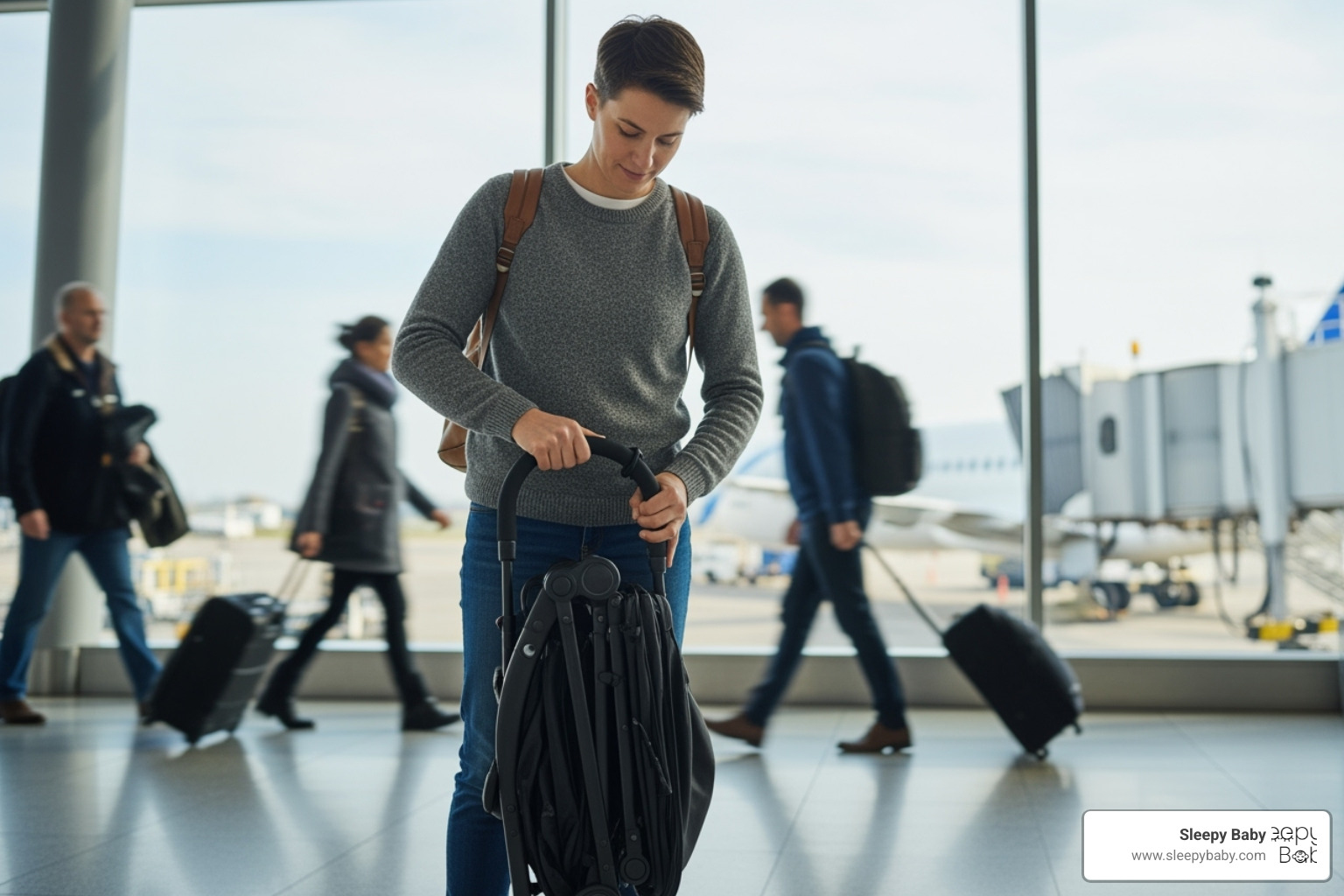
Navigating airports and new cities with a baby requires the right mobility gear. These baby travel essentials are your lifeline for keeping everyone comfortable on the move. Choose gear that fits your travel style, whether it's a compact stroller for city trips or a baby carrier for hands-free adventures.
For air travel, most airlines let you gate-check strollers for free. Use a protective travel bag to prevent damage.
Travel can be overwhelming for babies due to new environments and disrupted routines. Comfort-focused baby travel essentials are your secret weapons for success, balancing familiar comforts with new distractions.
A good entertainment strategy can prevent meltdowns. Pack a mix of favorite small toys and a few new, engaging toys to capture their attention. Indestructible board books, teething toys, and pacifiers with clips are also travel must-haves. For toddlers, downloaded shows on a tablet with kid-friendly headphones can be a lifesaver. Consider packing silicone mats to create clean play surfaces on the go.
Sleep disruption is a major travel challenge, but you can recreate a sleep-friendly environment.
At Sleepy Baby, we know how rhythmic tapping devices can solve travel sleep issues. Our portable sleep aids mimic a caregiver's comforting touch, using gentle vibrations and safe white noise to help babies feel secure. Some can even be placed on your baby's chest, providing that soothing sensation anywhere. This rhythmic patting promotes better sleep in any environment.
For more tips, read The Definitive Guide to the Best Baby Sleep Aid for Travelling and Airborne Naps: How to Help Your Baby Sleep on a Plane. Some sleep disruption is normal, so be patient with your baby and yourself.
Yes. Breast milk, formula, and juice are exempt from TSA's 3.4-ounce liquid rule. You can bring a reasonable amount for your journey in your carry-on. Just declare these items to TSA officers for separate screening.
While flying with a lap infant is cheaper, both the FAA and the AAP strongly recommend purchasing a separate seat and using an FAA-approved car seat. This is the safest option during turbulence and provides a more comfortable, dedicated space for your baby.
A portable changing mat is essential for a clean surface anywhere. On planes, ask which lavatory has a changing table. Always carry wet bags for soiled items and keep hand sanitizer and antibacterial wipes accessible for cleaning hands and surfaces like high chairs.
Air travel requires compact, lightweight packing to meet luggage and liquid rules, with essentials in your carry-on. Road trips offer more flexibility for bulkier items, but you must still plan for frequent stops, as babies shouldn't be in a car seat for more than two hours at a time.
Use your checked bag for bulk baby travel essentials. This includes extra diapers and wipes, full-size toiletries, 2-3 outfits per day, a portable travel crib (if needed), a baby monitor, and larger toys.
Always prioritize safety. Ensure your car seat is properly installed and FAA-approved for flights. Adhere to the two-hour car seat rule on road trips. Pack a comprehensive baby first-aid kit and use outlet covers to baby-proof your accommodation.
Tailor your packing list to your destination. For sunny locations, pack UPF 50+ sun hats, baby-safe sunscreen (6+ months), and insect repellent. For colder climates, bring warm layers, hats, and a warmer sleep sack.
Traveling with a baby can be one of parenting's most rewarding adventures with the right baby travel essentials and preparation. This guide has covered everything from timing your trip to packing smart and ensuring comfort along the way.
The key takeaways are simple: prioritize safety, focus on comfort, and use the right gear to transform potential stress into precious memories. Whether you choose a road trip or a flight, finding what works for your family is what matters most. The confidence that comes from being well-equipped makes every bit of planning worthwhile.
At Sleepy Baby, we know that well-rested babies make for happier travelers. Our portable sleep aids, with safe low-decibel white noise and gentle rhythmic patting, help your baby feel secure and sleep well anywhere. When your baby sleeps, the whole family enjoys the journey more.
Your family adventures are just beginning. With these baby travel essentials, you're ready to explore the world together. Sweet dreams and safe travels!


