


When your baby cries while sleeping, it can be alarming. The good news is that this behavior is completely normal and rarely indicates a serious problem. Most babies cry for 2-3 hours daily in their first three months, and some of this naturally happens during sleep.
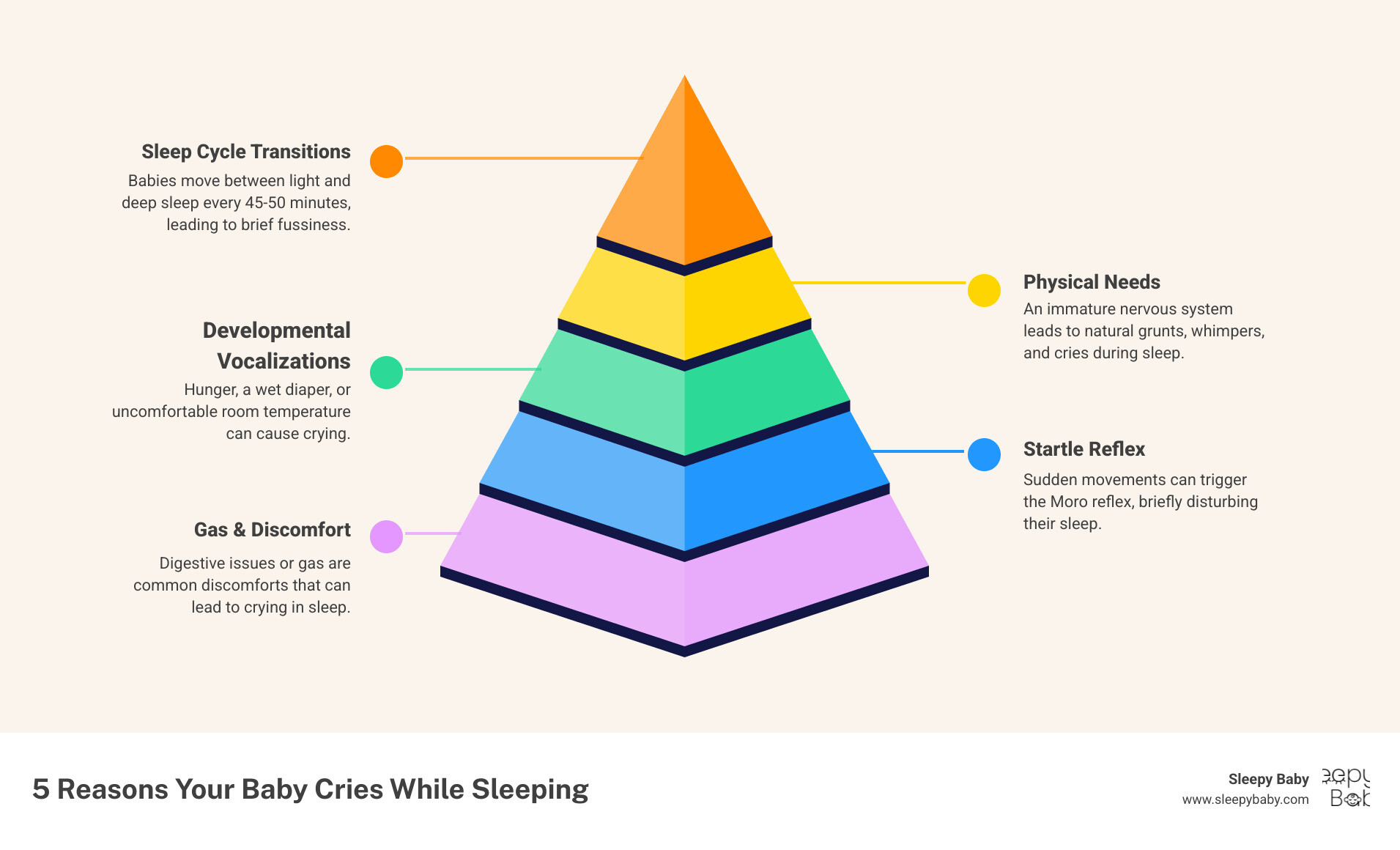
Unlike adults, babies spend about half their sleep in active REM sleep, where they might grunt, whimper, or cry without fully waking. These sounds are often due to:
The key is learning when to respond versus when to wait, as many sleep cries resolve on their own. I'm Gary Harutyunyan, and after facing my own newborn's sleep challenges, I developed solutions to help families find rest. Understanding why your baby cries in their sleep is the first step toward more peaceful nights for everyone.
That sudden cry from the nursery can be startling, but when you find your baby still asleep, you're witnessing something very common. When your baby cries while sleeping, it's usually due to their developing brain and nervous system, not a sign of distress. A baby's brain is constantly processing new information, and their primary communication tool—crying—doesn't switch off during sleep.
These sleep sounds are often just their way of processing experiences or transitioning between sleep stages. The reassuring news is that this phase is temporary. As your baby's nervous system matures, these nighttime vocalizations will decrease. The Children and Sleep resource offers valuable insights into this developmental journey.
Baby sleep differs greatly from adult sleep. Babies primarily alternate between two phases: active sleep (like REM) and quiet sleep (non-REM). Newborns spend about half their sleep time in the active phase.
Unlike adults, whose muscles are paralyzed during REM sleep, babies remain physically active. This is why they might twitch, grimace, make sucking motions, grunt, or whimper all while fast asleep. It’s their brain processing information while their body is free to move.
Baby sleep cycles are also much shorter, lasting only 45 to 50 minutes compared to an adult's 90-120 minutes. These frequent transitions create more opportunities for brief sounds. The startle reflex (Moro reflex) can also cause a baby to cry out briefly after a sudden movement before they settle again. This is normal and typically fades by 4 months. As your baby's sleep patterns change by age, these vocalizations will naturally decrease.
Yes, it's completely normal. When your baby cries while sleeping, you're seeing typical infant behavior. Most of the time, they are not fully awake and are simply processing the day's events in a dream-like state. It's similar to how adults might talk in their sleep.
Consider this: two to three hours of daily crying is normal for babies in their first three months. A portion of this naturally occurs during sleep as part of their developmental phase. Think of these cries not as a problem, but as a sign that your baby's brain and nervous system are developing as they should.
While it seems logical, actual nightmares are extremely rare before age 2, as babies' brains haven't developed the capacity for complex, scary dreams. However, it's useful to know the difference between nightmares and night terrors as your child grows.
Beyond sleep cycles, several practical factors can cause sleep crying. Knowing these can help you decide whether to intervene.
For more tips on handling crying, explore our guide: Why Your Baby Won't Stop Crying.
When your baby cries while sleeping, your first instinct is to rush in. But sometimes, the kindest thing you can do is pause. Learning to respond thoughtfully rather than reactively is key. The goal isn't to ignore your baby, but to create a calm environment where you are responsive to their needs while also giving them space to develop self-soothing skills.
When your baby cries while sleeping, waiting a minute or two before intervening can be a powerful tool. This "pause" method allows you to see what's really happening. Often, your baby is just transitioning between sleep cycles, and the whimpers are a normal part of that process. Rushing in can accidentally turn a brief stir into a full wake-up, disrupting their ability to connect sleep cycles on their own.
Learn to distinguish the cries. Brief whimpers that fade quickly often signal a normal sleep transition and an opportunity for your baby to self-soothe. However, sustained, escalating, or distressed-sounding crying calls for your intervention. Trust your instincts; if the crying continues for more than a few minutes, go to your baby. You can find more guidance at Responding to Your Baby's Cries.
Your baby's sleep environment should be a sanctuary that signals rest. A consistent and comfortable space can significantly reduce how often your baby cries while sleeping.
For more tips, check out our guide on When Bedtime Turns into Cry Time and How to Stop It.
When your baby does need help, approach them with calm, gentle, and slightly boring techniques to ease them back to sleep.
The key to nighttime soothing is to be wonderfully boring. Keep your voice quiet and movements slow to help them drift back to dreamland.
For more strategies, explore our guide: How to Calm a Fussy Newborn and Finally Get Some Sleep.
While it's reassuring to know that a baby cries while sleeping is usually normal, you should always trust your parental instincts. Learning to differentiate between normal fussiness and cries of pain can be tricky, but your pediatrician is there to help. It's always better to call with a concern than to worry in silence.
If your baby's cry changes in quality—becoming high-pitched, intense, or inconsolable—it could signal pain or illness. Contact your doctor if crying is accompanied by other symptoms, such as:
For more guidance on digestive issues, check out our guide: Colic Conundrum: How to Soothe Your Baby.
While the "pause" method is great for normal sleep sounds, certain patterns warrant a call to your pediatrician.
Most importantly, trust your parental intuition. You know your baby best. If something feels off, or if you're worried, make the call. Advocating for your baby's health is a sign of great parenting.
As parents, we naturally worry when our little ones make sounds during sleep. Here are clear, science-backed answers to some of the most common questions about why a baby cries while sleeping.
It's highly unlikely. A baby's brain isn't developed enough for the complex imagery and emotions that create nightmares until around age 2. When your baby cries while sleeping, it's almost always due to a more straightforward cause, like a sleep cycle transition, a physical need like hunger, or their developing nervous system processing the day. You can rest assured they aren't being frightened by bad dreams.
It's best to wait a moment first. Babies often cry briefly while transitioning between sleep cycles and will settle back down on their own. Intervening too quickly can fully wake them and disrupt their natural ability to connect sleep cycles. If the crying escalates, continues for more than a few minutes, or sounds genuinely distressed, then it's time to check on them. You'll quickly learn the difference between a brief sleep sound and a true call for help.
Yes, sleep training can help. By teaching babies to fall asleep independently, they learn to self-soothe and steer sleep cycle transitions without crying for help. The goal isn't to eliminate all sleep sounds, but to empower your baby to handle brief awakenings on their own.
However, it's crucial to choose a method that suits your baby's age and temperament, and always rule out medical issues like reflux or allergies first. Modern sleep aids can be a great support during this process. Safety-rated devices that offer gentle rhythmic patting and low-decibel white noise can provide comfort and help babies learn to self-soothe, creating a positive path to better sleep.
When your baby cries while sleeping, it's usually a normal part of their development. From short sleep cycles and an active nervous system to simple needs like hunger, these sounds are rarely a cause for panic. Understanding the "why" empowers you to respond with confidence.
The key is to learn when to pause and let your baby self-soothe, and when to intervene with a gentle touch or a quick check. Creating a consistent, safe, and comfortable sleep environment—with the right temperature and darkness—lays the foundation for peaceful nights.
For parents seeking extra support, modern sleep technology can be a game-changer. Intelligent sleep aids from companies like Sleepy Baby offer hands-free soothing with rhythmic patting that mimics your touch and safe, low-decibel white noise, sometimes delivered right on the baby's chest. These tools help babies build independent sleep skills while giving you much-needed rest.
Trust your instincts, be patient, and remember this phase won't last forever. As your baby's sleep matures, you'll both be sleeping more soundly.

Find more expert baby sleep tips on our blog.


