


Old fashioned terry nappies are simple, square pieces of absorbent terry towelling fabric that you fold to fit your baby, secure with a modern fastener like a Nappi Nippa, and cover with a waterproof wrap. They're making a major comeback, driven by the cost of living crisis, eco-conscious parenting, and a blend of nostalgia and practicality.
Why Parents Are Choosing Terry Nappies Again:
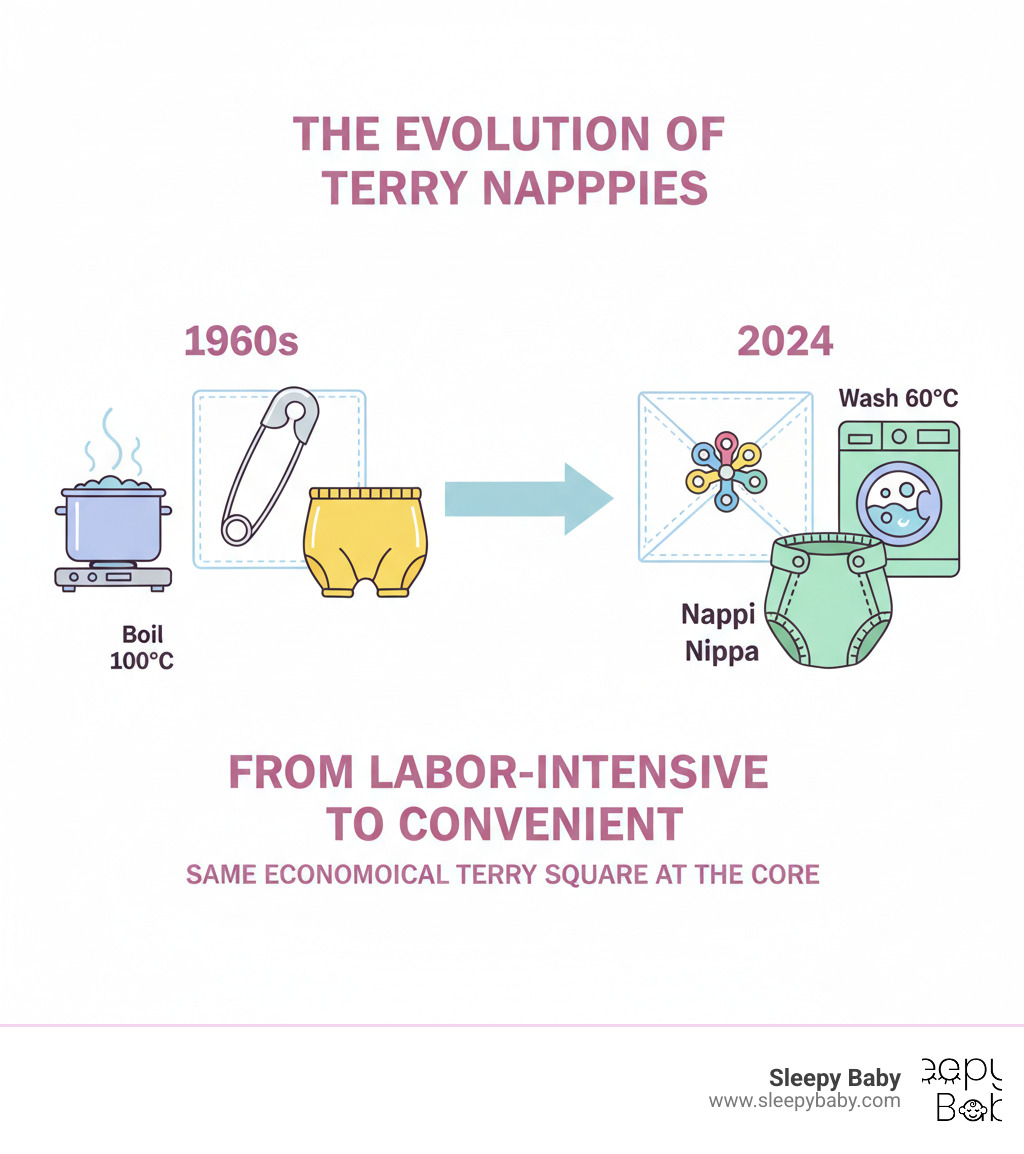
While the older generation might recall boiling nappies and using safety pins, today's terry nappies have evolved. They combine the economical reliability of the past with modern accessories like breathable waterproof covers and safe fasteners, making them far more convenient.
Traditionally made from cotton terry towelling, they now also come in bamboo and hemp blends. As they are simply cloth with no elastic to perish, they are virtually indestructible. You can wash them at 60°C, they air dry super fast, and are so durable that many parents reuse nappies their own parents wore.
Choosing the right tools, whether old fashioned terry nappies for daytime or innovative sleep aids for nighttime, can transform family life. The best solutions often combine timeless wisdom with modern innovation.
Explore more about diapering:
When your grandmother talks about nappies, she's likely picturing old fashioned terry nappies—simple, square pieces of absorbent fabric also known as terry squares or flat nappies. For much of the 20th century, these were the standard: a square of fabric, a safety pin, and plastic pants. It was a simple system that worked.
The classic material was cotton terry towelling, the same loopy fabric as your bath towel. Parents would fold the square, place it under the baby, and secure it with a safety pin. The main challenge was leak prevention, which was managed with rubber or plastic pants. For a glimpse into how past generations handled nappy changes, Baby nappies/diapers made of towelling: lessons from the past is a fascinating read.
Understanding this history helps us appreciate why old fashioned terry nappies still make sense today. If you're starting your parenting journey, our guide From Zero to Diaper Hero: Mastering Newborn Diapering covers all the basics.
The core design of a foldable, absorbent square remains, but the accessories have improved dramatically.
The durability of terry nappies is legendary. With no elastic or velcro to wear out, they are virtually indestructible and are often passed down through generations.
While traditional cotton terry is the classic, reliable choice, modern terry nappies offer more options.
Folding a square of fabric into a nappy might seem daunting, but the learning curve is gentle. Once mastered, the simplicity and versatility of old fashioned terry nappies are their greatest strengths. You can adapt the fold and absorbency to fit any baby from newborn to toddler, a flexibility not found in pre-shaped nappies.
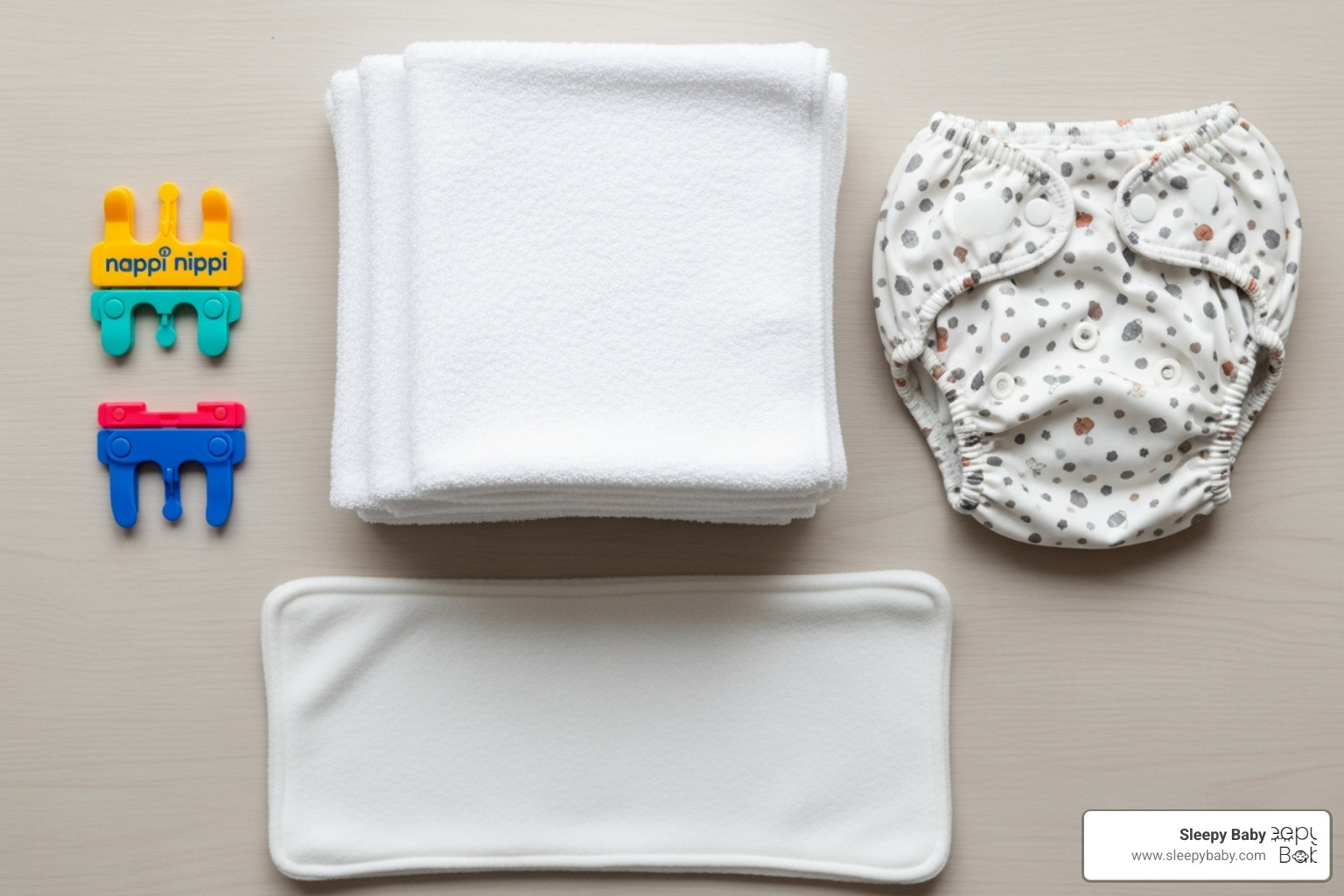
To turn a simple terry square into a complete, leak-free nappy system, you'll need a few modern accessories.
For more tips on what to pack when you're on the go, check our guide on Newborn Diaper Bag Necessities You Didn't Know You Needed.
Different folds serve different purposes, and you'll quickly find a favourite. Don't worry about memorising them all at once; start with one or two that suit your baby.
A single 60cm square can be folded to fit a tiny newborn or a toddler. The website How To Use A Terry Nappy has excellent visual guides for learning these folds.
Modern washing methods have made using old fashioned terry nappies simple.
Parents today can choose between disposables, modern cloth nappies (like All-in-Ones), and old fashioned terry nappies. Terry nappies occupy a unique space, blending traditional benefits with modern practicality.
This comparison shows why terries are regaining popularity. For a deeper dive, read our Diaper Dilemma: Decoded - Good, Bad, or Just Misunderstood?.
The financial savings with old fashioned terry nappies are impressive. With an initial investment of around £100-£150, you can save thousands compared to disposables over your child's diapering years. Their incredible durability means they can be used for multiple children, multiplying the savings. Once potty training is complete, they can be repurposed as cleaning cloths, extending their value even further. In an era of rising living costs, the economic argument for terry nappies is stronger than ever. For more on smart baby purchases, explore our guide on Registry Reality Check: Baby Essentials You Won't Regret.
Choosing old fashioned terry nappies is a significant step towards reducing your family's ecological footprint. A single child in disposables can create over a tonne of landfill waste, with each nappy taking hundreds of years to decompose. Terry nappies, made from natural fibres like cotton, also offer a chemical-free alternative to disposables, which often contain plastics, fragrances, and polymers. While washing uses water and energy, lifecycle analyses show that reusable nappies generally have a lower carbon footprint than disposables, especially when line-dried and washed in full loads.
Like any choice, using old fashioned terry nappies has its upsides and downsides.
Pros:
Cons:
Here are answers to some common questions about old fashioned terry nappies.
Terry nappies can be bulkier than disposables or slim-fit cloth nappies, but bulk often equals absorbency. You can manage the bulk by:
Many parents find the trade-off for superior absorbency and reliability is well worth it.
Yes, this is a key feature. A standard 60cm x 60cm terry square is a "birth to potty" solution. The key is adjusting the folding technique as your baby grows. For tiny newborns, a 50cm square might offer a trimmer fit, while a 70cm square can be useful for larger toddlers. You can also add boosters for more absorbency without changing the nappy size, making your initial investment last for years.
Preventing leaks with old fashioned terry nappies is achievable with a few key practices:
Old fashioned terry nappies are more than just a nostalgic throwback; they are a smart, practical choice for modern families. They offer undeniable cost savings, are genuinely eco-friendly, and boast legendary durability. While there is a small learning curve, their simplicity and versatility make them a reliable system that adapts as your baby grows.
Choosing terry nappies is about combining the timeless wisdom of traditional methods with the convenience of modern accessories like breathable PUL covers and safe Nappi Nippa fasteners. You get economy, sustainability, and practicality all in one.
Just as parents thoughtfully choose a diapering system, they also seek effective solutions for other challenges, like sleep. At Sleepy Baby, we understand this journey. While some older white noise machines have raised safety concerns, modern, safety-rated sleep aids like ours present white noise at safe, low-decibel levels, and can even be placed on a baby's chest. Our unique approach adds rhythmic tapping, which mimics a caregiver's comforting touch. This combination provides hands-free soothing that helps babies develop independent sleep habits, giving the whole family the rest they need.
Whether you're drawn to terry nappies for their cost, environmental benefits, or simplicity, we hope this guide has given you the confidence to try them. Sometimes the best solutions are those that have stood the test of time, improved with a touch of modern innovation.


