


Baby sleep problems are incredibly common, affecting over 25% of parents in Western countries and over 50% in East Asian countries. If you're struggling, you're not alone.
Quick Solutions for Common Baby Sleep Problems:
Babies aren't born "good sleepers." Newborns need 14-17 hours of sleep but wake often for feeding. By 4-12 months, they still need 12-16 hours, but with more predictable patterns. Most infant sleep issues are behavioral, not medical, meaning parents can make a big difference. The journey can feel overwhelming, but with consistent approaches, families can achieve better sleep.
I'm Gary Harutyunyan, and my own experience as a first-time father with baby sleep problems led me to create the Sleepy Baby device, an innovative solution to help families get the rest they need.
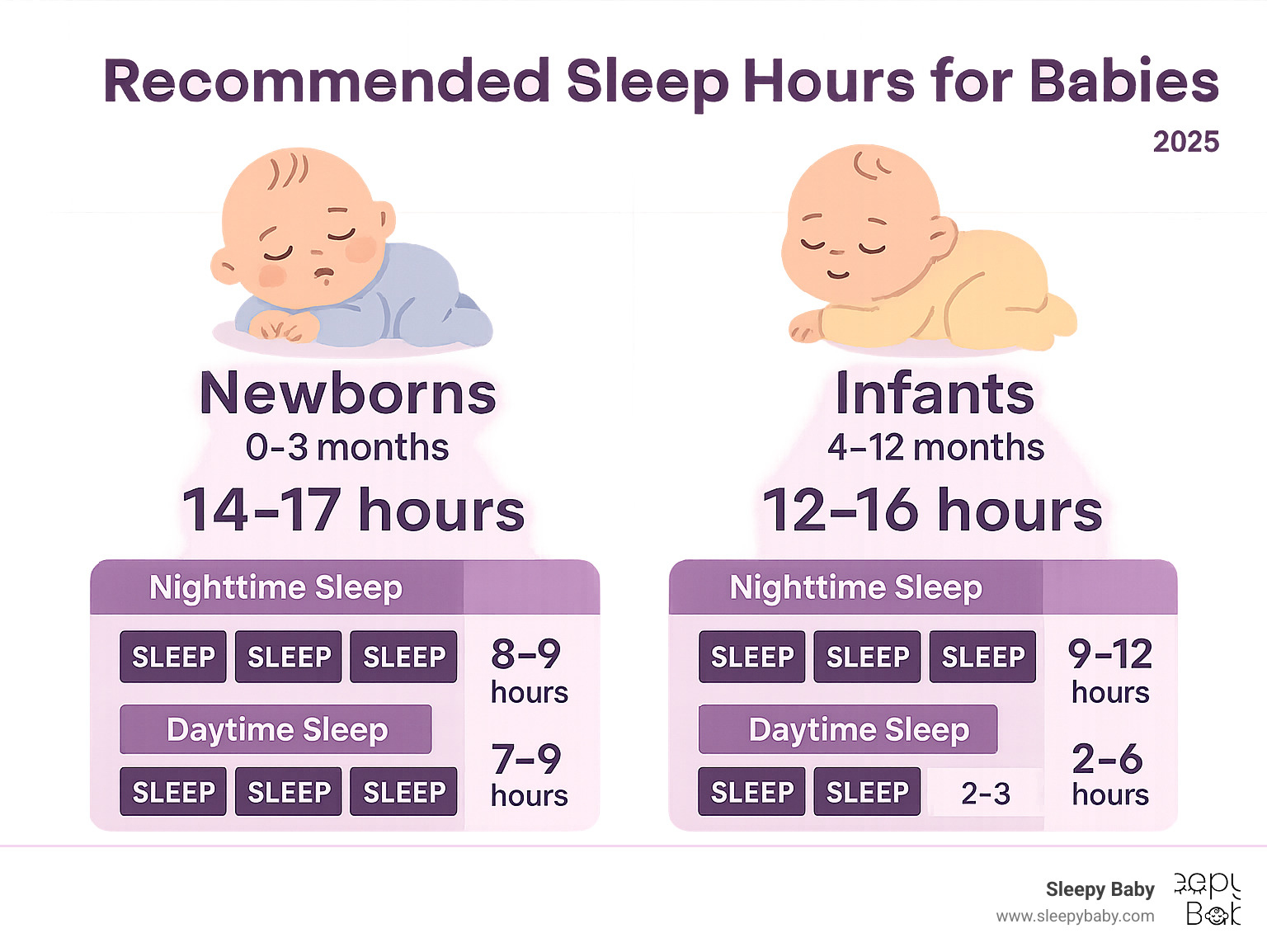

Before you panic that your newborn is waking every two hours, understand that this is likely normal. A baby's sleep cycles are much shorter than an adult's (50-60 minutes), and their tiny stomachs require frequent feeding. What feels like a baby sleep problem is often just normal infant development. As they grow, their sleep patterns mature, with longer stretches emerging around 3-4 months. For a deeper dive, see our guide on Sleep Like a Baby: Decoding Infant Sleep Habits.
Sleep needs change with age, but individual variation is huge. As long as your baby is happy, alert, and growing well, they're likely getting enough sleep. The Consensus Statement on Pediatric Sleep from the American Academy of Sleep Medicine offers these guidelines:
An Australian study found an eight-hour difference between the highest and lowest sleepers, all of whom were healthy. These numbers are guidelines, not strict rules.
Fact: All babies wake up 4-6 times per night. The difference between a "good sleeper" and one who struggles is the ability to self-soothe and fall back asleep without help. If your baby relies on being rocked or fed to sleep (a sleep association), they'll need that same assistance during normal night wakings.
A genuine baby sleep problem might be present if your baby is extremely fussy, difficult to console, or if the situation is severely impacting your family's well-being. Often, the "problem" is the toll that normal infant sleep takes on exhausted parents. Trust your instincts; if you're struggling, it's valid. Our article Nighttime Woes: Why Your Baby Struggles to Sleep can help you assess your situation.
Learning your baby's sleep cues is a game-changer. Watch for early signs of tiredness like yawning, rubbing eyes or ears, or a distant, glazed look. This is your golden window to put them down for sleep.
If you miss these cues, you'll likely face an overtired baby. Their bodies release stress hormones like cortisol, making it harder for them to settle. An overtired baby is often fussy and fights sleep. Understanding wake windows - the time a baby can comfortably stay awake between naps (e.g., 45-60 minutes for a newborn) - helps you catch that sweet spot before they become overtired. For more tips, read Understanding Why Babies Fight Sleep and How to Help.

Baby sleep problems often have specific, solvable causes, from hunger to developmental milestones. Identifying the root of the issue is the first step toward a solution. Most disruptions are temporary and a normal part of development. For insights on a common challenge, see our 4-Month Sleep Regression SOS: Your Guide to Better Baby Sleep.
For newborns, frequent night feedings are a matter of survival, not a sleep problem. Their small stomachs need constant refilling. However, by 6 months, most babies can sleep longer stretches without food. If an older baby still wakes every two hours for milk, it may be a learned association between feeding and sleep.
Strategies like dream feeding (offering a feed right before your bedtime) or encouraging cluster feeding in the evening can help "top them off" for a longer sleep stretch. When your baby is ready, you can gradually wean night feeds by reducing the duration or amount. Explore this topic further in Nursing to Sleep: A Comforting Debate.
Sleep regressions are not steps backward but signs of major brain development. During these temporary phases, your baby's sleep is reorganized as they master new skills like rolling, crawling, or pulling up.
The key to surviving these periods is consistency. Stick to your routines, offer extra comfort, and remember that their sleep will settle again once they've integrated their new abilities.
Sometimes, physical discomfort is the culprit behind baby sleep problems.
If you suspect a medical issue or your baby is inconsolable, seek professional help. For severe fussiness, our guide on The Ultimate Guide to Soothing a Colicky Baby Without Losing Your Mind can offer support.

With an understanding of the causes of baby sleep problems, let's focus on proven solutions. The key ingredients are consistency, patience, and understanding your baby's unique needs. Our guide, Routine Magic: Your Guide to the Best Baby Bedtime Ritual, is a great place to start.
A predictable bedtime routine signals to your baby's brain that it's time to wind down. Research shows children with consistent routines fall asleep faster and wake less. Your routine should include calming activities like a warm bath, a gentle massage, a quiet story, or soft lullabies. The key is to keep it mellow and aim for a consistent bedtime each night, creating positive sleep associations that replace the need for rocking or feeding to sleep.
Self-soothing is a valuable skill that helps babies resettle themselves during natural night wakings.
Consistency is crucial. For more techniques, see The Art of Self-Calming: Helping Infants Find Their Zen.
For persistent baby sleep problems, gentle sleep training can be life-changing. These responsive methods focus on teaching independent sleep skills while providing parental support. They are not about leaving a baby to cry alone. Popular methods include graduated extinction (checking at increasing intervals) and the chair method (gradually moving out of the room).
Studies show sleep training effectively reduces night wakings and improves parental well-being, with no negative long-term effects. The best time to start is typically around 4-6 months. The most important factor is choosing a method you are comfortable with and can apply consistently.
Your baby's safety is the top priority. Always follow safe sleep guidelines to prevent SIDS.
For the latest information, always consult The AAP's Updated 2022 Safe Sleep Recommendations.
You don't have to tackle baby sleep problems alone. A world of tools, technology, and support systems exists to help exhausted families. As a parent who has been there, I know how desperate 3 AM can feel. That's why we created Sleepy Baby—to provide the consistent, comforting support that parents and babies need. For product ideas, see We Tried the Top Baby Sleep Aids: Here's What Actually Worked.
Modern sleep aids are designed for safety and effectiveness.
If problems persist despite your best efforts, it may be time to seek professional help.
Seeking help is a sign of proactive parenting, not failure.
Baby sleep problems profoundly impact parents. Chronic sleep deprivation affects mental and physical health and increases the risk of postpartum depression and anxiety.
Taking care of yourself is essential for taking care of your baby. For more support, especially with colic, see Overcoming Colic and Sleep Deprivation in Newborns: A Journey to Colic Relief.
It's normal to have questions about baby sleep problems. Here are clear, honest answers to some of the most common concerns.
"Sleeping through the night" usually means a continuous 6-8 hour stretch. Most babies are physiologically capable of this by 3-6 months (or 12-13 pounds), but capability doesn't guarantee it will happen. Individual variability is huge. All babies wake 4-6 times a night; the key is whether they can resettle themselves. If your baby is happy and growing well, their pattern is likely normal for them. For more, read When Will My Baby Sleep Through the Night? Answers for Exhausted Parents.
For newborns (0-3 months), it's too early for formal sleep training, but you can start gentle sleep shaping from day one. This includes establishing routines and putting them down drowsy but awake. Formal sleep training is typically best from 4-6 months onward, once sleep cycles mature. However, it's never too late to work on healthy sleep habits. Consistency is the most powerful tool at any age. Learn more in Can You Really Sleep Train a Newborn? Here's the Truth.
While most baby sleep problems are behavioral, it's crucial to rule out medical causes. Consult your pediatrician if you notice:
Always trust your instincts. If something feels off, contact your pediatrician.
Navigating baby sleep problems is a challenging journey, but you now have more tools in your toolkit. You are doing your best.
The most liberating knowledge is understanding normal baby sleep—frequent waking is how babies are wired, not a reflection on you. By identifying the root cause of struggles, from hunger to teething, you can respond with confidence. Your greatest superpower is consistency; a predictable routine helps your baby feel secure enough to sleep. Above all, safe sleep practices (Alone, Back, Crib) are non-negotiable and must always be your priority.
You are not alone in this. Millions of parents worldwide share this experience. Reach out for support from your partner, friends, or parent groups. Your exhaustion is real, and asking for help is a sign of strength.
Better sleep is achievable. At Sleepy Baby, our personal journey inspired us to create solutions that work. Our innovative sleep aids, featuring gentle rhythmic patting and safe white noise, are designed to give you a helping hand. We offer customizable, portable soothing to help families in Australia, Canada, the United Kingdom, and worldwide find the rest they deserve.
Taking the next step—whether with new routines or innovative aids—is about giving your family the gift of healthy sleep. For more strategies, explore The Ultimate Guide to Baby Sleep Solutions: No More Fights! and move toward the peaceful nights your family deserves.


