


6 month old self soothing is your baby's ability to calm themselves and fall asleep independently, without needing you to rock, feed, or hold them. If you're tired of bouncing your baby to sleep, you're not alone. But the good news is that 6 months is an ideal age to start teaching this valuable skill.
Quick Guide to 6 Month Old Self-Soothing:
Self-soothing is a life skill that fosters emotional regulation and independence. At this age, your baby's sleep patterns are maturing, and they are beginning to understand predictable routines, making them primed to learn. This doesn't mean ignoring their needs; it means teaching them calming strategies while remaining responsive to genuine distress.
The journey involves meeting basic needs, establishing routines, and gradually letting them practice. While traditional methods like shushing are common, modern sleep aids can support this process. Safe, low-decibel white noise machines can create a calming environment. Rhythmic tapping devices that mimic a parent's gentle pat can also provide consistent comfort, allowing your baby to learn to settle themselves.
I'm Gary Harutyunyan, and as a father who struggled with sleepless nights, I created the Sleepy Baby to help my own child learn 6 month old self soothing. Our device combines rhythmic patting with soothing sounds to support babies on their journey to independent sleep, giving families the rest they need.
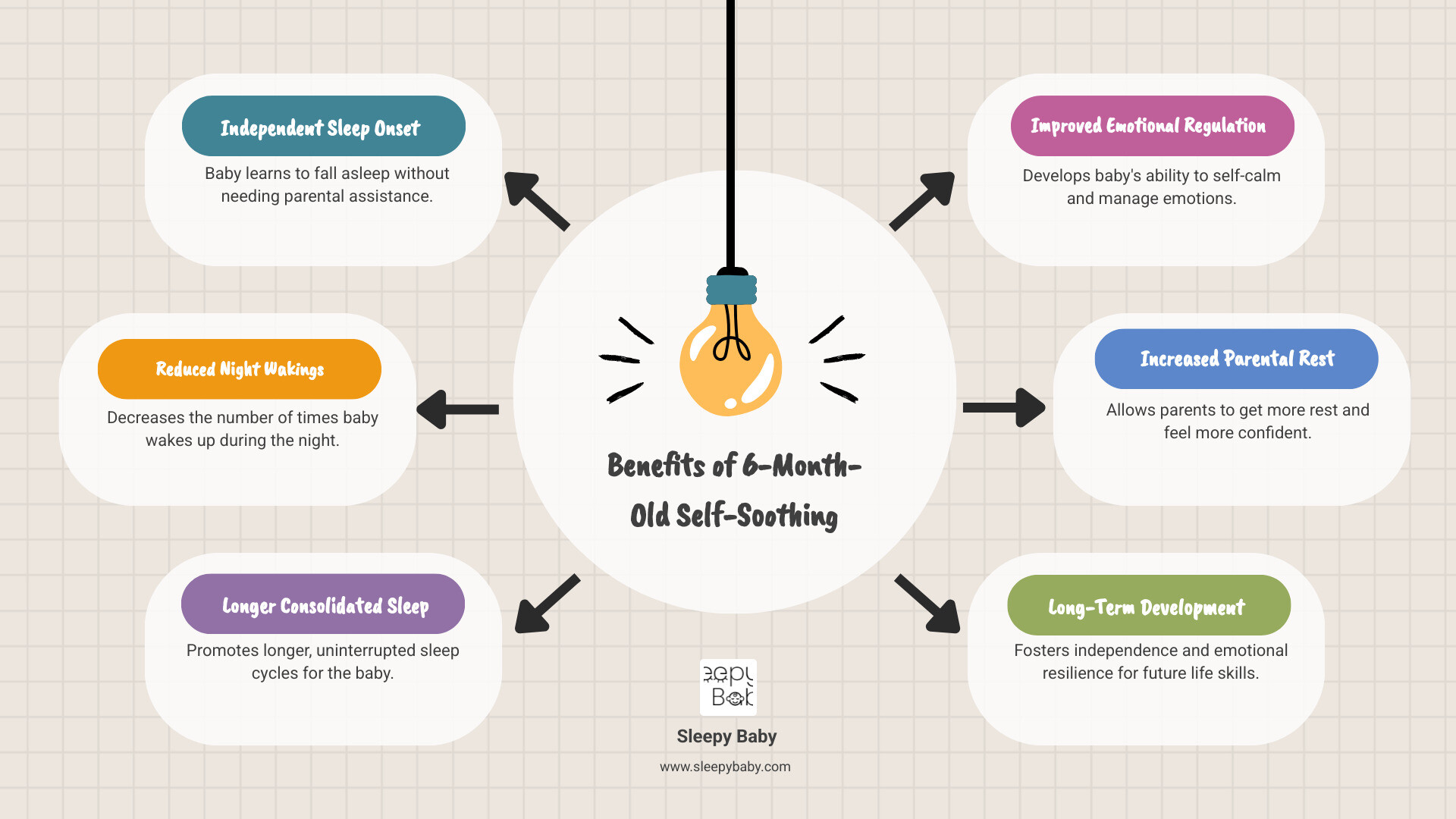
Self-soothing is your baby's ability to calm themselves and manage their emotions without you stepping in every time. It's the skill that allows them to settle back to sleep after stirring in the night or to play contentedly in their crib for a few minutes. According to pediatrician Dr. Matthew Badgett, it's about falling asleep without help and falling back asleep if they wake. This is a fundamental building block for emotional independence.
Teaching self-soothing is not the same as "cry it out." As the American Academy of Pediatrics emphasizes, it's about helping babies learn calming strategies, not leaving them to struggle alone. You can read more in this helpful guide on Teaching Babies to Self-Soothe. Modern approaches recognize that babies need support. While some white noise machines can be unsafe if too loud, today's safety-rated devices present white noise at safe, low-decibel levels. Rhythmic tapping devices that mimic a parent's comforting pat can also provide consistent soothing while your baby practices settling themselves. These tools support your baby's journey toward independence.
At 6 months, your baby's brain and body are developing rapidly, making 6 month old self soothing especially important and achievable.
Around 6 months is a sweet spot for learning self-soothing. Here are the signs your baby is developmentally ready:
If your baby shows these signs, they are prepared for this next step. It takes time and practice, but you can start teaching 6 month old self soothing with confidence.
Before you start teaching 6 month old self soothing, it's crucial to lay the groundwork. A baby who is hungry, uncomfortable, or in a stimulating environment won't be able to learn. First, ensure all basic needs are met: a full belly, a clean diaper, and a comfortable temperature.
Once the basics are covered, focus on consistency and creating a sleep-promoting environment. Babies thrive on predictability, and a solid routine helps regulate their internal clock, making it physically easier for them to fall asleep.
A consistent bedtime routine is a powerful signal to your baby's brain that sleep is coming. Keep it calm, enjoyable, and around 20-30 minutes long.
A great routine might include:
The final, crucial step is placing your baby in their crib drowsy but awake. This is where they learn that the crib is for sleeping and begin to practice falling asleep on their own. Do this at the same time each night to help set their body clock. For more on schedules, check out Mastering the 6 Month Old Sleep Schedule.
Your baby's room should be a sleep sanctuary: dark, cool, quiet, and safe.
Optimizing these elements creates a sleep haven that supports your baby's journey. For more on timing, explore The Secret to Better Sleep: Understanding 6 Month Old Wake Windows.
With a solid foundation in place, you can introduce gentle techniques to encourage 6 month old self soothing. The goal is to gradually give your baby more responsibility for falling asleep while reassuring them that you're nearby.
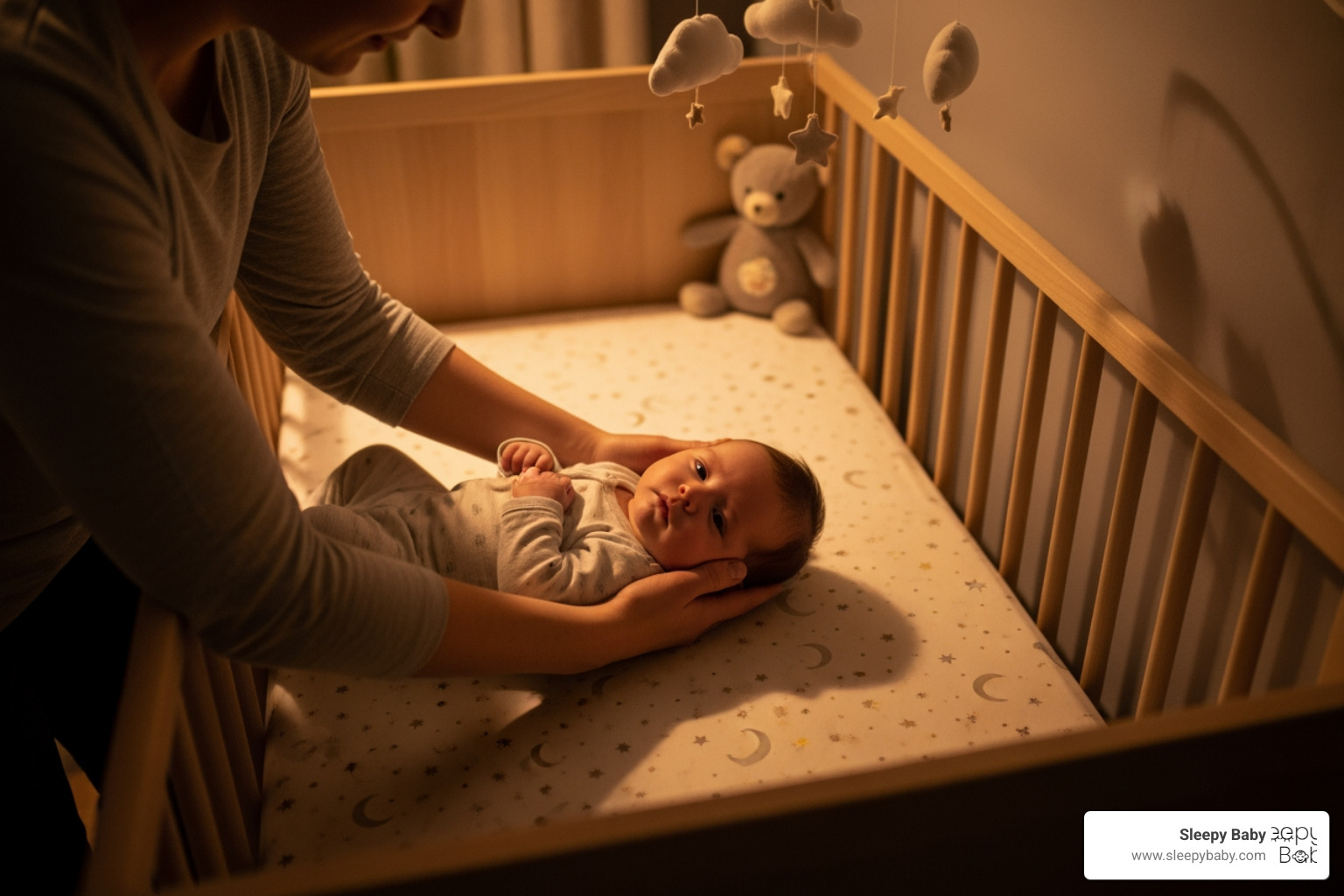
These methods are about creating opportunities for your baby to find their ability to settle. Consistency and a calm approach are key.
This is the cornerstone of teaching independent sleep. The goal is to break the association between your active help (like rocking or feeding) and falling asleep. Watch for drowsy cues like eye rubbing or yawning, then place your baby in their crib while they are calm but still aware of their surroundings.
They might fuss or roll around—this is them actively working on the skill of falling asleep. It can be tough at first, but consistently giving them this practice helps them learn that their crib is where sleep happens. If they struggle, our guide on Understanding Why Babies Fight Sleep and How to Help has more tips.
If "drowsy but awake" feels too abrupt, gradual methods offer a gentler path. These techniques slowly reduce your involvement, allowing your baby to take on more responsibility at a comfortable pace.
These gentler approaches may take longer, but they often result in fewer tears. For a deeper dive into these methods, see our guide: Dream Team: Effective Sleep Training Methods for 6 Month Old Babies.
Learning to distinguish between different cries is one of the hardest parts of teaching 6 month old self soothing. Not all cries are created equal.
Try pausing for a few minutes when you first hear fussing. Research shows this brief pause gives babies a chance to practice settling themselves. You can read more in this study on Nighttime sleep-wake patterns and self-soothing from birth to one year of age. If crying escalates, go in and offer comfort, then try putting them down again once calm. The goal is to respond to genuine needs while allowing space for skill development.
Let's be real: the path to 6 month old self soothing is rarely a straight line. Just when you think you've succeeded, a sleep regression or teething can disrupt everything. If you're feeling frustrated, know that it's normal and you're not doing anything wrong.

Babies are constantly developing, which makes their sleep unpredictable. Listening to your baby fuss can be emotionally taxing, and you might feel guilty or want to give up. The key through these tough moments is consistency. Maintaining your routine provides an anchor for your baby, especially when their world feels chaotic. Progress isn't always linear.
The 6-month sleep regression has a reputation for being particularly brutal. A previously good sleeper might suddenly start waking frequently. This is not a failure on your part; it's a sign of healthy development.
Around 6 months, your baby is mastering major skills like sitting up and rolling, and their brain is working overtime. This can make it hard for them to switch off and sleep. You might find them practicing their new moves in the crib at 2 a.m.
The good news is that regressions are temporary, usually lasting a few days to a few weeks. The key to getting through it is to stick to your routine. Don't introduce new sleep props like rocking or feeding to sleep if you've worked to move past them. Give your baby plenty of floor time during the day to practice their new skills. This phase will pass, and the self-soothing skills you're teaching will remain. For more coping strategies, read our guide: 6 Month Sleep Regression: Signs Every Parent Should Know.
Teaching your baby to self-soothe can be harder on you than on them. Hearing your baby cry triggers protective instincts, and it's easy to feel guilty or frustrated. Acknowledging these emotions is the first step to managing them.
For more encouragement, check out No More Tears: Easy Techniques to Help Your Baby Self-Soothe. You're doing a great job.
We know you have questions—probably lots of them. Teaching your baby to self-soothe can feel overwhelming, especially when you're exhausted and just want everyone to sleep peacefully. We're here to provide clear, reassuring answers based on research and real-world experience.
There's no magic number, as every baby is unique. However, with a consistent approach, many parents see meaningful progress within 3 days to 3 weeks.
The timeline depends on two main factors:
Focus on gradual progress, not perfection. Celebrate small victories, like shorter fussing times or slightly longer sleep stretches. Learning is a process with good days and bad days.
While it's difficult to avoid all crying when making a change to a baby's routine, you can absolutely use gentle methods that aim to minimize tears and distress.
It's important to distinguish between protest crying and distress. A few minutes of fussing is a normal way for a baby to communicate displeasure with a new routine. It's not a sign of suffering. However, if your baby's cries escalate to genuine distress—sounding panicked, intense, and continuous—you should always respond. Go in, offer comfort, and then try again once they are calm.
Gentle methods like the Chair Method or Pick-Up/Put-Down are designed to keep your baby feeling secure while they learn. Also, ensuring your baby isn't overtired when you put them down can significantly reduce crying. A well-rested baby is much more likely to settle with minimal fuss.
While we provide extensive guidance on 6 month old self soothing, we also want to be clear: there are times when seeking professional help is absolutely the right move. Recognizing when you need expert support is a sign of strength and good parenting, not failure.
Your pediatrician is always a great first point of contact for any persistent sleep concerns. They know your baby's health history and can guide you toward appropriate specialists if needed. Don't hesitate to reach out—getting help means you're taking your baby's well-being (and your own) seriously.
Teaching your 6 month old self soothing is truly one of the most valuable gifts you can give—not just to your baby, but to your entire family. This skill reaches far beyond simply getting through the night. It's about helping your little one develop emotional regulation, build confidence in their own abilities, and establish a foundation for independence that will serve them throughout their entire life.
We've walked through this journey together, exploring why 6 months is such a sweet spot for starting, how to create the perfect foundation with consistent routines and a sleep-friendly environment, and which gentle techniques like "drowsy but awake" and gradual withdrawal can help your baby learn this essential skill. We've also talked honestly about the bumps in the road—those inevitable sleep regressions, the emotional toll on parents, and how to manage expectations with grace and patience.
This is a marathon, not a sprint. Some nights will feel like victories, and others might leave you wondering if you've made any progress at all. But here's the truth: with consistency, love, and a responsive approach that honors your baby's needs, you are guiding them toward more peaceful sleep and greater emotional resilience. Every small step forward matters, even when it doesn't feel like it in the moment.
At Sleepy Baby, we understand how challenging these early months can be because we've been there too. That's why we created our sleep aids with rhythmic patting and soothing white noise—to mimic that comforting touch you'd give your baby yourself. Our devices are designed to provide consistent, hands-free support as your baby learns to settle independently, giving them that reassuring sensation of your presence even when you're not right there. We believe every family deserves rest, and sometimes a little extra support makes all the difference.
You're doing an incredible job, and we're cheering you on every step of the way. For more expert guidance, practical tips, and support on your sleep journey, explore our blog for more expert sleep tips. Here's to calmer nights and well-rested families—you've absolutely got this.


