


Does motrin make babies sleepy? The short answer is: not directly. Motrin (ibuprofen) doesn't contain sedatives, but it may help babies sleep better by relieving pain and discomfort that keeps them awake. Here's what you need to know:
Quick Answer:
When your baby is sick or teething, sleep becomes elusive. The reality is that Motrin works by reducing inflammation and blocking pain signals. When teething pain, earaches, or fever disrupt your baby's ability to settle, Motrin addresses the root cause of discomfort. Once that pain subsides, your baby can finally relax into natural sleep.
However, drowsiness is listed as a potential, though uncommon, side effect. Some children may feel sleepy after taking ibuprofen, while others paradoxically become more active. Every baby responds differently.
I'm Gary Harutyunyan, inventor of the Sleepy Baby device and a father who spent countless nights researching solutions for infant rest. Through my journey, I learned that medication addresses symptoms but isn't a sleep solution—it's a pain management tool that may indirectly support better rest.
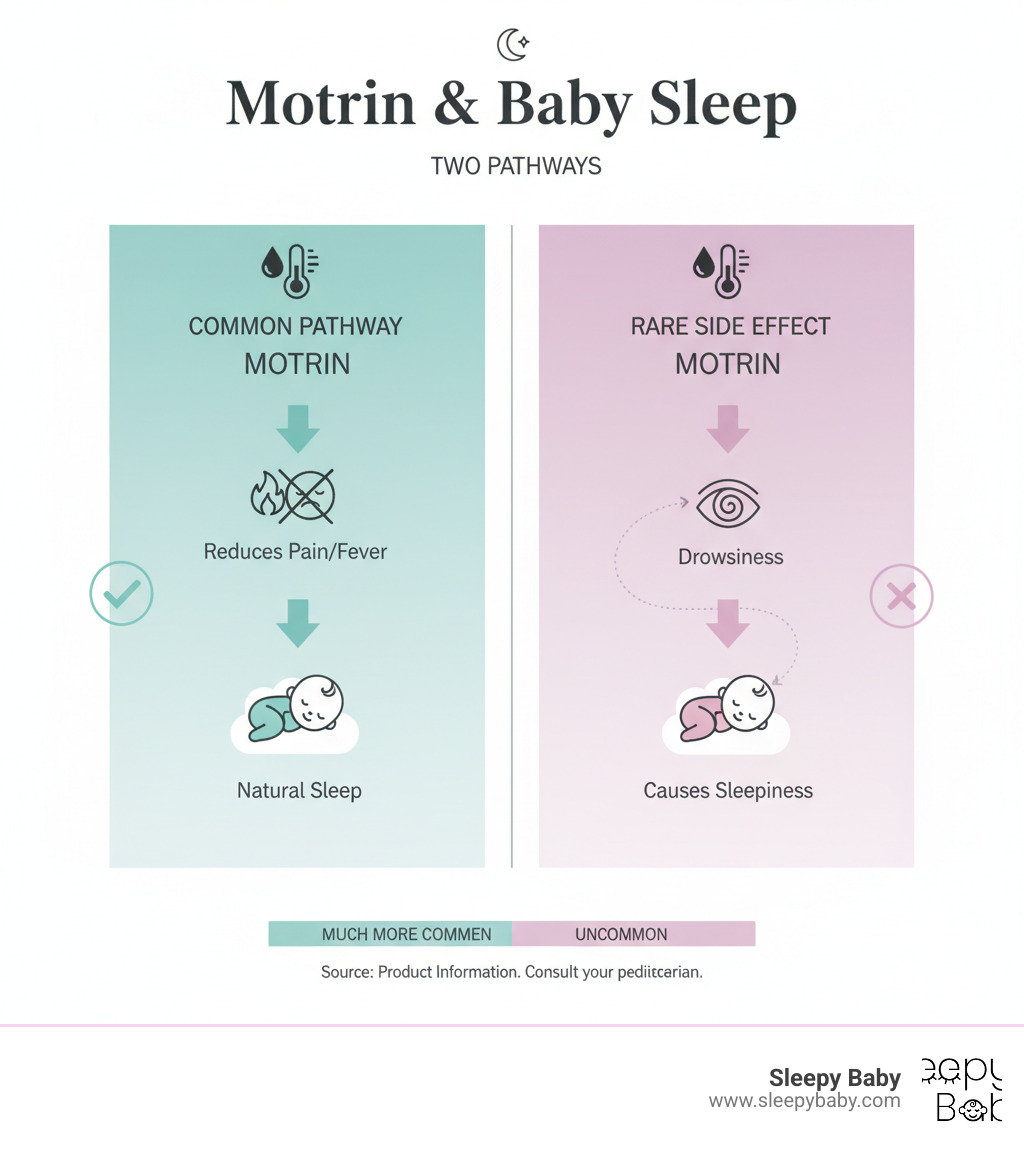
If you've ever wondered if Motrin makes babies drowsy, you're not alone. Parent forums are filled with conflicting stories: some babies drift off peacefully, while others become unexpectedly wired. This reflects two theories about how Motrin affects sleep.
The first and most widely accepted theory is that Motrin works indirectly. It relieves pain, allowing a baby to finally relax into the natural sleep their body needs. The second theory is that drowsiness is a direct, but uncommon, side effect of the medication itself.
After reviewing pediatrician advice and medical research, the evidence points strongly toward the pain relief theory. Motrin isn't a sedative—it's a pain reliever that removes the obstacles keeping your baby awake.

Think about trying to sleep with a pounding headache—it's nearly impossible. Your baby faces the same struggle with teething pain, an earache, or a fever. Motrin's active ingredient, ibuprofen, is a nonsteroidal anti-inflammatory drug (NSAID) that blocks the production of prostaglandins—chemicals that trigger pain and inflammation.
As the pain from teething or fever fades, your baby's body can finally relax. The improved comfort doesn't knock them out; it simply removes the barriers preventing natural sleep. They're not sedated; they're finally comfortable enough to rest.
That said, drowsiness is technically listed as a possible side effect of ibuprofen. According to Children's Motrin Side Effects: Common, Severe, Long Term, unusual sleepiness can occur, though it's considered an uncommon reaction. In rare cases, extreme drowsiness might signal a more serious issue.
Some children experience a paradoxical reaction and become hyperactive after taking Motrin. This individual variation means there's no one-size-fits-all answer.
A critical distinction: Children's Motrin is not the same as Motrin PM. Motrin PM contains diphenhydramine, an antihistamine that causes drowsiness, and is not approved for children under 12. Regular Children's Motrin contains only ibuprofen. Any sleepiness is typically an indirect result of pain relief or an uncommon individual reaction.
When your little one is sick, your medicine cabinet likely has two options: Motrin (ibuprofen) and Tylenol (acetaminophen). Both reduce fever and ease pain, but they work differently. Understanding these differences helps you choose the right one for your baby's needs.

Motrin (ibuprofen) is a nonsteroidal anti-inflammatory drug (NSAID). It blocks prostaglandins that cause pain, fever, and inflammation, making it effective for teething and earaches.
Tylenol (acetaminophen) is a pain reliever and fever reducer. It's believed to act on the central nervous system but, unlike ibuprofen, does not target inflammation.
For exhausted parents, the duration is key: Motrin typically lasts 6-8 hours, while Tylenol works for 4-6 hours. This longer stretch of relief from Motrin can be a game-changer overnight.
| Feature | Motrin (Ibuprofen) | Tylenol (Acetaminophen) |
|---|---|---|
| Active Ingredient | Ibuprofen | Acetaminophen |
| Drug Class | NSAID | Analgesic & Antipyretic |
| How it Works | Blocks inflammation, pain, and fever | Reduces pain and fever |
| Best For | Pain with inflammation (teething, earaches), fever | Mild to moderate pain, fever |
| Duration of Relief | 6-8 hours | 4-6 hours |
For overnight relief, Motrin's longer-lasting effect often makes it the better choice to help a baby stay comfortable through the night. However, neither medication is a sleep aid. We never recommend using medication just to make a baby sleep. It can mask underlying problems and is not what these medicines are for.
Think of these medications as tools for comfort. They remove the obstacles (pain, fever) that prevent your baby from sleeping naturally. Once the discomfort is addressed, your baby can relax into the restful sleep they need.
For more on using medication responsibly, see our article on Sleep Aid Medicine for Infants: What Experts Say. Always consult your pediatrician to determine which medication is right for your child.
When using Motrin for your little one's pain or fever, getting the dosage right and knowing what to watch for is essential for their safety.

Dose by weight, not age. A child's weight is the most accurate factor for determining the correct dose. Check the packaging for a dosing chart that matches your child's current weight to the correct amount in milliliters (mL).
When in doubt, call your doctor. For official guidance, you can reference the Official Dosing Information from the FDA.
Most children tolerate ibuprofen well, but it's important to know what to look for.
Common side effects are usually mild and include stomach upset, nausea, diarrhea, or constipation. Giving Motrin with food or milk can help prevent stomach discomfort.
Serious side effects are rare but require immediate medical attention. Contact your doctor or seek emergency help if you notice any of the following:
Trust your instincts. If something doesn't feel right after giving your baby Motrin, don't hesitate to contact your healthcare provider.
Knowing when to consult your pediatrician about Motrin can provide peace of mind and keep your child safe. Here are key situations that warrant a call.
Pause and consult your doctor or pharmacist before giving Motrin if your child:
Once you've given a dose, watch for any warning signs. Call your doctor immediately if your child experiences:
Trust your parental instincts. If you are concerned about how your child is acting, it's always best to make the call. If you ever suspect an overdose, contact your local poison control center or seek emergency help immediately, even if your child seems fine.
Let's tackle some of the most common questions parents have about Motrin and sleep.
No. The active ingredient in Children's Motrin is ibuprofen, an NSAID designed to fight pain and fever, not cause sleepiness. The inactive ingredients (like water, sweeteners, and flavorings) are for taste and consistency and have no sedative properties.
This is different from adult products like Motrin PM, which adds diphenhydramine, an antihistamine that causes drowsiness. Children's Motrin does not contain diphenhydramine or any other sedatives. If your baby seems sleepy, it's likely due to pain relief or, in rare cases, an individual reaction to ibuprofen.
Children's Motrin typically provides relief for 6 to 8 hours, which is longer than acetaminophen's 4 to 6 hours. This extended duration can be very helpful for overnight comfort.
When teething pain or a fever is waking your baby up, a dose of Motrin before bed can provide a longer window of comfort. This allows for more sustained, restful sleep. It doesn't induce sleep, but it removes the pain that's disrupting it.
The primary reason a baby might sleep better after Motrin is the relief from pain and discomfort. By addressing the source of their distress, Motrin allows their body to relax and fall into a natural sleep.
Drowsiness is listed as a rare side effect, but it is not the intended or typical response. Some children even have the opposite reaction and become hyperactive. Therefore, the most accurate answer is that Motrin enables sleep through pain relief, rather than acting as a sedative. This is an important distinction: Motrin is a tool for managing pain that disrupts sleep, not a sleep aid itself. For a similar look at acetaminophen, see our article Baby Got Zzzzs: Can Children's Tylenol Cause Sleepiness?.
While medication like Motrin is useful for managing pain, it's only one piece of the sleep puzzle. A holistic approach that includes non-medicinal comfort and a soothing environment can make all the difference in promoting healthy, independent sleep.

When your baby is sick, simple comforts can work wonders alongside any necessary medication.
Sensory soothing is a powerful tool for helping babies fall and stay asleep. At Sleepy Baby, we focus on mimicking the natural comforts that infants find most calming.
White noise machines can mask startling household sounds and create a comforting, womb-like environment. While some older devices raised safety concerns, modern safety-rated devices are designed to present white noise at safe, low-decibel levels. Some innovative devices can even be placed on the baby's chest, allowing them to feel the gentle vibrations of the sound for an improved soothing effect.
Rhythmic tapping is another technique that mimics the familiar sensations from the womb. Think of how you naturally pat your baby's back to calm them. Our Sleepy Baby devices are engineered to replicate this comforting, rhythmic tapping, providing consistent, hands-free soothing that helps babies regulate their nervous systems and settle into sleep.
This approach supports caregivers by providing a much-needed break while the baby receives crucial comforting touch, promoting independent sleep in a gentle, secure way.
So, does motrin make babies sleepy? The answer is that it helps them sleep by taking their pain away. Motrin isn't a sedative; its power lies in relieving the pain and fever that prevent rest. By addressing the root of the discomfort, it allows a baby's natural ability to sleep to take over.
We've covered the importance of safe medication practices—dosing by weight, using the right tools, and knowing when to call a doctor. Medication should be a short-term tool for managing symptoms, not a long-term sleep solution.
Building healthy sleep habits requires a more holistic approach. This is where non-medicinal sleep support becomes invaluable. Creating a soothing environment with consistent routines and innovative tools can make all the difference. Modern, safety-rated devices that provide gentle white noise at low decibels can create womb-like security. Rhythmic tapping that mimics a caregiver's touch helps babies learn to self-soothe and sleep independently.
At Sleepy Baby, we are passionate about providing solutions that promote genuine, healthy rest for the whole family. However, your pediatrician's advice is paramount. They know your child's health history and can provide personalized guidance.
We hope this guide has given you clarity and confidence. For more insights into infant sleep and soothing techniques, we invite you to Explore our blog for more expert sleep tips.


