


When do babies transition to one nap is one of the most common questions from exhausted parents watching their little one's sleep patterns shift. The answer isn't always straightforward, but here's what you need to know:
Quick Answer:
Just when you think you've mastered the two-nap routine, everything changes. Your baby who once happily took two naps suddenly starts fighting sleep, taking shorter naps, or skipping them entirely. This transition marks a major developmental milestone as your baby's sleep consolidates—they can stay awake for longer periods and need fewer but longer stretches of daytime rest.
The shift from two naps to one represents your child's growing maturity. Their circadian rhythm is developing, and they can handle extended wake windows of 4-6 hours. However, timing this transition wrong can lead to an overtired, cranky baby and disrupted nighttime sleep. Many parents mistake temporary sleep disruptions (like teething or developmental leaps) for readiness to drop a nap. The key is recognizing consistent patterns versus short-term phases.
As a parent who has steerd these challenges, I've learned that timing and patience are everything. This guide is based on extensive research to help other families through this important developmental phase.
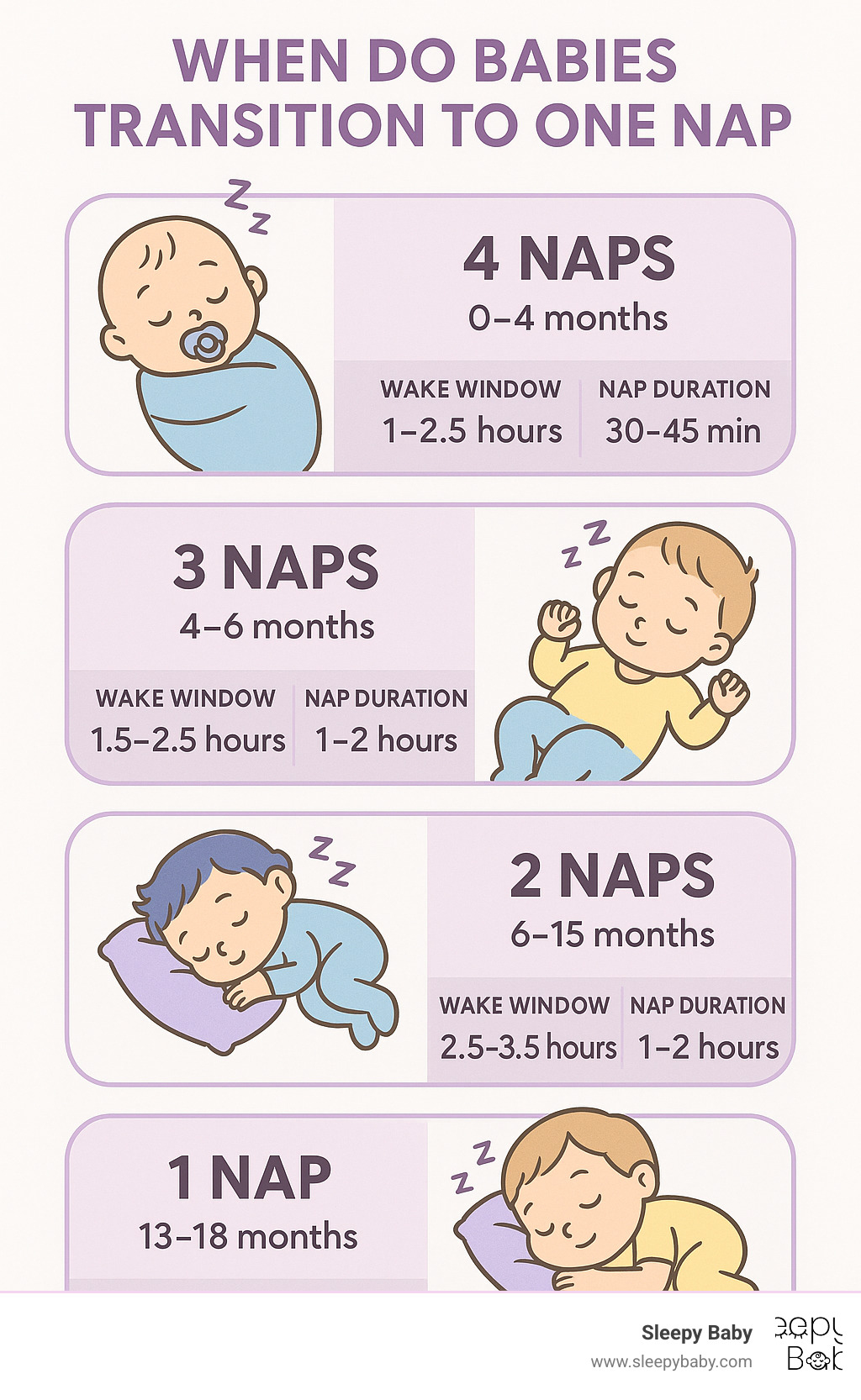
Knowing if your little one is truly ready for one nap can feel like solving a puzzle. It’s not just about age, but a combination of consistent signs that their sleep needs are evolving. As babies grow, their sleep patterns mature, their circadian rhythms stabilize, and their ability to stay awake longer increases. This consolidation of sleep is a natural part of development.
Adequate daytime rest is crucial for cognitive development, memory, and emotional regulation, as research on the role of naps shows. The key is to look for consistent signals over a week or two, not just a few tricky days, to know if they're ready.
For most babies, the sweet spot for this transition is between 13 and 18 months old. This is when they are developmentally ready for longer wake windows. However, every child is unique; some might be ready earlier, while others hold onto two naps until 19 or 20 months.
Is 12 months too early? For most babies, yes. Developmentally, most aren't ready for a one-nap schedule until at least 14 months. Around their first birthday, babies hit major milestones—first steps, new words, and blossoming independence. These leaps can cause temporary sleep disruptions that look like nap transition readiness but aren't. If your baby struggles with sleep around 12 months, it's more likely due to these big changes than a true need to drop a nap.
When it comes to when do babies transition to one nap, look for these signs to be present for at least one to two weeks:

It's easy to confuse a sleep regression with readiness to drop a nap. The key difference is consistency over time.
If sleep disruptions last a few days to two weeks and are accompanied by increased hunger, clinginess, or new skills, it's likely a temporary phase. Common culprits include:
To differentiate, ask yourself: Is this behavior consistent for at least one to two weeks, and is my child still content on days with fewer naps? If yes, it's likely readiness. If not, try to ride out the temporary phase before forcing a transition.
You've decoded the signs and feel confident your little one is ready. Now, let's make the shift to one nap as smooth as possible. Think of this as a gentle dance, not a sudden leap. Patience and gradual changes are key. A predictable routine and a calm sleep space are also essential. For tips on creating calming sequences, see our guide on Routine magic your guide to the best baby bedtime ritual.
There isn't a single magic trick for this transition. Here are a few popular strategies:
Once on one nap, wake windows get longer, typically 4-6 hours before and after the nap. The nap should ideally start midday, about 5-6 hours after waking, and last 1.5 to 3 hours.
Here’s a comparison of a typical 2-nap vs. 1-nap schedule for a 15-month-old. These are just examples.
| Schedule Element | Typical 2-Nap Schedule (approx. 12-14 months) | Typical 1-Nap Schedule (approx. 15-18 months) |
|---|---|---|
| Wake Up | 7:00 AM | 7:00 AM |
| Wake Window 1 | 3.5 hours | 5.5 hours |
| Nap 1 | 10:30 AM - 11:30 AM (1 hour) | 12:30 PM - 2:30 PM (2 hours) |
| Wake Window 2 | 3.5 hours | 5.5 hours |
| Nap 2 | 3:00 PM - 4:00 PM (1 hour) | No second nap |
| Wake Window 3 | 3 hours | |
| Bedtime | 7:00 PM | 8:00 PM (or earlier if needed) |
| Total Daytime Sleep | 2 hours | 2 hours |
| Total Wake Time | 9 hours | 11 hours |
Supporting your little one requires comfort, consistency, and smart adjustments.
One of the most important rules is to adjust bedtime earlier. If the single nap is short, bringing bedtime forward by 30-60 minutes prevents overtiredness, which can make it harder for them to sleep. Don't be afraid of a 6:00-6:30 PM bedtime.
A consistent nap routine is also key. A simple, predictable sequence like dimming the lights and reading a quick book signals that it’s time to wind down.

Modern sleep aids can also be a great help. Rhythmic patting devices for calming, like our Sleepy Baby products, are designed to mimic your comforting touch. This hands-free, customizable soothing can be a huge help in settling babies for their single, longer nap. The consistent motion helps calm their nervous system and encourages independent sleep. You can learn more about how our devices, like The gentle dreamer the baby patting device thats revolutionizing sleep for babies and families, are helping families.
Safe white noise machines are another powerful tool for blocking out household sounds. While some older machines have raised concerns, modern safety-rated devices like those from Sleepy Baby are designed to deliver white noise at safe, low-decibel levels. Some even have the sound emanating from a device placed on the baby's chest, ensuring both safety and effectiveness. This consistent auditory cue can help your baby drift off and stay asleep.
Even with the best strategies, the journey of when do babies transition to one nap can have its ups and downs. Overtiredness, crankiness, short naps, or nap strikes are a normal part of this developmental leap. Understanding why babies might fight sleep is the first step in helping them. Our article Understanding why babies fight sleep and how to help dives deeper into this topic.
When your little one’s single nap is short (less than 1.5 hours) or they refuse it, it can be frustrating. Here’s how to help:
Daycare can add complexity to the transition, but good communication makes it manageable.
As mentioned, 12 months is typically too early. While some daycares implement a one-nap schedule then, the risks of an early transition often outweigh the benefits.

Pushing the transition too soon can lead to chronic overtiredness. This can cause increased fussiness, more meltdowns, difficulty falling asleep, increased night wakings, and early morning wakings. An overtired baby's body produces more cortisol, a stimulating hormone that makes it harder to sleep. Unless your 12-month-old is consistently taking a single, long nap of 2.5-3 hours and showing all other signs of readiness for weeks, it’s best to hold off. Rushing this transition can compromise the vital rest they need for healthy development, as supported by recommendations from the American Academy of Pediatrics.
Navigating the journey from two naps to one can bring up many questions. Here are answers to some of the most common ones.
It's almost always the afternoon nap that goes first. As your baby gets older and can stay awake longer, their morning nap naturally shifts later. Eventually, this becomes the single midday nap, replacing the need for a second one. During the transition, your baby might need a short "catnap" (30-45 minutes) in the late afternoon to bridge the gap to bedtime without getting overtired.
There's no single answer, as every child is unique. For some, the switch might happen in just a few days. For most, it's a more gradual process, taking anywhere from two to four weeks. Expect a bumpy ride with some one-nap days and some two-nap days. Consistency and patience are your best friends during this adjustment.
This shift changes the rhythm of your baby's day. With longer wake windows (now 4-6 hours), you'll need to adjust feeding and play routines.
With more time between meals, your baby will likely need more snacks to stay fueled. You'll also need to adjust meal times, especially lunch, offering it before the midday nap (e.g., lunch at 11:30 AM for a 12:30 PM nap).
The longer morning wake window is perfect for active play to build up "sleep pressure" for a good nap. Follow this with quiet pre-nap activities, like reading or cuddling, to signal that it's time to rest.
Navigating when do babies transition to one nap can feel like a huge mountain to climb, but it's a positive step in your child's development. This transition is a sign that your baby is growing, learning, and becoming more independent.
By watching for the key signs of readiness and using the gradual transition strategies we've discussed, you're setting your little one up for success. Patience and consistency are your superpowers. This shift to a single nap often brings a new, predictable rhythm to your days, giving you a longer block of time to plan activities, run errands, or just relax.
Here at Sleepy Baby, we support you through every step of your baby's sleep journey. Our innovative products are designed to make these transitions smoother. With rhythmic patting that mimics your comforting touch and safe, low-decibel white noise from a device that can even be placed on their chest, our tools can guide your baby toward the restorative sleep they need. We believe in empowering you with the knowledge and tools to foster independent sleep, so your whole family can thrive. You've got this!
For more insights into how your baby's sleep patterns evolve, don't miss our guide on The sleep journey infant sleep patterns in the first year.


