


Gripe water for sleep is a topic that comes up often in new parent circles, but does this traditional remedy actually help babies sleep better?
Quick Answer:
When you're running on two hours of broken sleep, you'll consider just about anything that promises relief for your fussy baby. One remedy that keeps popping up is gripe water—especially the "nighttime" versions marketed for sleep. But is it really helping, or is something else going on?
The reality is more complicated. Gripe water has been used for over 100 years to address digestive issues like gas and colic. The theory is that if your baby's tummy feels better, they might sleep better. But that's not the same as being a sleep aid.
Here's what matters: gripe water is a dietary supplement, not a medication. The FDA doesn't regulate it like actual medicines, and there have been recalls for contamination. Despite a century of use, there's no scientific research proving it helps babies sleep.
Medical professionals, including pediatrician Christina Vernace, DO, don't typically recommend gripe water because its safety and effectiveness aren't guaranteed.
As a father who has steerd the challenges of a newborn's sleep, I understand the desperation to find anything that works. My journey led me to research every option, including gripe water, and ultimately to create evidence-based solutions. I'm Gary Harutyunyan, and my mission is to help parents separate what actually works from marketing hype.
Gripe water for sleep definitions:
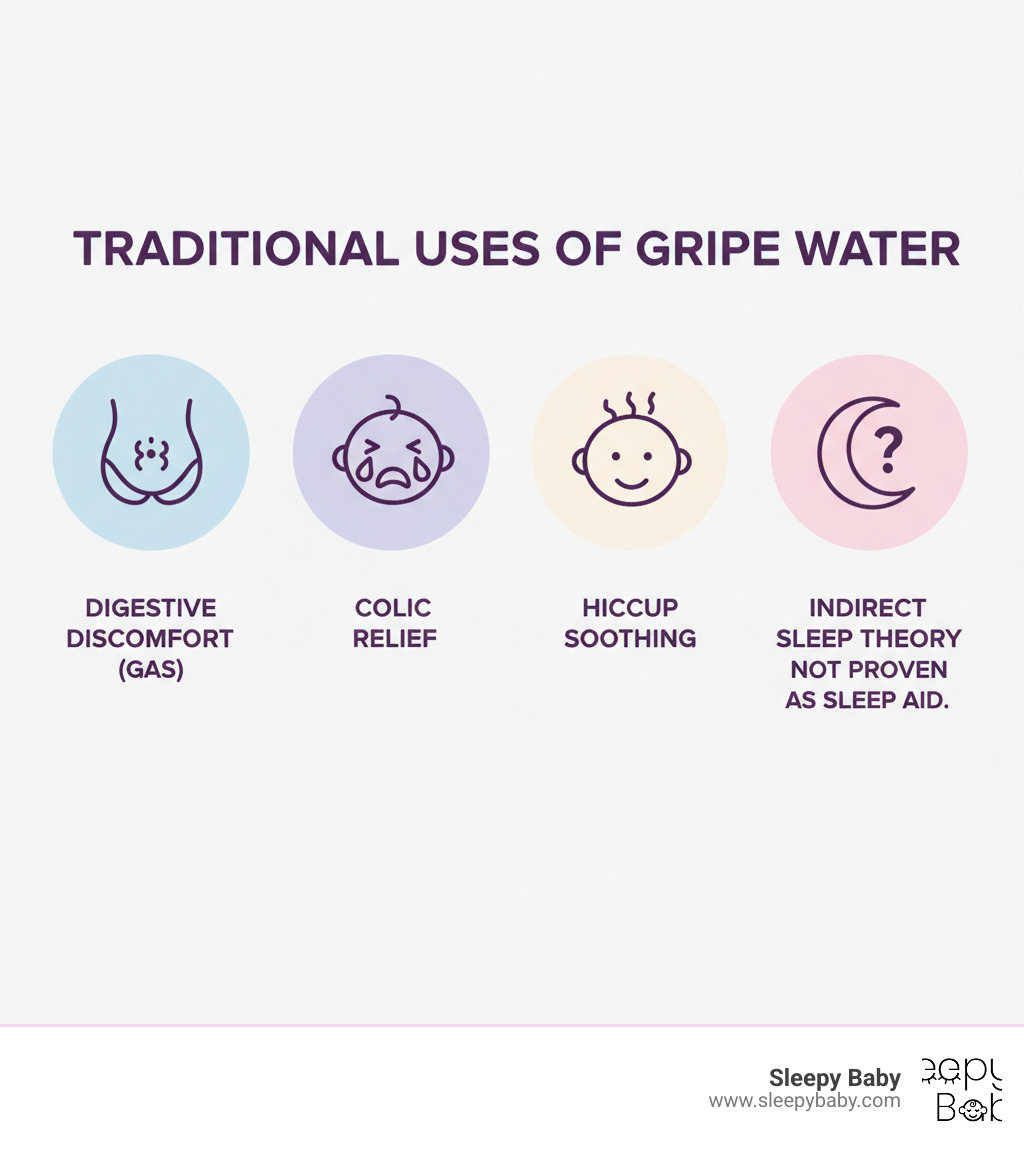
Let's start with the basics. Gripe water is an over-the-counter herbal supplement—usually a liquid you give with a dropper—that's been around for more than a century. Parents reach for it when their babies are dealing with digestive discomfort: gas, hiccups, and the kind of fussiness that often comes with colic. It's one of the traditional approaches to management and treatment for colic.
But here's where things get interesting when we talk about gripe water for sleep. The connection isn't as direct as you might think.
The theory goes like this: if your baby has a gassy, uncomfortable tummy, that discomfort can make it nearly impossible for them to settle down and sleep. By soothing those digestive issues, gripe water might help your baby feel more comfortable. And a more comfortable baby might sleep better as a result.
Notice all those "mights" and "maybes"? That's because gripe water isn't designed to make babies sleep. It's not a sedative. It doesn't contain anything that directly induces drowsiness. The idea is simply that addressing the root cause of discomfort—the gas, the belly troubles—could remove a barrier to sleep.
Think of it this way: if you had a terrible stomachache, you'd have trouble falling asleep too. Fix the stomachache, and suddenly sleep becomes possible again. That's the indirect sleep theory behind gripe water.
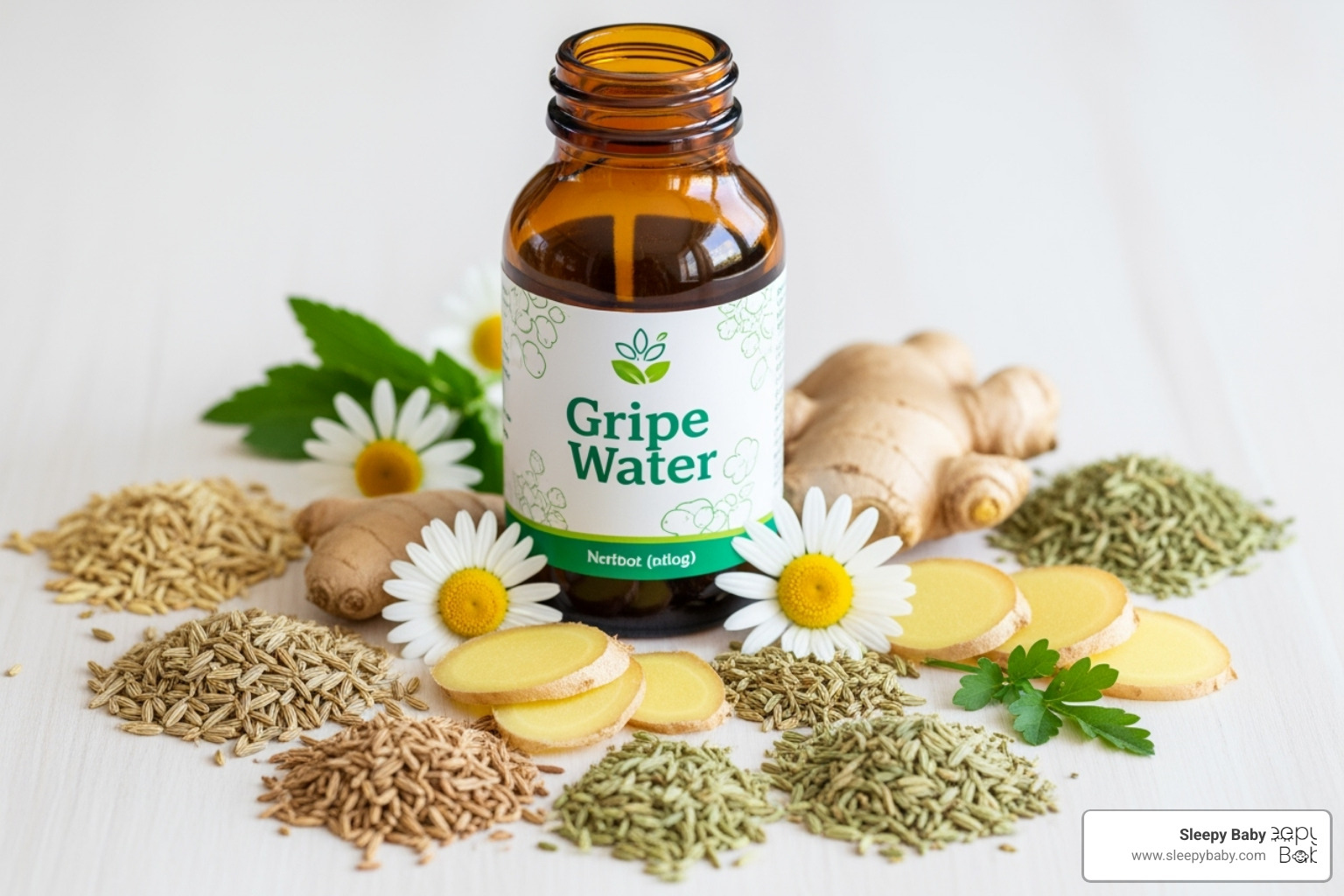
So what's actually in this stuff? Traditional gripe water contains herbal ingredients known for their carminative properties—a fancy way of saying they help relieve gas and bloating.
The most common ingredients you'll see are fennel seed, which is believed to relax the digestive tract and reduce gas buildup, and ginger root, known for soothing the stomach and reducing nausea. These herbs have been used in traditional medicine for generations.
You'll also find sodium bicarbonate (baking soda) in some formulas. Historically, it was included as an antacid to neutralize stomach acid. But here's the thing: pediatrician Christina Vernace, DO, points out that acid isn't actually the root cause of most babies' gassiness. Using baking soda might not be effective and can even cause problems. We'll explore those risks in more detail later.
It's worth noting that old-school gripe water formulas used to contain alcohol and sugar—ingredients we now know are harmful for infants. Modern, reputable brands have removed these from their recipes, but it's a reminder that not all gripe water products are created equal.
This is where manufacturers have gotten creative with gripe water for sleep. Recognizing that exhausted parents are looking for nighttime relief, some brands have developed special "bedtime" or "nighttime" versions.
These formulations include the traditional digestive-soothing ingredients we just discussed, but add what's often called a "Bedtime Bliss Blend" of calming herbs. These typically include chamomile, which is known for its mild calming effects, lemon balm, believed to reduce anxiety and promote relaxation, and sometimes passionflower, another herb thought to have gentle calming properties.
The marketing pitch is that these added herbs help babies relax into sleep more easily once their tummy troubles are addressed. But here's the important part: manufacturers are careful to emphasize that these products are not sedatives. They contain no melatonin, no drugs, nothing that will knock your baby out.
The idea is gentler than that—to help calm a fussy baby who's already uncomfortable, making it easier for them to settle down naturally. Whether that actually works in practice is another question entirely, which we'll tackle in the next section.
When you're holding a crying baby at 2 AM, you want answers that you can trust. With gripe water for sleep, those answers are harder to come by than most parents realize.

Here's the fundamental issue: gripe water is classified as a dietary supplement by the FDA, not a medication. That might sound like a minor technicality, but it changes everything. Dietary supplements don't go through the same rigorous testing and approval process that actual medicines do. The FDA doesn't verify that they're safe, effective, or even that they contain what the label claims.
This creates a strange situation where a product marketed for babies doesn't have to prove it actually works or won't cause harm.
Many parents share glowing testimonials about gripe water helping their babies sleep. Meanwhile, pediatricians are much more cautious. The divide between anecdotal evidence and medical recommendations is significant, and understanding why matters for your baby's safety.
The uncomfortable truth is that there's virtually no scientific evidence supporting gripe water's effectiveness for sleep or even for its primary purpose of soothing digestive discomfort.
Pediatrician Christina Vernace, DO, puts it bluntly: "The problem is there's really no scientific evidence that confirms gripe water is safe or effective." She adds that "it's not something we tend to recommend." This isn't doctors being overly cautious—it's the reality that after more than a century of use, no one has actually proven it works.
A study conducted in India found that 64 percent of mothers were giving their children gripe water. But here's the kicker: most infants who received the supplement continued to cry excessively anyway. Even for colic relief, which is what gripe water was originally designed for, the results weren't encouraging.
So why do some parents swear by it? There are a few possible explanations. The placebo effect is real—when you believe something will help your baby, you might perceive improvement that isn't actually there. Or your own relaxed state after giving the remedy might calm your baby more than the gripe water itself.
Coincidence is another big factor. Babies naturally become less fussy as they mature. Colic typically resolves on its own by 3 to 4 months of age. If you start giving gripe water around that time, you might credit the supplement when your baby would have improved anyway.
And yes, if your baby had mild gas discomfort, the gripe water might have provided some relief, allowing them to settle. But that's not the same as being an effective sleep aid—it's just addressing temporary discomfort that was keeping them awake.
The lack of FDA regulation isn't just a bureaucratic concern. It has led to real, documented problems that have put babies at risk.
The American Academy of Pediatrics has documented several gripe water recalls, and the reasons are alarming. One recall involved gripe water that may have contained cryptosporidium, a parasite from contaminated water that causes severe, watery diarrhea in infants. Another case involved gripe water contaminated with the bacteria Pseudomonas aeruginosa, which caused septic shock in a 9-month-old baby.
Let that sink in for a moment. A product marketed to soothe babies put a child in the hospital with septic shock.
Allergic reactions are another concern. Babies can be sensitive to herbal ingredients like fennel, ginger, or chamomile. Warning signs include hives, watery eyes, swelling of the lips or tongue, vomiting, itchiness, or changes in breathing. If you see any of these symptoms after giving gripe water, stop immediately and seek medical attention.
The sodium bicarbonate (baking soda) found in many gripe water formulas creates its own set of problems. While it's intended to neutralize stomach acid, Dr. Vernace notes that acid isn't actually the root cause of most babies' gassiness. Using baking soda can interfere with your baby's natural stomach pH, potentially making digestive issues worse instead of better. It can cause gas, constipation, or even serious electrolyte imbalances if given in excess.
One recall was issued because a brand contained an undissolved ingredient that posed a choking hazard. These aren't theoretical risks—they're documented incidents that happened to real babies.
When you're desperate for sleep, it's tempting to try anything. But the combination of zero scientific proof that gripe water for sleep works and documented safety concerns should give any parent pause. For more information on what might actually be causing your baby's discomfort, check out our guide on colic pain unwrapped: causes, symptoms, and solutions.
The question isn't whether some parents have had good experiences with gripe water. The question is whether it's worth the risk when there are safer, evidence-based alternatives available.
Look, I get it. When you're exhausted and your baby won't settle, you'll consider anything that might help. If you've decidedafter talking with your pediatricianto try gripe water for sleep, let's make sure you do it as safely as possible.
Here's the thing: your pediatrician should always be your first stop. Not a Facebook group, not a well-meaning relative, not even this article. Your doctor knows your baby's specific health situation and can advise whether gripe water makes sense for your little one. They can also recommend brands and dosages that might be appropriate.
Once you have the green light from your pediatrician, choosing the right product becomes critical. Not all gripe waters are created equal, and with the lack of FDA regulation, you need to be your baby's advocate.
Start with the label. You're looking for a formula that's free from alcohol, sugar, artificial flavors, dyes, and parabens. These ingredients have no business in your baby's system. The product should be specifically formulated for infantsnot just marketed with a cute baby on the bottle, but actually designed for their delicate digestive systems. Third-party certifications like NSF are a good sign because they indicate independent testing for quality and safety.
Age matters more than you might think. While some original gripe water formulations can be used from birth (or once your baby reaches 8 pounds), nighttime formulations are different. Many nighttime gripe water products recommend waiting until your baby is at least 1 month old. Why? The added calming herbs like chamomile and lemon balm have a history of safe use for slightly older infants, but we don't have the same data for newborns.
Dosage isn't a guessing game. Always follow the manufacturer's instructions based on your baby's age and weight. Never exceed the maximum daily use, no matter how desperate you feel at 3 a.m. Typical recommendations might look like this: younger babies (4 to 6 weeks) might get 1 mL up to 15 times per day, while babies 10 weeks and older might get 5 mL up to 3 times per day. But again, follow what's on your specific bottle and what your pediatrician advised.
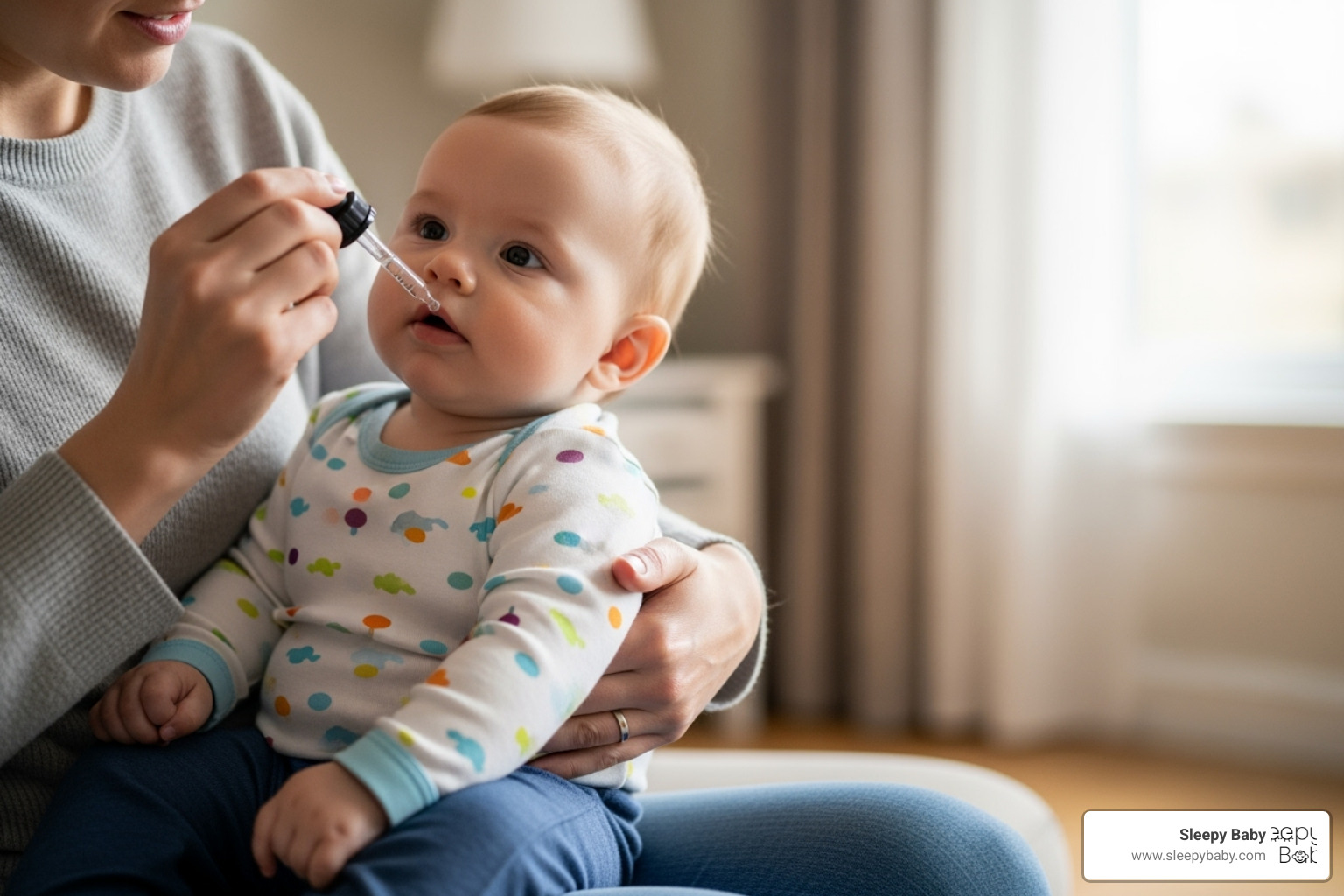
When it's time to actually give the gripe water, technique matters. Shake the bottle well before each useingredients can settle. Use the provided syringe or dropper, and administer the liquid slowly, a few drops at a time, towards the side of your baby's inner cheek. Let them swallow each portion before giving more. Keep your baby upright during administration to reduce choking risk.
Never mix gripe water with formula or breast milk. Give it separately. And here's a crucial safety point: never administer gripe water to a crying infant. Wait until they're calm. A crying baby is more likely to inhale the liquid, which can cause choking. For more detailed tips on giving gripe water like a pro, we've got a complete guide.
So what's actually different between regular gripe water and the nighttime versions marketed for sleep? It's more than just packaging.
| Feature | Original Gripe Water | Nighttime Gripe Water |
|---|---|---|
| Purpose | Primarily to ease digestive discomfort (gas, colic, hiccups) | Digestive relief PLUS gentle relaxation for sleep |
| Key Ingredients | Fennel seed, ginger root, sodium bicarbonate | Fennel seed, ginger root, sodium bicarbonate, PLUS chamomile, lemon balm, passionflower |
| Sleep Benefit | Indirect (relieves discomfort that might disrupt sleep) | Indirect (relieves discomfort) AND aims to promote relaxation for sleep |
| Sedative? | No | No (contains no melatonin or drugs) |
| Dependency? | No | No |
| Age | Often from birth (or 8 lbs+) | Typically 1 month+ (due to calming herbs) |
Original formulations focus on digestive discomfort. They contain the traditional ingredients like fennel seed and ginger root that are supposed to ease gas and colic. Any sleep benefit is purely indirectif your baby's tummy feels better, they might settle down.
Nighttime formulas add that "Bedtime Bliss Blend" of calming herbs. Chamomile, lemon balm, and passionflower are included to help your baby relax. The idea is that you're addressing both the tummy troubles and the general fussiness that might be keeping them awake.
But let's be crystal clear: nighttime gripe water is not a sedative. It contains no melatonin, no drugs, nothing that will knock your baby out. Manufacturers emphasize this specifically because they don't want parents thinking they're giving their baby a sleep medication. Your baby also can't become dependent on itthese are herbs, not habit-forming substances.
The choice between original and nighttime comes down to timing and your baby's needs. If your baby is gassy and fussy during the day, the original formula makes more senseyou don't want to give calming herbs when they should be alert and active. The nighttime version is specifically designed for evening use when you're trying to establish that wind-down routine.
Here's what gripe water for sleep cannot do: replace an actual bedtime routine. It's not magic. It's not even proven to work. If you use it, it should be one small piece of a much larger sleep strategy.
Think of your bedtime routine as a series of cues that tell your baby's brain, "Hey, it's time to wind down now." This might include a warm bath, a gentle massage with baby lotion, dimming the lights, reading a board book, or quiet cuddles. Gripe water, if you choose to use it, would fit somewhere in this sequencemaybe after the bath and before the final feeding.
But here's where you need to be careful: never combine gripe water with other sleep aids without explicit approval from your pediatrician. Even though gripe water itself isn't a sedative, you might be tempted to use it alongside other products that are. The interactions aren't well studied, and the risks aren't worth it.
A consistent routine works because babies thrive on predictability. When the same sequence happens every night, their bodies start to anticipate what comes next. The bath signals the beginning of the wind-down. The dim lights tell them nighttime is approaching. The story time provides that final connection before sleep.
Modern sleep aids that use safe, low-decibel white noise and rhythmic tapping can be valuable parts of this routine as well. Unlike gripe water, these devices have a clear mechanism: they mimic the comforting sensations your baby experienced in the womb and the soothing touch of a caregiver. When used as part of a consistent routine, they can help babies learn to self-soothe without relying on unproven supplements.
The bottom line? Gripe water isn't a substitute for good sleep hygiene. It's not a replacement for addressing the root causes of sleep disruption. And it's certainly not a shortcut to skip the hard work of establishing healthy sleep patterns. If you use it, do so thoughtfully, safely, and always as part of a broader approach to your baby's sleep and comfort.
Instead of reaching for unproven solutions like gripe water for sleep, we already have methods backed by research and recommended by pediatricians. These approaches don't carry the risks of unregulated supplements and address the root causes of sleep disruption.
Most infant sleep problems stem from physical discomfort. Simple, free techniques are often most effective. Burping frequently during and after feedings prevents gas buildup. Gently moving your baby's legs in a cycling motion helps release trapped gas. Supervised tummy time strengthens core muscles and aids digestion, while snug swaddling can recreate the security of the womb, reducing the startle reflex. A warm bath before bed is another excellent way to relax tense muscles.
For gas relief, some FDA-regulated gas relief drops are available that work by breaking down gas bubbles. You can learn more in our newborn gas relief guide: helping your little one feel better fast. Some research also shows promise for certain probiotics, which may provide relief for babies with colic. Always consult your pediatrician before trying new supplements or drops.
Sometimes the culprit is diet. Breastfeeding mothers might find that eliminating common allergens reduces their baby's discomfort. For formula-fed babies, your pediatrician might suggest a different formula. For more on this, see our guide on colic pain unwrapped: causes, symptoms, and solutions.
Even a comfortable baby won't sleep well in the wrong environment. A consistent bedtime routine is your most powerful tool. Calming activities like a warm bath, gentle massage, and quiet cuddles signal to your baby that it's time to sleep.
The physical environment matters, too. A dark, cool room (68-72°F or 20-22°C) is ideal for sleep. White noise can also be effective, masking household noises and mimicking sounds from the womb. While some white noise machines can be unsafe if too loud, modern safety-rated devices present white noise at safe, low-decibel levels, sometimes directly on the baby's chest for optimal comfort.
Beyond sound, rhythmic tapping devices offer a unique benefit by mimicking a caregiver's gentle, rhythmic patting. This instinctive motion provides a powerful, hands-free sleep cue, helping babies transition to sleep and stay asleep longer. These evidence-based approaches work together to create the ideal conditions for restful sleep—no unregulated supplements required.
The journey through sleepless nights with a fussy baby is one of parenthood's toughest challenges. I know this firsthand. When you're exhausted and desperate for rest, it's natural to reach for any solution that promises relief—including traditional remedies like gripe water.
But after examining the evidence on gripe water for sleep, here's what we need to accept: it's designed to address digestive discomfort, not to help babies sleep. The connection to sleep is purely indirect—if tummy troubles are keeping your baby awake, soothing those troubles might help them rest. But there's no scientific proof that gripe water actually improves infant sleep.
What's more concerning is that gripe water exists in a regulatory gray zone. As a dietary supplement, it doesn't undergo the rigorous FDA testing that medications do. We've seen recalls for contamination with parasites and bacteria. We've heard from pediatricians like Dr. Christina Vernace who don't recommend it because its safety and effectiveness simply aren't guaranteed.
The good news? You have better options.
Start with your pediatrician. They know your baby's unique situation and can guide you toward solutions that actually work. For digestive issues, FDA-regulated simethicone drops are a safer bet than unregulated herbal supplements. For colic pain, proven techniques like bicycle legs, proper burping, and tummy time can provide real relief.
Build a consistent bedtime routine. This is your most powerful tool for healthy sleep. A predictable sequence of calming activities—warm bath, gentle massage, quiet cuddles—teaches your baby when it's time to wind down. A dark, cool room supports natural melatonin production.
Consider modern, evidence-based sleep aids. While some older white noise machines posed safety risks, today's safety-rated devices deliver soothing sounds at safe, low-decibel levels. Some can even be placed directly on your baby's chest for optimal comfort. Rhythmic tapping devices that mimic a caregiver's gentle patting offer another scientifically-supported approach, providing the consistent, comforting touch babies crave—without requiring you to stand over the crib all night.
At Sleepy Baby, we've combined these proven approaches into intelligent sleep aids that use both rhythmic patting and safe white noise. Our products are designed to mimic the comfort of a caregiver's touch while giving exhausted parents the hands-free support they desperately need. We ship to families in Australia, Austria, Belgium, Canada, Czechia, Denmark, Finland, France, Germany, Hong Kong SAR, Ireland, Israel, Italy, Japan, Malaysia, Netherlands, New Zealand, Norway, Poland, Portugal, Singapore, South Korea, Spain, Sweden, Switzerland, United Arab Emirates, United Kingdom, and United States.
Every baby is different. What soothes one might not work for another, and that's okay. The key is staying informed, making choices based on evidence rather than marketing claims, and always prioritizing your baby's safety above everything else. You're doing an amazing job, even on the hardest nights.


