


6 month old frequent waking is an exhausting challenge. Just when you thought sleep was improving, your baby is suddenly up every hour. You're not alone. Research shows 25-50% of babies still wake overnight at 6 months, despite being capable of longer stretches. This isn't a failure—it's a normal developmental phase.
Quick Solutions for 6 Month Old Frequent Waking:
Around six months, your baby's brain is buzzing with new skills. This cognitive leap, often called a "sleep regression," is actually a sign of growth. The good news is that this phase is temporary. With consistent strategies, you can guide your baby back to better sleep.
I'm Gary Harutyunyan, founder of Sleepy Baby. I created our rhythmic patting device and sound machine after experiencing this exact challenge with my own child. Through that journey, I learned what truly works to help families find rest.
Related content about 6 month old frequent waking:

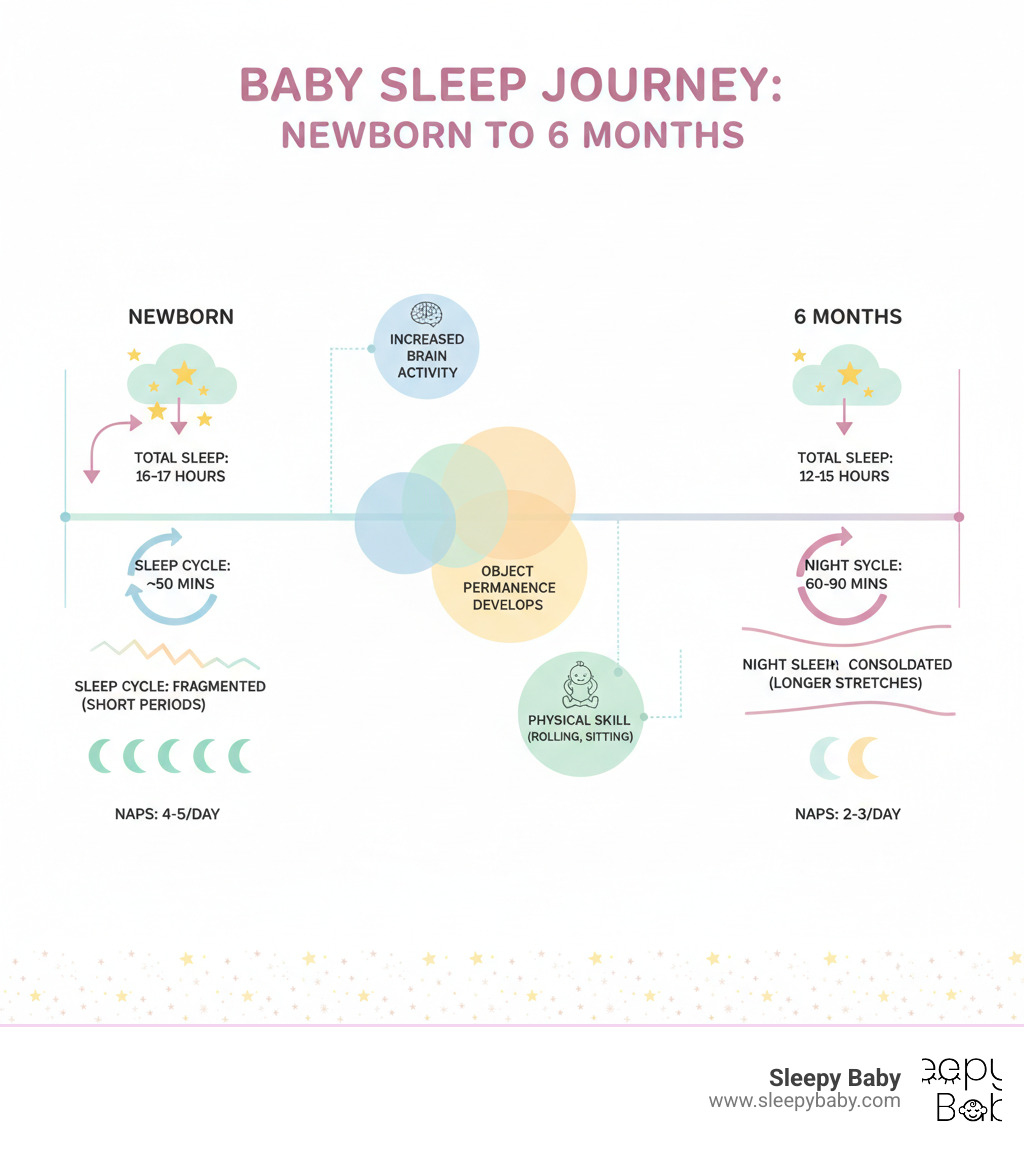
When your baby's sleep suddenly regresses, it's not a step backward—it's a sign of incredible brain development. These temporary disruptions, often leading to 6 month old frequent waking, happen as your baby's mind processes new skills and awareness. Their world is becoming more interesting, and their brain is working overtime, which can make settling down difficult.
A major cognitive leap at this age is object permanence: your baby now understands you exist even when out of sight. This can lead to separation anxiety, causing them to cry for you at bedtime or during the night. You can learn more about these exciting changes at Developmental milestones at 6 months.
How do you know if you're in the middle of this phase? The signs of 6 month old frequent waking are often sudden:
Recognizing these signs helps you respond with a consistent plan. For a deeper look, check out our article on More on regression signs.
Around six months, babies are constantly working on new physical skills like rolling over, sitting up, and babbling. Their brains don't distinguish between day and night for practice. They might wake at 2 AM to practice rolling or sit up and then get "stuck," crying for help. This drive to master new abilities is a common cause of disrupted sleep.
For more on these physical developments, explore Movement milestones for babies.
It can be tricky to tell if your baby is waking from hunger or habit. Growth spurts can increase genuine hunger, but many six-month-olds are capable of sleeping 6-8 hours without a feed. Waking at the same time each night often points to a learned pattern.
Another factor is distracted daytime feeding. Your curious baby might not take full feeds during the day, leading them to make up for calories at night ("reverse cycling"). The introduction of solids can also temporarily affect sleep, though milk remains their primary nutrition source. To create a supportive schedule, see our guide on The 6-month-old sleep and feeding schedule.
With 6 month old frequent waking, it's easy to wonder about the cause. Is it a sleep regression, teething, or separation anxiety? The symptoms often overlap, but close observation can reveal the culprit. Understanding the cause helps you respond effectively, as the solution for teething differs from that for a developmental leap.
| Feature | 6-Month Sleep Regression | Teething | Separation Anxiety |
|---|---|---|---|
| Primary Sign | Sudden increase in night wakings & difficulty settling | Drooling, gum swelling, chewing on hands/objects | Crying when parent leaves the room, clinginess |
| Duration | 1-4 weeks | 24-72 hours per tooth | Can come and go in phases |
| Behavior | Practicing new skills in crib, fighting sleep | Irritability, low-grade fever (sometimes), ear pulling | Needs constant reassurance, wakes looking for parent |
| Solution Focus | Consistency, routine, sleep hygiene | Pain relief, cold teethers, comfort | Reassurance, consistent goodbyes, bedtime routine |
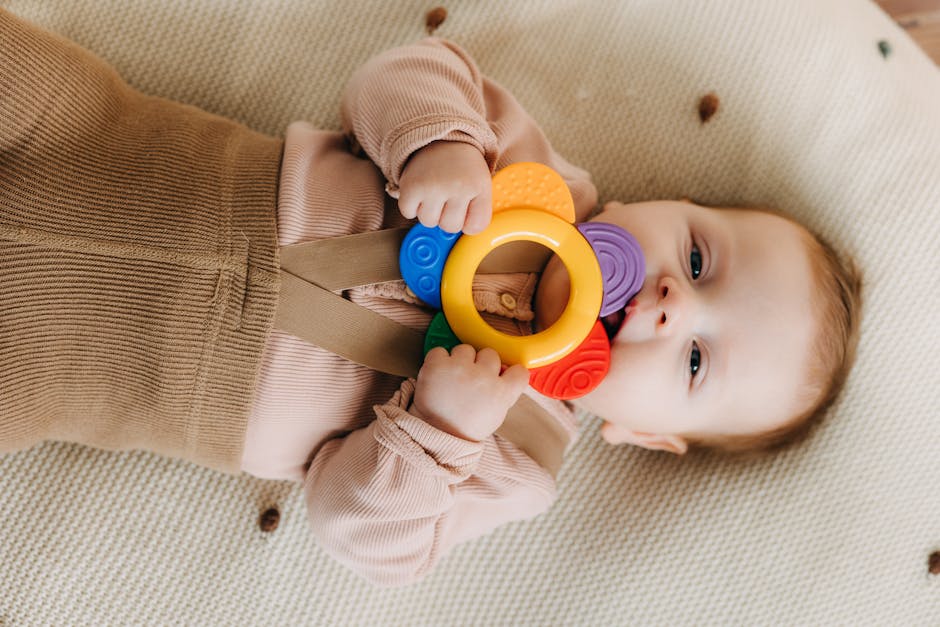
Teething often starts around six months and can disrupt sleep. Look for telltale signs like excessive drooling, red or swollen gums, and a constant urge to chew on hands and toys. Teething babies can also be more irritable, pull at their ears, or run a low-grade fever. High fevers, however, are not caused by teething and warrant a call to your pediatrician.
The good news is that the most intense teething pain typically lasts only 24-72 hours per tooth. If sleep issues persist for weeks, teething is likely not the only cause. To soothe sore gums, offer a cold teething ring or a chilled, damp washcloth. If your baby is very uncomfortable, ask your pediatrician about pain relief options. For more information, check out Facts about baby's first tooth.
Navigating 6 month old frequent waking can feel overwhelming, but with a clear action plan, we can help our babies (and ourselves!) get more restful sleep. The key is a proactive approach, unwavering consistency, and remembering the importance of parental self-care during this challenging time. You've got this!
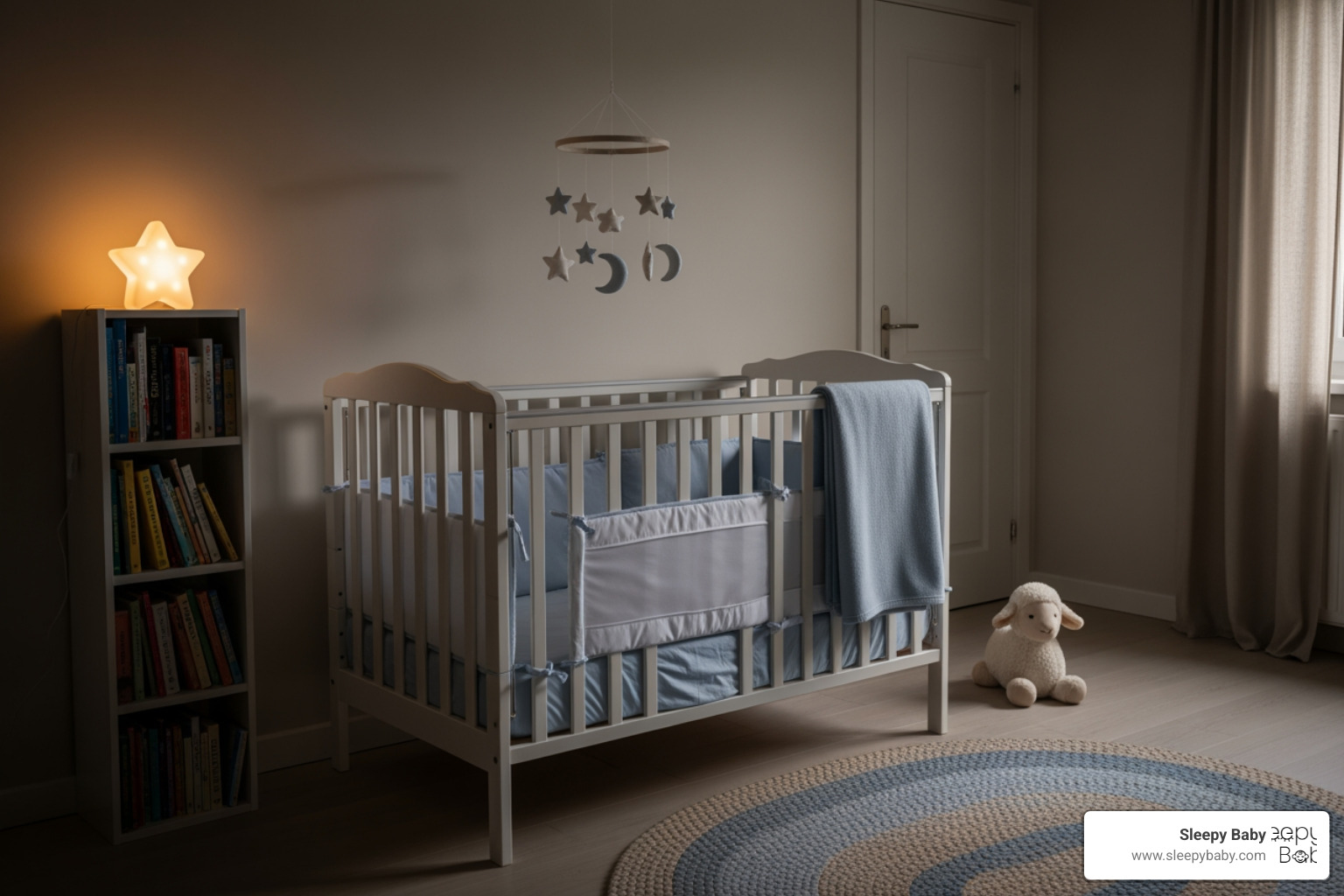
Creating the right sleep environment signals to your baby's brain that it's time to rest.
Always follow safe sleep practices: place your baby on their back in a clear crib. For more details, see A Parent's Guide to Safe Sleep. A powerful sleep environment becomes a cue that helps your baby recognize it's time to relax and sleep.
Think of a bedtime routine as your secret weapon against 6 month old frequent waking. At this age, babies thrive on predictability. A consistent routine signals that sleep is coming, helping them feel calm and secure.
The magic is in doing the same calming activities in the same order every night. A warm bath, a gentle massage, reading a quiet book, or singing a soft lullaby are all great options. Keep things gentle and avoid stimulating activities or screens before bed.
Timing is also crucial. A bedtime between 7:00 and 8:00 pm aligns with a six-month-old's natural sleep rhythms. Pushing bedtime later can lead to overtiredness, which paradoxically makes it harder for babies to fall and stay asleep. Research confirms that children with regular bedtime routines fall asleep faster and wake less often. One study found that bedtime routines significantly improve sleep outcomes.
For help building a full schedule, see our guide on Mastering the 6-month-old sleep schedule.
Teaching your baby to fall asleep on their own is a transformative step in resolving 6 month old frequent waking. We all wake briefly between sleep cycles. If your baby relies on you to fall asleep initially (by being rocked, fed, or held), they will need that same help to get back to sleep all night long.
The key is to put your baby down drowsy but awake. This teaches them that their crib is the place where sleep begins. When they can drift off on their own, they are much more likely to resettle themselves during normal night stirrings.
This involves gently breaking strong sleep associations. If your baby needs to feed or be rocked to sleep, try shifting that activity earlier in the bedtime routine. Gradually reduce the amount of intervention they need from you, creating space for them to find their own self-soothing methods, like thumb-sucking or rubbing their head. Research on behavioral interventions for infant sleep confirms these approaches are highly effective.
This is why we developed the Sleepy Baby. Its rhythmic patting feature mimics your gentle touch, providing comfort and security without you needing to be there for every waking. Paired with safe, low-decibel white noise, it creates a soothing environment that supports your baby as they learn to fall asleep independently.
For a deeper look at various approaches to building these skills, explore our guide on effective sleep training methods.
What happens during the day significantly impacts night sleep. An optimized daytime schedule can reduce overtiredness and improve nighttime sleep quality, directly addressing 6 month old frequent waking. Think of it this way: daytime sleep (or lack thereof) sets the stage for nighttime sleep. When the balance is off during the day, you'll feel it at night.
Appropriate wake windows are crucial at this age. For a six-month-old, wake windows—the time your baby is awake between naps or before bedtime—typically range from 2-3 hours. This might not sound like much, but it's the sweet spot for this age. If your baby is awake for too long, they become overtired, and an overtired baby is a wired baby. Their little bodies produce cortisol (a stress hormone) to help them stay awake, which makes it harder for them to fall asleep and stay asleep. On the flip side, if wake windows are too short, your baby might not be tired enough to sleep well, leading to short naps or bedtime battles.
Around six months, you might notice your baby's nap patterns shifting. This is when nap transitions often occur. Many babies start moving from three naps a day to two. How do you know if your baby is ready? If that third late-afternoon nap is becoming a struggle—maybe they're fighting it, or it's pushing bedtime past 8:00 pm—it might be time to adjust. Some babies will drop to two naps closer to seven or eight months, while others make the switch earlier. There's no one-size-fits-all timeline, so observe your baby's cues. For more guidance on navigating naps at this age, check out The 6 month old nap length sweet spot and Threes company: Why your 6-month-old needs three naps a day.
Beyond sleep timing, adequate daytime play is essential. Your baby needs plenty of stimulating playtime and opportunities to practice those exciting new skills—rolling, sitting, reaching, babbling. This helps them expend energy and makes them genuinely tired for sleep. A baby who's been engaged and active during the day is more likely to sleep soundly at night.
Finally, don't underestimate the power of sunlight exposure. Getting your baby outside in natural light during the day helps regulate their circadian rhythm, reinforcing the difference between day and night. Morning sunlight is particularly helpful for setting their internal clock. Even on cloudy days, natural light is far brighter than indoor lighting.
Understanding and adjusting wake windows can be a game-changer for reducing 6 month old frequent waking. Dive deeper into this topic with our guide: Understanding 6-month-old wake windows.
While 6 month old frequent waking is often developmental, always trust your parental instincts. If something feels off or sleep issues are paired with other worrying symptoms, contact your pediatrician. They can rule out underlying medical issues like reflux, ear infections, or food sensitivities and provide reassurance or a treatment plan.

Call your doctor if you notice any of the following warning signs along with sleep disruptions:
Your pediatrician is your partner in your baby's health and can offer personalized guidance to help you through this exhausting phase of 6 month old frequent waking.
We know you have questions about 6 month old frequent waking. Here are answers to some of the most common ones.
This phase is temporary, typically lasting from a few days to four weeks. However, the habits formed during this time can stick around. If your baby learns that crying gets them rocked back to sleep, that new association can outlast the regression itself. Responding with a consistent sleep strategy is key to moving through this phase quickly.
Most six-month-olds need 12-15 total hours of sleep in a 24-hour period. This usually breaks down into 10-12 hours at night and 2.5-3.5 hours of daytime sleep spread across 2-3 naps. The best indicator is your baby's mood; if they are happy and alert when awake, they are likely getting enough rest. For official guidelines, see the Recommended sleep amounts for children.
Yes, this can be an ideal time to start or reinforce sleep training. At six months, babies are developmentally ready to learn independent sleep skills. Addressing sleep challenges with a consistent plan during a regression can prevent temporary disruptions from becoming long-term habits. Choose a method that fits your family and stick with it. Our Sleepy Baby device can be a great tool, providing rhythmic patting and white noise to support your baby as they learn to self-soothe. For more, read Why your 6-month-old keeps waking up and how to fix it.
If you're exhausted from dealing with 6 month old frequent waking, know this: this phase will pass. It's a sign of incredible brain development, not a reflection of your parenting. Your baby is learning about object permanence, mastering new physical skills, and processing a bigger world. This growth can temporarily disrupt sleep, but it is not permanent.
Your action plan is clear:
Through it all, consistency is your most powerful tool. Babies thrive on predictability, and your steady approach will guide them through this phase.
This is why I created Sleepy Baby. After my own struggles, I knew parents needed better support. Our intelligent sleep aids provide rhythmic patting that mimics your touch and safe, low-decibel white noise. This gives your baby the security they crave while empowering them to develop self-soothing skills—so you can both get the rest you need.
You are doing an incredible job. Trust your instincts, stay consistent, and remember that peaceful nights are ahead.
Explore our blog for more baby sleep tips—we're here to help.


