


Baby sleep patterns development is a common challenge for new parents wondering when their little one will finally sleep through the night. Understanding this journey is key.
Here's a quick look at baby sleep patterns development:
Science shows sleep is critical for brain development, which happens fastest between birth and age three. Newborns spend 50% of their sleep in REM (active sleep)—more than double the adult 20%—which is essential for memory and neural connections.
Your baby's sleep cycles are also different: 40-50 minutes compared to an adult's 90 minutes. This means more chances for waking and disruptions.
Understanding these patterns helps you work with your baby's natural development. You'll learn to recognize sleep cues, create effective routines, and choose safe sleep aids that help.
I'm Gary Harutyunyan, and my journey into baby sleep patterns development began with my own newborn's sleep struggles. This personal experience, combined with my professional background, led me to create solutions that truly understand how baby sleep works.
Picture this: you finally master your baby's sleep schedule, only to have everything change the next week. This rollercoaster is a normal part of baby sleep patterns development. Understanding what to expect at each stage can transform sleepless nights from chaos into manageable challenges. Let's walk through this journey so you know what's coming next.
The first three months, or "fourth trimester," are an adjustment period, and your newborn's sleep patterns reflect this. Their world is one of beautiful, exhausting sleep.

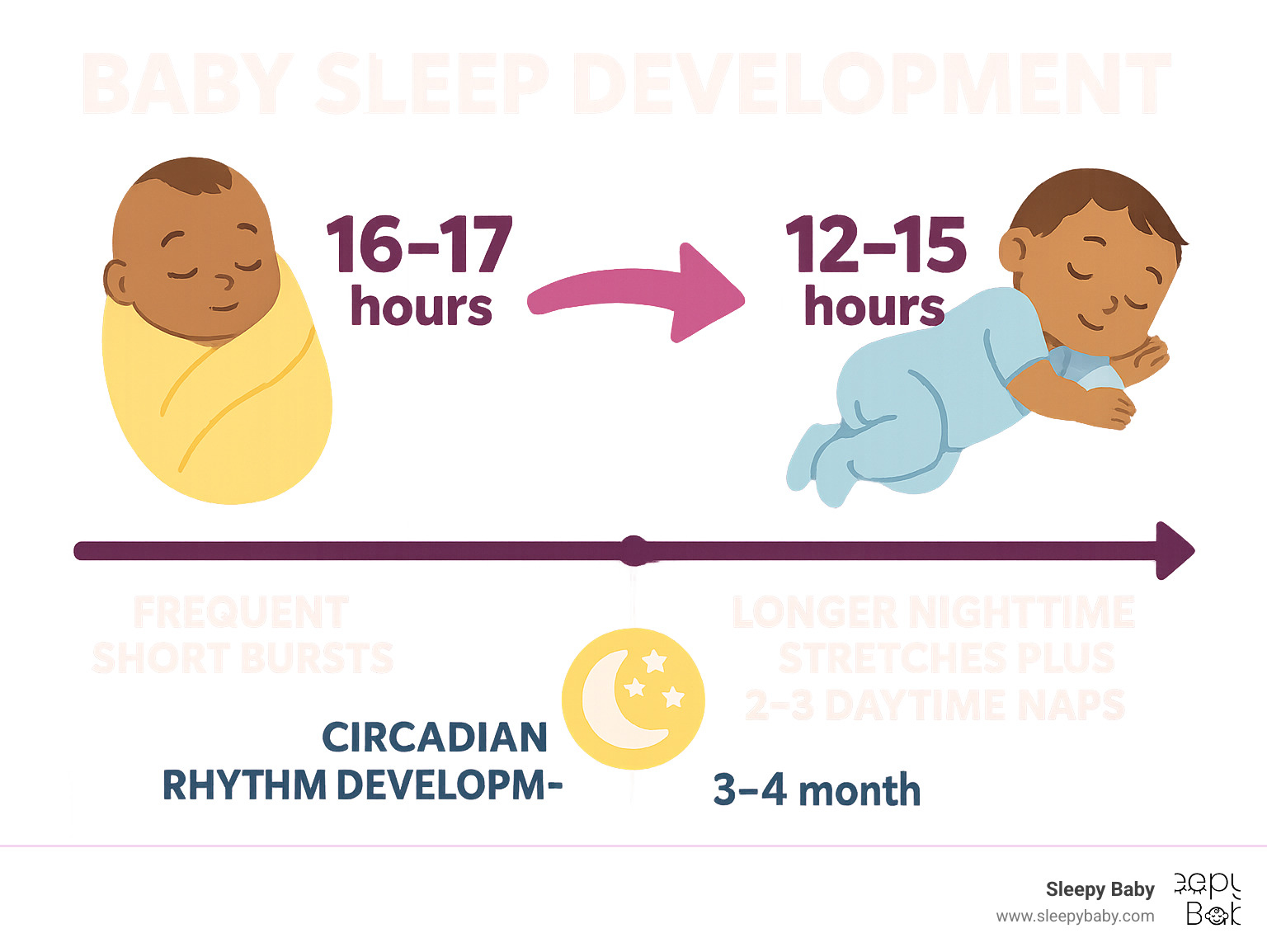
Newborns need an incredible 14-17 hours of sleep daily, but it comes in short 20-50 minute cycles, leading to frequent waking. This fragmented sleep is due to their tiny stomachs. Breastfed babies eat every 2-3 hours, while bottle-fed babies might go 3-4 hours. Their hunger cues are subtle at first; crying usually means they are already quite hungry.
The biggest challenge is day and night confusion. Your newborn's internal clock hasn't developed, so 3 AM might feel like party time. This is normal and temporary.
Crying is their main form of communication. Most newborns cry for about three hours daily, peaking around 6-8 weeks. If you're struggling, our guide How to Calm a Fussy Newborn and Finally Get Some Sleep offers proven strategies.
For a deeper dive, check out Dreamland: A Guide to Newborn Sleep Hours.
Around three months, a major milestone in baby sleep patterns development occurs as their sleep matures and organizes. You might finally get more than two hours of sleep in a row!

Sleep consolidation begins, with your baby taking longer night stretches of 4-6 hours. By six months, most babies sleep about 13 hours total with more predictable patterns. The game-changer is circadian rhythm development. Around 3-4 months, their brain produces melatonin and responds to light cues, helping them learn that nighttime is for sleeping.
This period can also bring the infamous 4-month sleep regression. This isn't a step backward; it's your baby's sleep cycles maturing to be more adult-like. This progression can temporarily increase night wakings as they adjust.
The silver lining is that fewer night feedings are needed as their stomach grows, and a nap schedule emerges, typically with two longer naps.
Need help? Our 4-Month Sleep Regression SOS: Your Guide to Better Baby Sleep is your lifeline. For the six-month mark, Sweet Dreams Ahead: Mastering the 6-Month-Old Sleep Schedule has you covered.
Between 6-12 months, your baby's sleep starts resembling a more regular pattern. Most babies sleep 12-15 hours total, including 2-3 consistent naps and longer nighttime stretches.

This is when many babies start sleeping through the night (defined as 6-8 hours of uninterrupted sleep). However, every baby develops at their own pace.
Developmental milestones like crawling or pulling up can temporarily disrupt sleep. Separation anxiety also often emerges, making bedtime more challenging.
Sleep regressions commonly occur around 8-10 months, coinciding with these developmental leaps. While frustrating, these are signs of your baby's growing brain.
By 12 months, most babies have established solid sleep patterns. If you're wondering when your baby will reach this milestone, our guide When Will My Baby Sleep Through the Night? Answers for Exhausted Parents provides realistic timelines.
Every baby's journey is unique. Some reach milestones earlier, others later—and both are perfectly normal!
Ever wondered why your baby's sleep seems so different from your own? Understanding the science behind baby sleep patterns development can transform your perspective. There's incredible biological wisdom at work in your little one's developing brain.
Your baby's sleep cycle is much shorter than yours—just 40 to 50 minutes compared to your 90. This means they aren't just a smaller version of you when it comes to sleep. They complete a full cycle in less than half the time, creating more opportunities to wake up.
This shorter cycle explains why babies are naturally lighter sleepers. According to research on infant sleep and its relation with cognition and growth, frequent waking serves a protective purpose in early development. Your baby's brain is designed to check in regularly. The frequent transitions between sleep states mean more time in lighter sleep phases, which is exactly what their developing nervous system needs.
Your baby experiences two main types of sleep, just like you, but in different proportions. Baby sleep patterns development is heavily weighted toward active brain development.
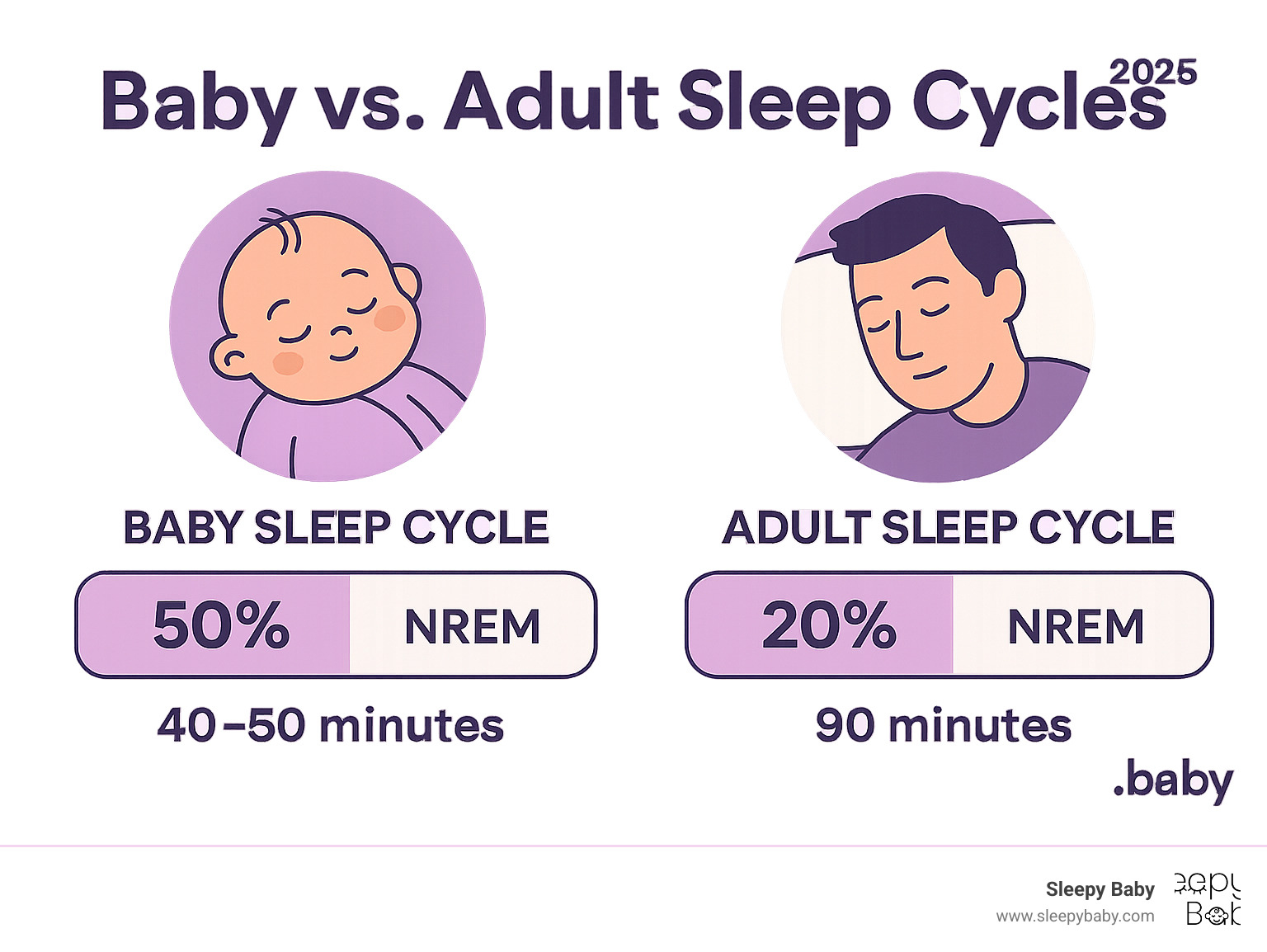
REM sleep, or "active sleep," is where the magic happens. Newborns spend about 50% of their sleep time in this stage—up to nine hours a day, compared to 20% for adults. During REM, you might see their eyes moving, muscle twitches, or soft sounds. This isn't restless sleep; it's productive. The brain is rapidly forming neural connections, processing experiences, and building foundations for memory. Those twitches are signs of intense brain development.
NREM sleep, or "quiet sleep," is the deeper phase where your baby lies still. As babies mature, this quiet sleep becomes more organized and is when physical growth and restoration happen most actively.
The high amount of REM sleep also serves as a safety mechanism. Lighter sleep makes it easier for babies to wake up if needed, which may help protect against breathing difficulties.
Around 3 to 4 months, a key milestone in baby sleep patterns development occurs: their internal body clock starts ticking. Newborns aren't born knowing day from night; their sleep is driven by hunger and comfort. As their circadian rhythm develops, this internal 24-hour clock coordinates with external cues like light and darkness to regulate sleep, hormones, and body temperature.
Light exposure is critical. Bright, natural light during the day signals it's time to be alert. As evening approaches and lights dim, their bodies begin producing melatonin, nature's sleep hormone.
This is why day-versus-night routines are so important. You're helping your baby's biology align with the natural world. This development is a major reason sleep becomes more predictable from 3 to 6 months. For practical guidance, our article From Sleepless Nights to Sweet Dreams: Establishing Newborn Sleep Patterns offers helpful strategies.
Understanding the science of baby sleep patterns development is the first step. Applying this knowledge to help your little one develop healthy sleep habits is the real challenge. These proven strategies can make a meaningful difference in your sleep journey.
Consistency is your superpower. A predictable bedtime routine signals to your baby's brain that it's time to wind down. The key is comforting predictability, not complexity.
Your routine could include a warm bath, reading a simple book, playing soft lullabies, and dimming the lights an hour before bed to promote melatonin. Gentle massage can also melt away the day's stimulation. The secret isn't a specific activity but doing them in the same loving order each night. This consistency fosters security and better sleep.
For more detailed guidance, explore our guide: Goodnight, Sleep Tight: Bedtime Routines for Your 3-Month-Old.
Learning your baby's sleep signals is a valuable parenting skill. Babies communicate their readiness for sleep long before tears start. Missing these early cues leads to an overtired baby who struggles more to fall asleep.
Watch for the first yawn, eye rubbing, or looking away to escape stimulation. A glazed-over stare means it's time to wind down. Fussiness is a late-stage warning that the optimal sleep window may have passed.
Understanding your baby's wake windows—the time they can comfortably stay awake between naps—transforms your day. Newborns can handle 60-90 minutes of awake time, which gradually extends. Putting your baby down when they show early tired signs, rather than waiting for crankiness, is a game-changer.
If your baby fights sleep, our article Understanding Why Babies Fight Sleep and How to Help offers practical solutions.
Safety must always come first. A secure sleep environment is the non-negotiable foundation for all other sleep strategies.

Remember the ABCs of safe sleep: your baby should sleep Alone, on their Back, in a safety-approved Crib with a firm mattress. The sleep surface must be bare—no loose blankets, bumpers, pillows, or stuffed animals.
Room sharing (not bed sharing) is recommended for at least the first six months, as it can reduce SIDS risk by up to 50%. Bed sharing carries significant risks.
Swaddling can be great for newborns, but you must stop once your baby shows signs of trying to roll over (around 2 months). After that, sleep sacks or wearable blankets provide warmth safely.
For comprehensive guidance, check out From Cradle to Bassinet: Ensuring Sweet Dreams for Your Newborn.
Supporting healthy baby sleep patterns development often requires a mix of routine and effective soothing. The goal is to help your baby develop self-soothing skills to fall back asleep independently.
While newborns aren't ready to self-soothe, you can foster this skill around 3-4 months by putting them down drowsy but awake. This gives them a chance to practice falling asleep on their own.
Modern sleep aids can provide invaluable support. Rhythmic tapping devices are particularly beneficial, mimicking a caregiver's comforting touch to calm a fussy baby and promote peaceful sleep. These tools offer the hands-free support exhausted parents need. Learn more in The Gentle Art of Rhythmic Patting for Babies.
When considering white noise, choose modern safety-rated devices that present sound at safe, low-decibel levels. Some are even designed for chest placement to create womb-like conditions safely. This gentle sound can mask household noises and provide auditory comfort.
Pacifiers offer comfort and research suggests they may even reduce SIDS risk. Once breastfeeding is established, a pacifier can be a valuable tool.
For more on effective sleep aids, dive into Best Sleep Aid for Newborns That Actually Work, So You Can Sleep Too.
As a parent navigating baby sleep patterns development, you're bound to have questions. Between late-night wake-ups and conflicting advice, it's easy to feel overwhelmed. Here are answers to the most common concerns from exhausted parents.
The term "sleeping through the night" can be misleading. Medically, it means a 5 to 6-hour stretch of uninterrupted sleep, not a full 8+ hours.
Most babies reach this milestone by 6 months of age, though some do so as early as 3-4 months. However, every baby is unique. Some healthy babies don't consistently sleep this long until closer to their first birthday, which is also normal.
Factors like weight, the ability to self-soothe, and the consistency of your bedtime routines all play a role. Even after reaching this milestone, occasional night wakings due to growth spurts or developmental leaps are normal. Sleeping through the night is a developmental milestone you can support but not force.
Sleep regressions, while frustrating, are a positive sign of your baby's development. They are temporary periods when a good sleeper suddenly starts waking frequently again.
Developmental leaps are the biggest cause. When your baby learns exciting new skills like rolling, crawling, or pulling to stand, their brain is too stimulated to "turn off" for sleep. Common regressions happen around 4 months (as sleep cycles mature), 8-10 months (motor milestones), and 12 months (walking and language).
Teething, illness, and changes in routine (like travel or daycare) can also temporarily disrupt sleep. The good news is that regressions are temporary, usually lasting 2-6 weeks. Consistency and patience will help you get through them.
Some worry about your baby's sleep is normal. While the range of normal in baby sleep patterns development is wide, certain red flags warrant professional attention.
Contact your pediatrician if your baby shows extreme fussiness unrelated to typical needs, has difficulty waking up, seems unusually drowsy, or shows little interest in feeding. Signs of illness like fever, persistent vomiting, or difficulty breathing always require medical attention. If you suspect reflux or other medical conditions are interfering with sleep, discuss this with your provider.
Sometimes the issue is that persistent sleep problems are impacting your family's well-being. If you feel overwhelmed by sleep deprivation, reaching out for professional guidance is a sign of strength.
Trust your parental instincts. You know your baby best. If something feels off, it's always wise to consult with your pediatrician.
Understanding baby sleep patterns development is a journey with unique challenges and rewards at every stage. This natural process unfolds as your little one's brain and body mature, and it can't be rushed.
Short sleep cycles and regressions are not setbacks; they are signs of progress. The 4-month regression marks maturing sleep cycles, while later disruptions often signal exciting developmental leaps. This is all normal and temporary.
Patience and consistency are your superpowers. A predictable bedtime routine provides security, while recognizing sleep cues helps prevent overtiredness. It's also crucial to remember that every baby is unique. Your baby's timeline is their own, so avoid comparing them to others. Some babies are naturally better sleepers, while others need more support.
Supporting your baby's sleep means working with their development. Create a safe, consistent environment where they can practice their emerging skills, offering comfort when needed and space when they're ready.
This is where thoughtfully designed sleep aids can help. Modern, safety-rated devices that provide white noise at low decibels can create a comforting, womb-like environment. Rhythmic tapping devices are especially beneficial, as they mimic a caregiver's touch to provide gentle, consistent soothing. At Sleepy Baby, our products are designed to give both you and your baby the hands-free support and comfort you need.
When your baby develops healthy sleep patterns, the whole family benefits. You get the rest you need, and your baby gets the quality sleep essential for their development. Sweet dreams are just around the corner.
For more strategies, dive into The Ultimate Guide to Baby Sleep Solutions: No More Fights.


