


Baby sleep is one of early parenthood's biggest challenges, affecting your little one's development and your family's wellbeing. Understanding infant sleep can transform exhausting nights into restful periods for everyone.
Quick Baby Sleep Essentials:
As a father who experienced sleepless nights firsthand, I know the desperation that comes with a baby who won't settle. This led me to create Sleepy Baby, which combines gentle rhythmic patting with soothing sounds to help families find rest. The journey from newborn sleep chaos to calmer nights takes time, but with the right strategies, you can help your baby develop healthy sleep habits. This guide will walk you through the essentials.
Baby sleep isn't just rest; it's a critical activity for development. During sleep, your baby's brain builds neural connections, consolidates memories, and supports physical growth. Infant sleep is very different from adult sleep. Babies have much shorter sleep cycles (50-60 minutes) and spend more time in active REM sleep, which is why they often seem restless. Frequent waking is normal and biologically necessary for their survival and development.
For a deeper dive into the science, check out more on sleep cycles and our guide on Sleepy Science: How Your Baby's Sleep Patterns Develop.
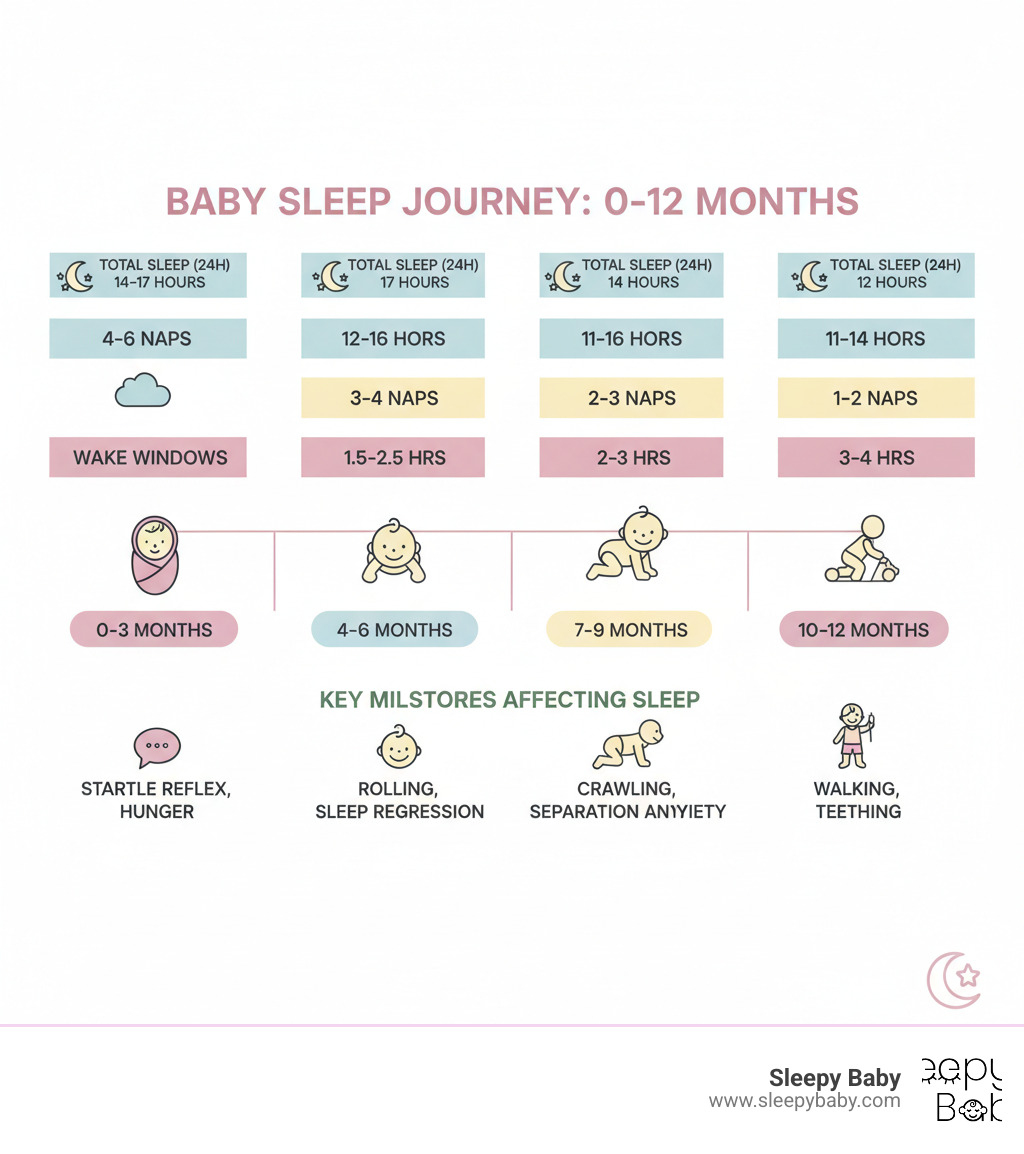
Sleep needs change as your baby grows, but every baby is unique. Watch your baby's cues rather than focusing on exact numbers. The following are general guidelines.
| Age Range | Total Sleep (24 hours) | Naps (Daily) | Night Sleep (Typical Stretch) |
|---|---|---|---|
| 0-4 Months | 14-17 hours | 4-6 short bursts | 1-4 hours |
| 4-6 Months | 12-16 hours | 3-4 naps | 5-8 hours |
| 6-12 Months | 11-14 hours | 2-3 naps | 10-12 hours |
Newborns (0-4 months) sleep 14-17 hours in short, unpredictable bursts. They don't know night from day and are driven by hunger. Our guide Dreamland: A Guide to Newborn Sleep Hours can help you steer this phase.
Infants (4-6 months) start to organize their sleep, needing 12-16 hours total. You may see longer stretches of 5-8 hours at night as their internal clock develops.
Older infants (6-12 months) settle into more predictable patterns with 11-14 hours of sleep. They might sleep for 10-12 hours at night with 2-3 structured daytime naps. Research supports these ranges, as found in recommended sleep amounts for children.
Knowing how baby sleep evolves can help you manage expectations.
The newborn phase is chaotic. Sleep is hunger-driven and happens in short bursts around the clock. For help with day-night confusion, see our article From Sleepless Nights to Sweet Dreams: Establishing Newborn Sleep Patterns.
Between 3-6 months, your baby's circadian rhythm matures. They begin to sleep for longer stretches at night as they distinguish between day and night.
From 6-12 months, sleep patterns become more established, with most sleep happening at night. Naps become more predictable, though developmental milestones like crawling can cause temporary disruptions. Wondering when they'll sleep through the night? Our guide Opening up the Mystery: When Do Babies Sleep Through the Night? explores this milestone.
Creating a safe and soothing sleep space is foundational for healthy baby sleep. It's about combining safety with comfort to promote the rest your baby needs.
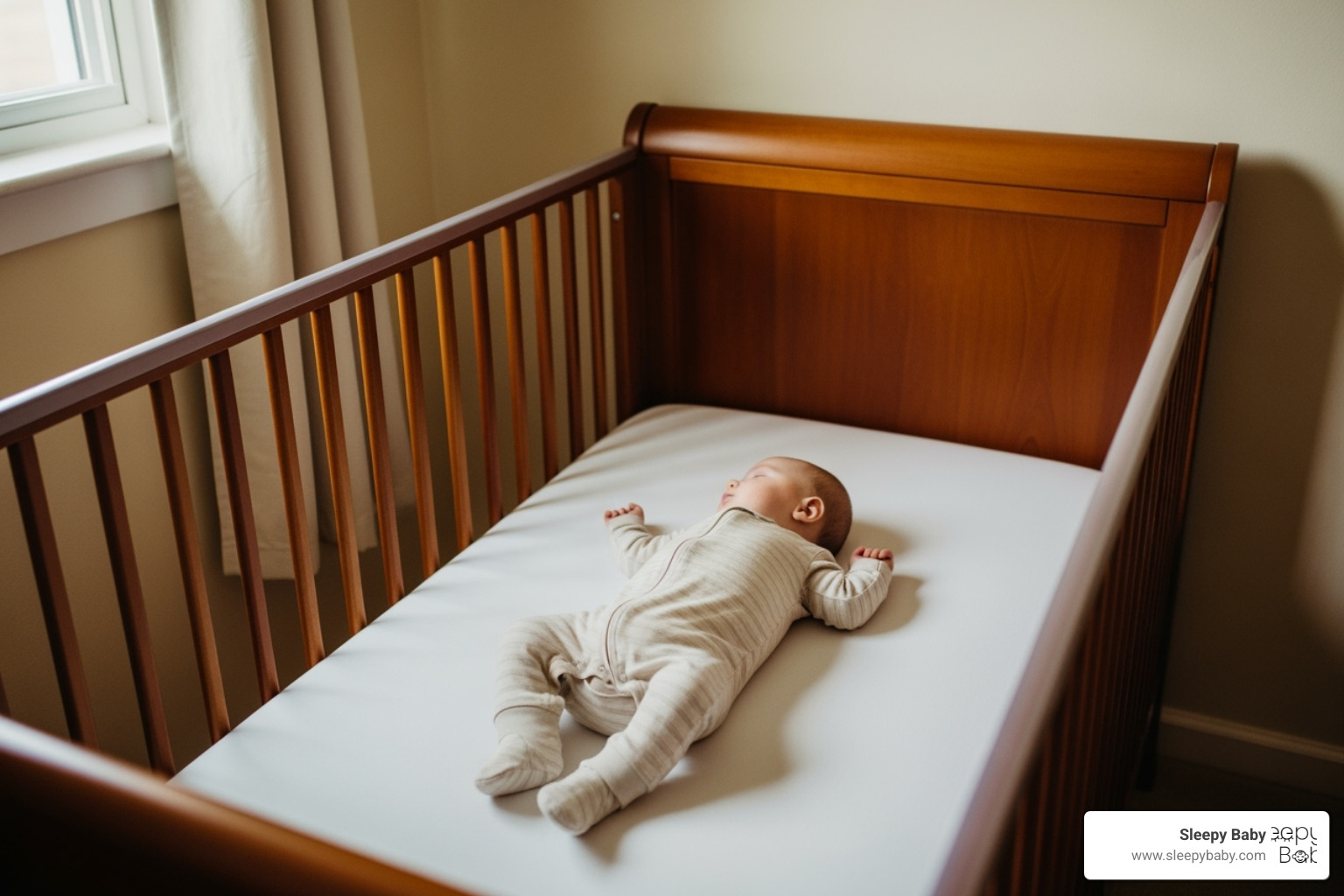
The ABCs of Safe Sleep are your guide to reducing the risk of SIDS. A is for Alone in their sleep space, without blankets, pillows, or toys. B is for Back – always place your baby on their back to sleep. C is for Crib – use a safety-approved crib, bassinet, or play yard with a firm mattress and fitted sheet. For more details, Safe sleeping information from Red Nose is an excellent resource.
The American Academy of Pediatrics recommends room-sharing without bed-sharing for at least the first six months. This means your baby sleeps in their own crib in your room, which lowers the risk of SIDS while keeping them close for monitoring and feeding. For portable options, see our guide Is It Safe? Baby Sleep in Portable Bassinets Explained.
Once safety is covered, fine-tune the environment to encourage baby sleep.
A consistent bedtime routine signals to your baby that it's time to sleep. Predictability helps babies feel secure, and the routine provides valuable bonding time. A simple 15-30 minute routine could include a warm bath, gentle massage, changing into pajamas, a story or lullaby, and a final cuddle. Consistency is more important than complexity. For more ideas, check out Routine Magic: Your Guide to the Best Baby Bedtime Ritual.
The foundation of good baby sleep is putting your baby down "drowsy but awake." This simple but powerful concept teaches your baby the invaluable skill of falling asleep independently. It requires patience and consistency, but it's a gift for a lifetime of healthy sleep.
The journey to better baby sleep is about understanding your baby's unique needs and responding with gentle guidance. For a deep dive, see our Comprehensive Guide to Solving Baby Sleep Problems.
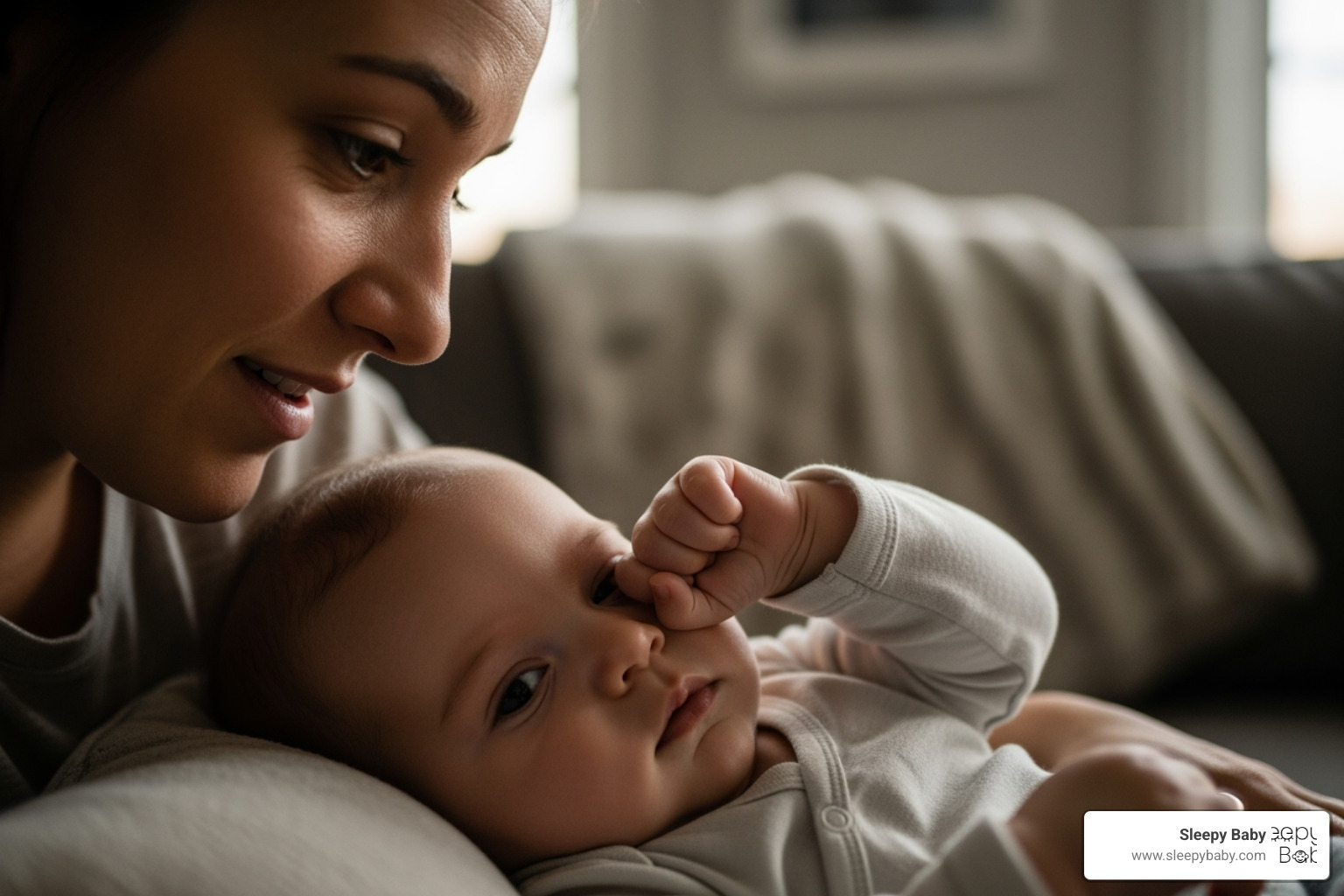
Learning your baby's sleepy signals is key to a smoother bedtime. Catch them early before your baby becomes overtired.
Timing is also a clue. Newborns can only handle being awake for about 45-60 minutes, while 3-6 month-olds can manage 90 minutes to two hours. Learn to spot these cues with our guide Baby Whisperer 101: How to Spot Sleep Cues Early.
Self-settling is your baby's ability to fall asleep and return to sleep on their own. It's a game-changer because babies who can self-settle often go back to sleep independently after waking between sleep cycles.
To encourage this skill, try giving your baby a few minutes to settle on their own when you put them down drowsy. Responsive settling means tuning into their needs without immediately picking them up. Gentle shushing or a hand on their chest can provide comfort. Rhythmic patting devices can also offer this consistent, soothing touch.
The goal is to avoid creating sleep props—things your baby becomes dependent on to fall asleep, like being rocked or fed to sleep every time. While these are beautiful bonding moments, relying on them exclusively can become exhausting. We explore this balance in Nursing to Sleep: A Comforting Debate. For more gentle approaches, see The Calming Chronicles: Helping Your Infant Self-Soothe.
Even with the best strategies, baby sleep can be unpredictable. Challenging nights are a normal part of the journey, often coinciding with developmental leaps like rolling or crawling, teething, or minor illnesses. The resulting parental exhaustion is real. Don't hesitate to ask for help from family and friends, and try to nap when your baby naps. For more tips, see Understanding Why Babies Fight Sleep and How to Help.
Sleep regressions are temporary periods when a baby's sleep patterns suddenly become chaotic. They are not steps backward but signs of brain development. They often occur around:
To survive regressions, stay consistent with your routines. Offer extra comfort during the day and be patient—these phases typically last a few days to a few weeks. Our guide 4 Month Sleep Regression SOS: Your Guide to Better Baby Sleep offers specific strategies.
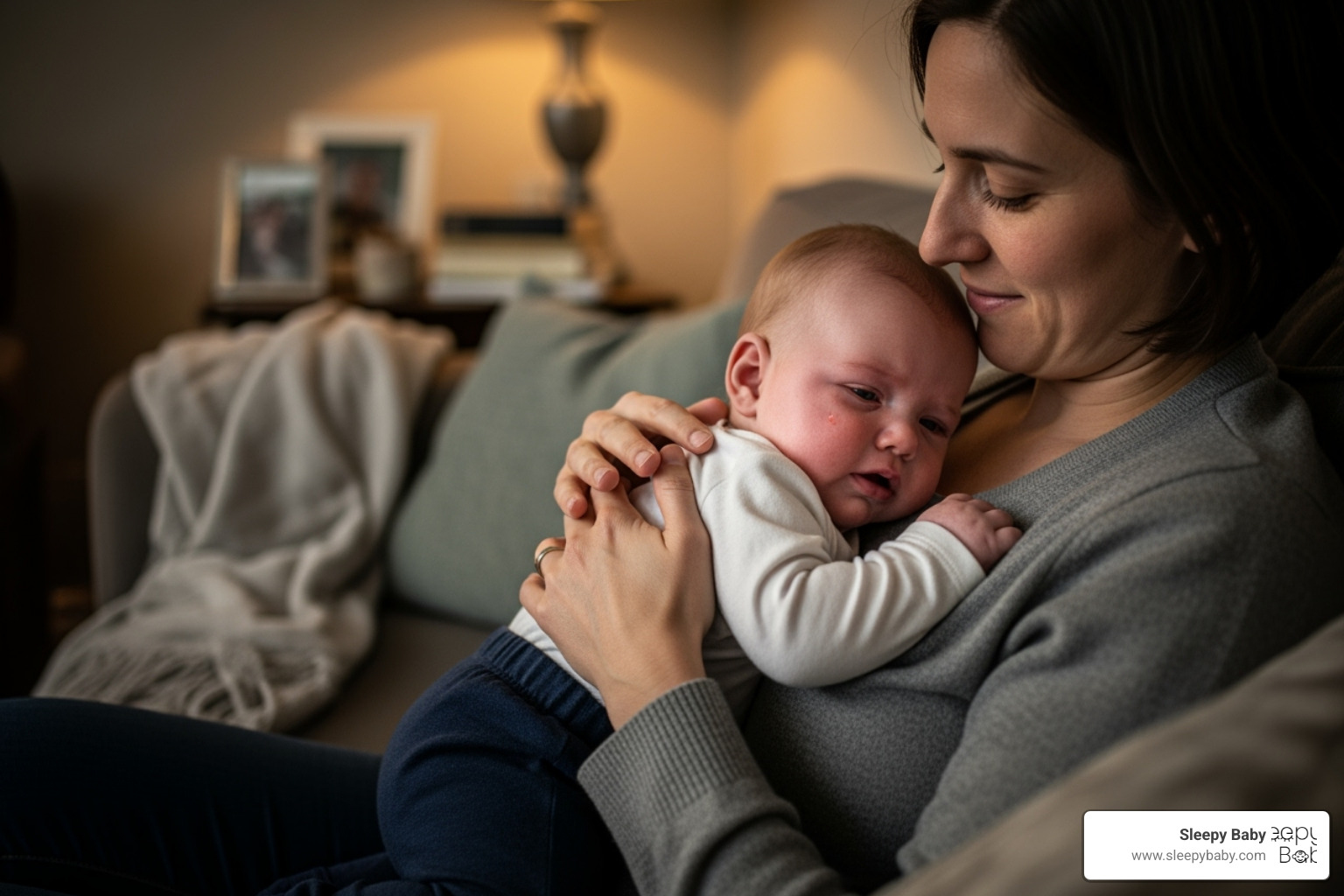
Colic and Gas: Intense, unexplained crying can be heartbreaking. Gentle tummy massages, bicycle leg movements, and thorough burping can help release trapped gas. Rhythmic patting devices like our Sleepy Baby can also be very soothing during these episodes. For more ideas, read Soothe the Storm: Effective Colic Relief for Babies.
Night Wakings: All babies wake at night; the question is whether they can resettle themselves. For younger babies, waking is often due to hunger. For older infants, it might be a reliance on parental help. Learn to distinguish the cries with our guide Why Your 6 Month Old Keeps Waking Up and How to Fix It.
Short Naps: Naps under 45 minutes can lead to an overtired baby. This can be caused by a stimulating environment or incorrect wake windows. Sometimes, helping your baby transition to the next sleep cycle can extend the nap. Find tips in From Catnap to Power Nap: Helping Your Baby Sleep Longer.
Trust your instincts. If something feels off, seek professional guidance. Contact your pediatrician for any health concerns, especially:
Also consider consulting a lactation consultant for feeding issues or a certified sleep consultant for persistent behavioral sleep problems. Finally, take care of your own mental health. If you're experiencing symptoms of postpartum depression or anxiety, reach out to a health professional. Find a list of contacts in Connecting with Baby Care: Essential Contacts You Need.
Here are straightforward answers to the most common questions about baby sleep.
The American Academy of Pediatrics advises waiting until your baby is at least 12 months old. Before this age, loose bedding like blankets, pillows, and bumpers poses a suffocation risk. For the first year, a bare crib is safest. To keep your baby warm, use a sleep sack or wearable blanket. Once your baby turns one, they generally have the motor skills to move blankets away from their face. For tips on this transition, read Snuggle Safely: Introducing a Comforter to Your Baby's Sleep Routine.
Yes, in the first few weeks. Newborns need to feed every 3-4 hours to ensure proper weight gain and establish healthy growth. Waking them for daytime feeds also helps them learn the difference between day and night. Once your pediatrician is happy with your baby's weight gain and they are past the early newborn stage, you can generally let them sleep for longer stretches at night. Always follow your pediatrician's specific advice. For more on this, see Should I Wake My Newborn to Feed or Let Sleeping Babies Lie?.
These terms are often confused, but the distinction is helpful.
Teaching healthy sleep habits is a proactive, gentle approach from the start. It involves creating a great sleep environment, establishing routines, and encouraging self-settling skills as your baby grows.
Sleep training is typically a more structured, reactive approach for older babies (4-6 months+) who have established sleep challenges. Methods range from gradual approaches to more direct ones like controlled crying. The goal is to teach a baby to fall asleep and resettle independently.
The choice to sleep train is personal. The best approach is one that aligns with your parenting philosophy and your baby's temperament. Good baby sleep is about finding what works for your family, not following a rigid formula.
We've covered everything from the science of baby sleep to practical strategies for creating a soothing sleep sanctuary. Baby sleep is a journey with good nights and challenging ones. Both are normal.
Focus on progress, not perfection. You are becoming the expert on your baby, learning their unique rhythms. Throughout this journey, don't forget your own well-being. Parental sleep deprivation is a real challenge, and taking care of yourself is essential for your family.
At Sleepy Baby, we understand the exhaustion of those early months. That's why we developed innovative sleep aids that provide gentle rhythmic patting and safe, low-decibel white noise. Our devices mimic a comforting parental touch, helping your baby develop independent sleep skills while feeling secure. They aren't a replacement for your love but an extension of it, offering consistent comfort when you need a break.
Every family's path to better baby sleep is different. Trust your instincts, be patient, and know that restful nights are within reach. For more resources and to see how our sleep solutions can support your family, find your ultimate baby sleep solutions here. Here's to peaceful nights and well-rested families!


